DAY 6: Kashgar Museum, Xiangfei Yuan (香妃園), Kashgar Old Town West (喀什古城西)
2026-09-19
Stay: Half Day B&B
The clouds are still looming overhead; another overcast day. I ask the hostel owner where he would recommend, and he said the Kashgar Museum (喀什博物館) and Xiangfei Yuan (香妃園), which was the house of a concubine of Emperor Qianlong of the Qing empire.
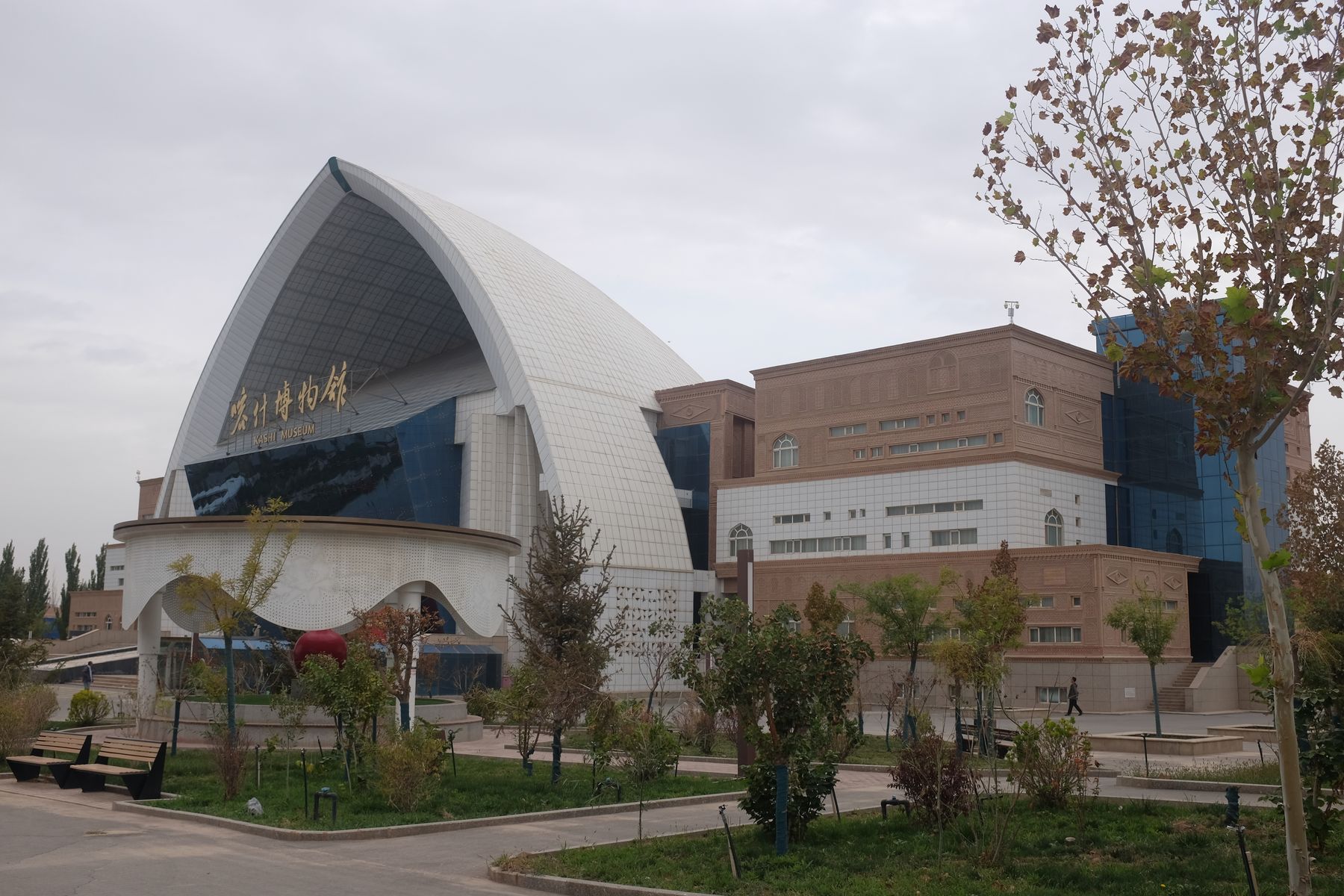
The exterior of Kashgar Museum was a lot more impressive than inside. The outside, a large dome with some ethnic-looking extensions. Like every other Chinese park, it’s vast, and the space is both comfortable and underutilised.
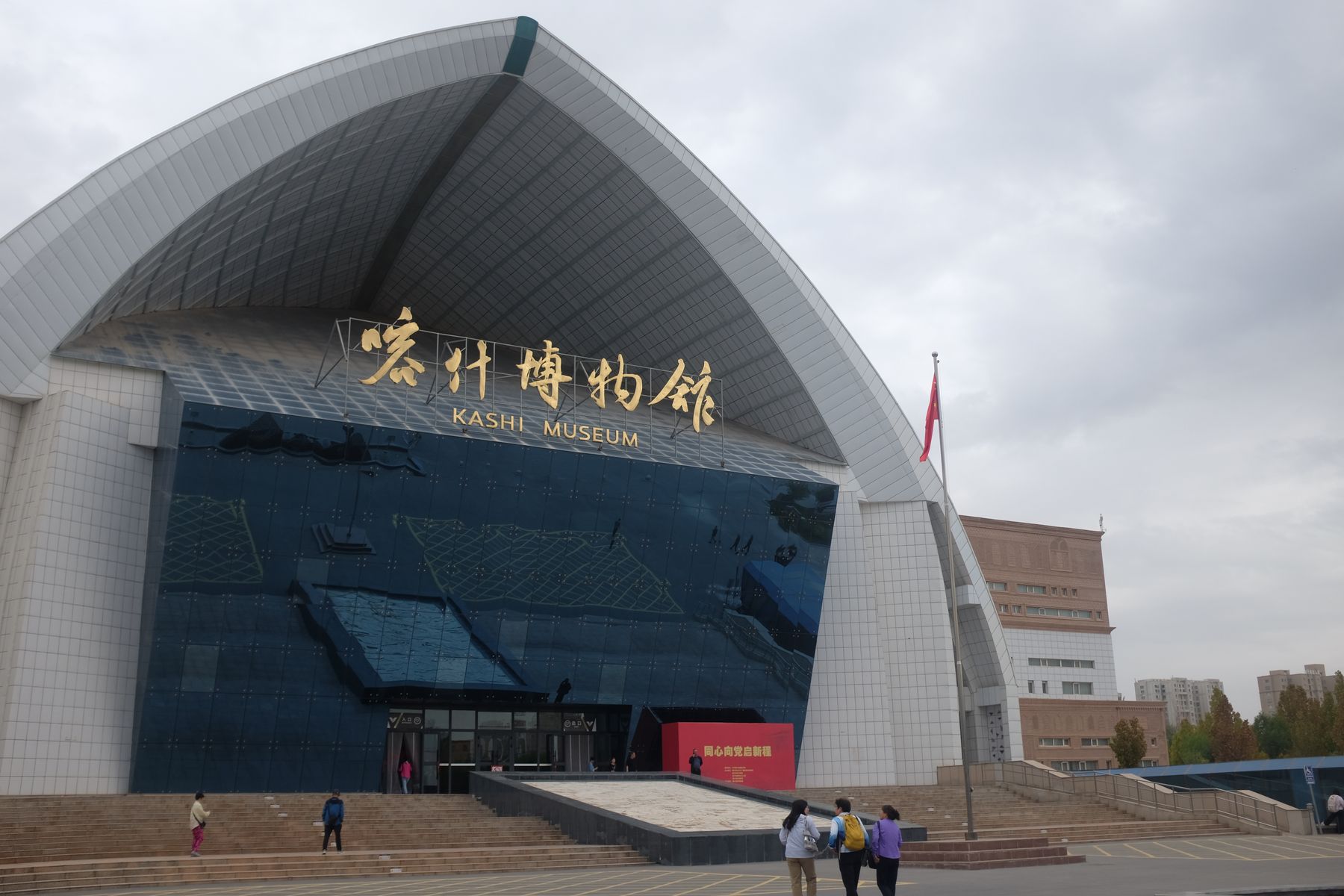
The inside is a mix of propaganda and relics. All of the introduction to the exhibits talk about how Xinjiang was an ethnic melting pot since forever-ago, and that these people were always a part of the great Chinese nation. I checked the translation, and it’s the same in English as it is in Chinese.
However, when it came to explaining the relics in the museum, the descriptions were more factual and less revisionist. Hence the relics. The curation seemed complete and more objective.
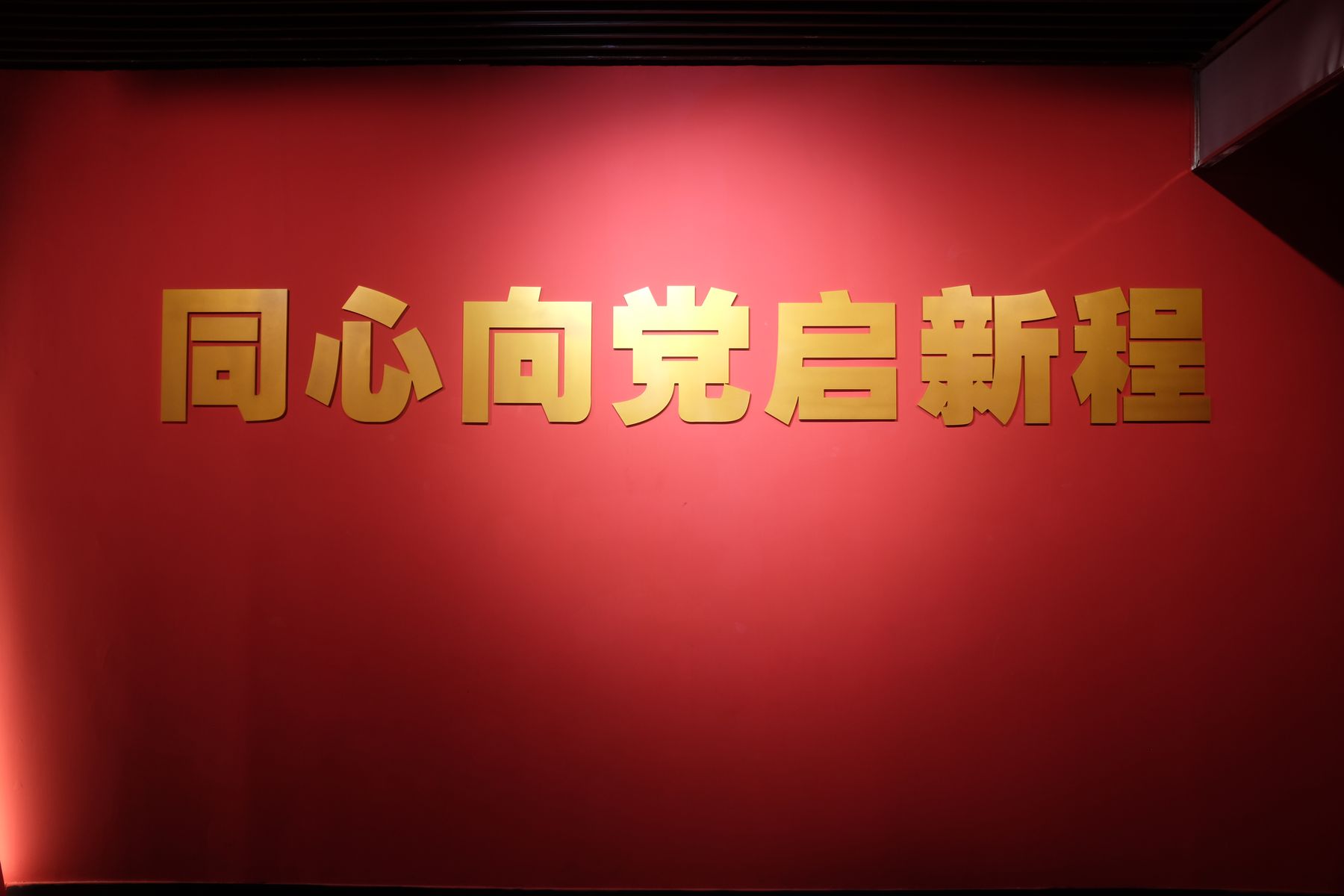
The peak of the museum was on exhibit deliberately glorifying the Chinese Communist Party and its contributions to this region. This was exemplified by a large, red-coloured themed room with this banner upon going in:
Walking around didn’t take too long: two large exhibit halls, one on the first floor and the other on the second. And then onto the next recommendation.
Xiangfei Yuan was the residence of a concubine of Emperor Qianlong during the Qing. I was confused about what it was at first, but it made sense as I wandered through.
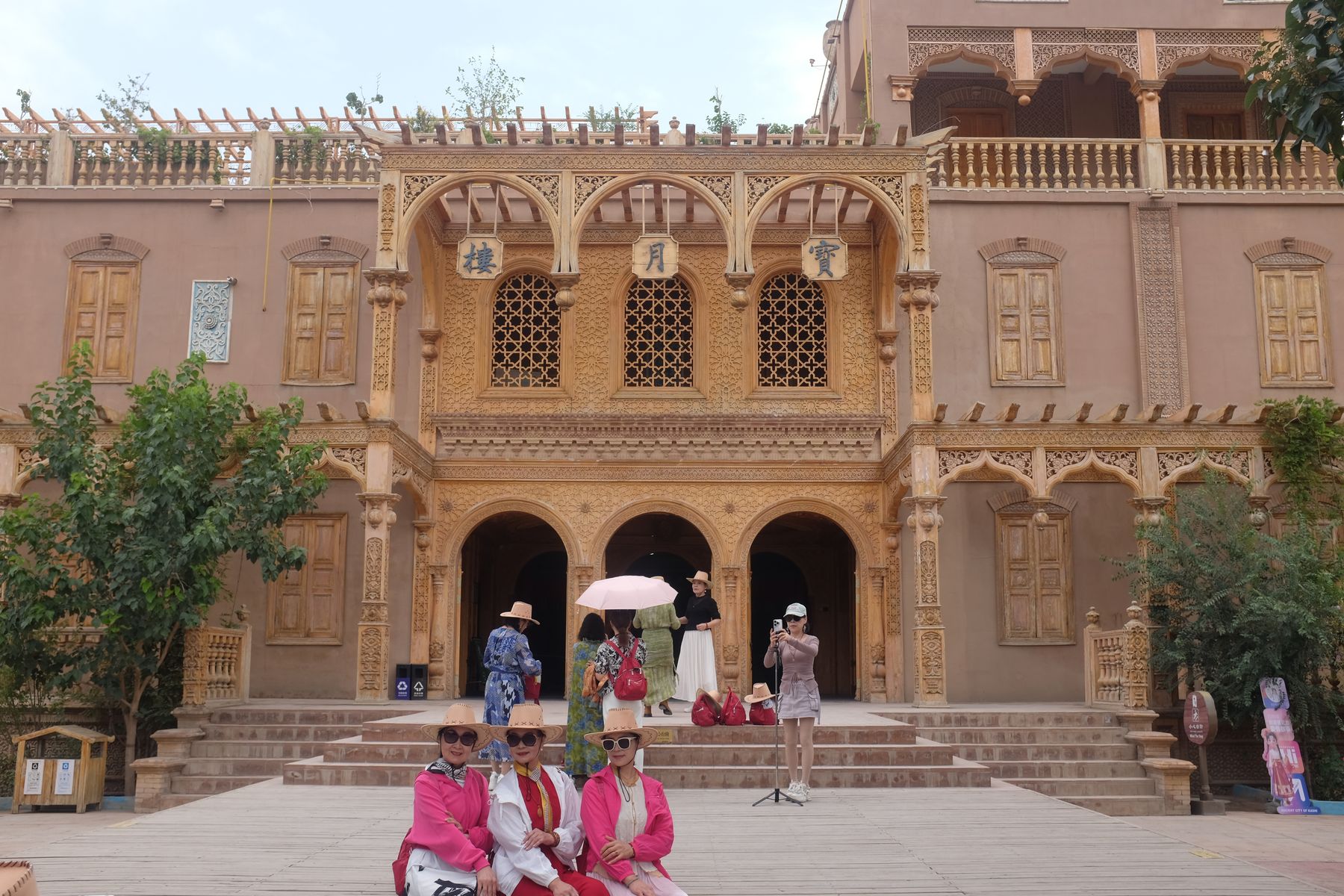
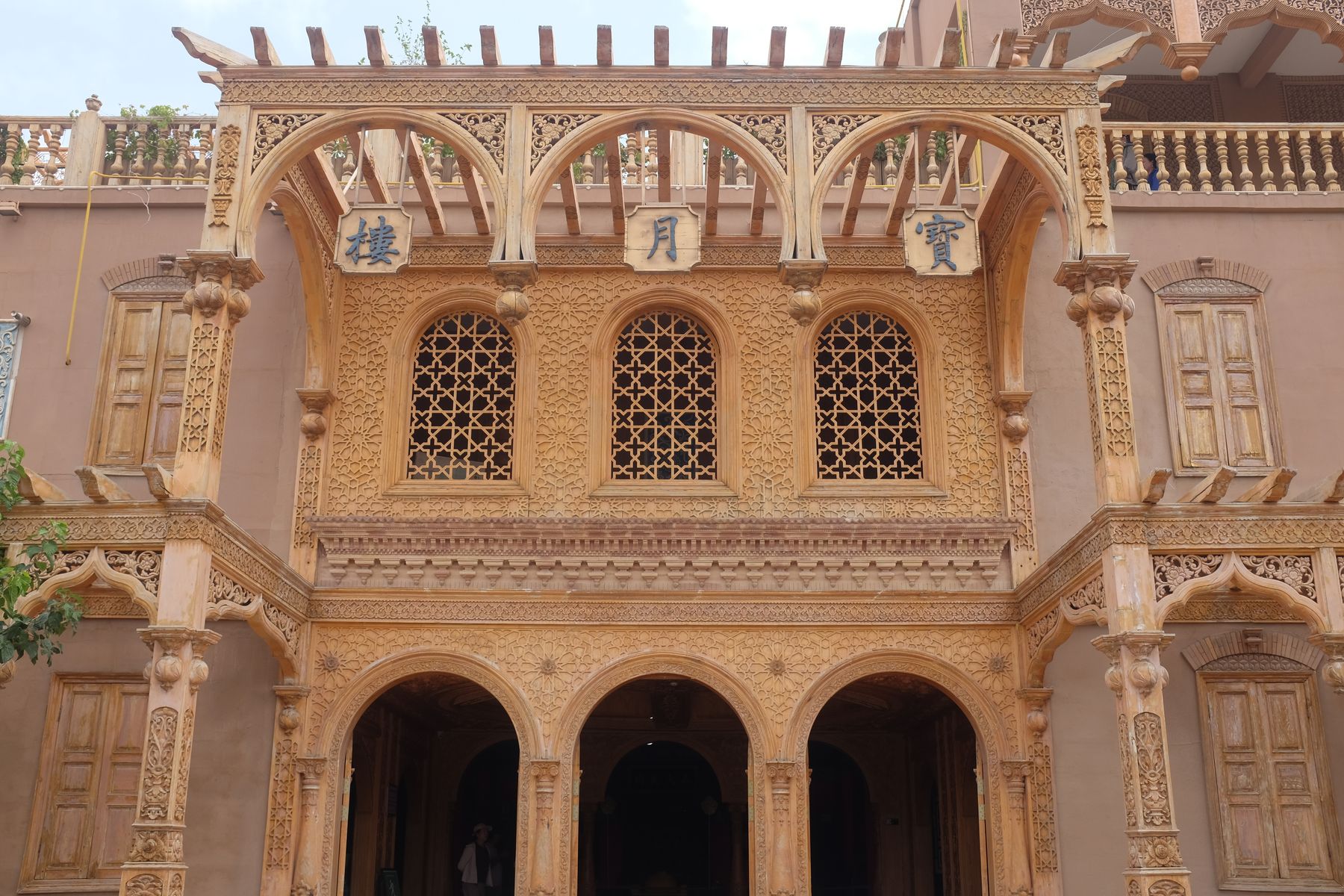
The “yuan” portion of the name comes from the fact that it’s essentially an imperial garden for the concubine. There are sitting areas, fountains, and all the fixtures of a park. The main hall, Baoyue Building (寶月樓) was an overly reconstructed building without any of its original flavour. Some aunties were taking pictures in front of it, which I found characteristic of Chinese tourism.
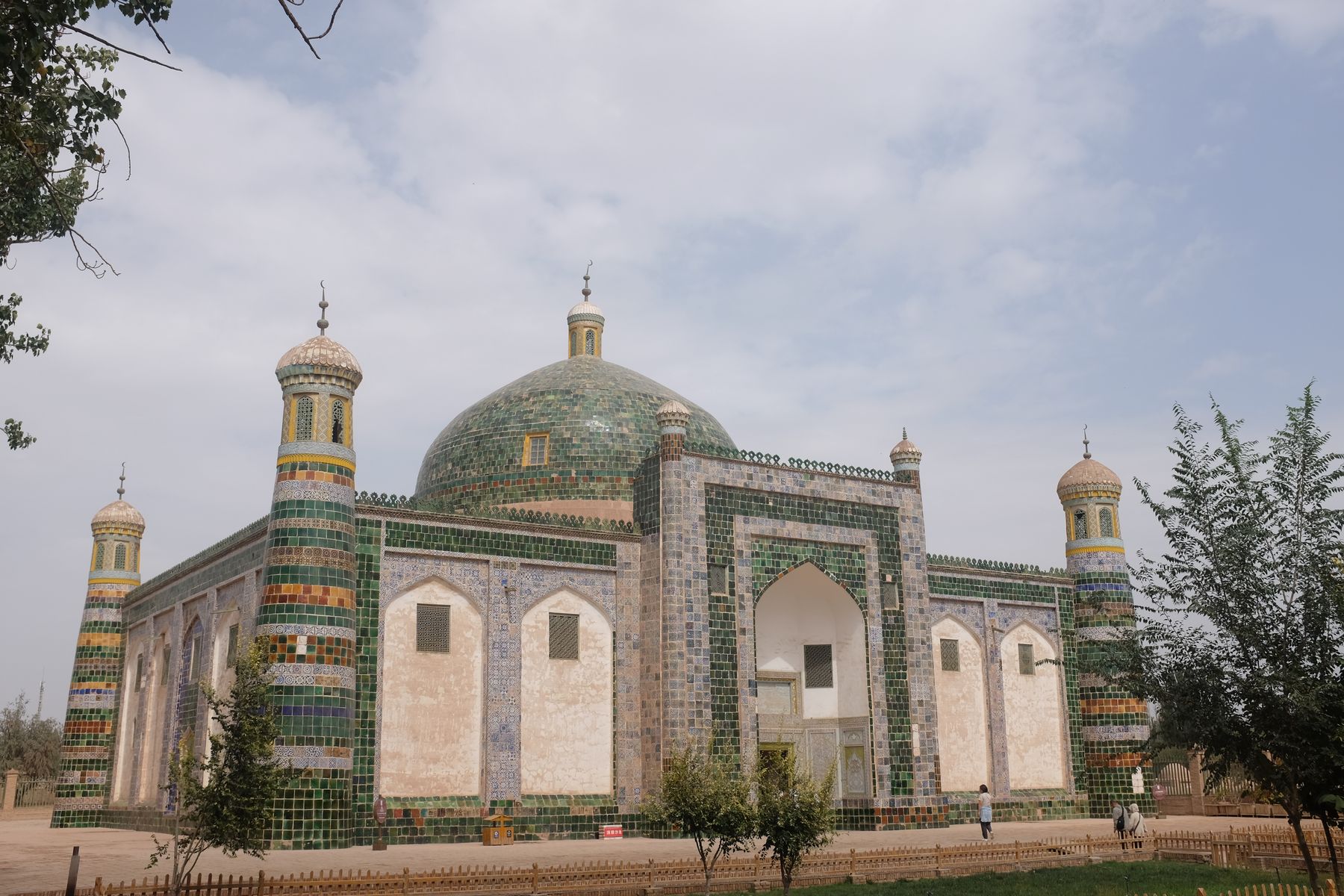
While overdone, the further inwards I got, the more interesting it became. The most inner portion of the park ends in the mausoleum where the concubine rests. The building is large and mosque-like, standing sombre in an otherwise manicured park. The mosque looks moderately new but has traces of wear and fading colour. A sign on the back says that the government had restored the colour in 1956. Most people take pictures in front of the mausoleum, but it is walkable all around. I take a few pictures from all faces
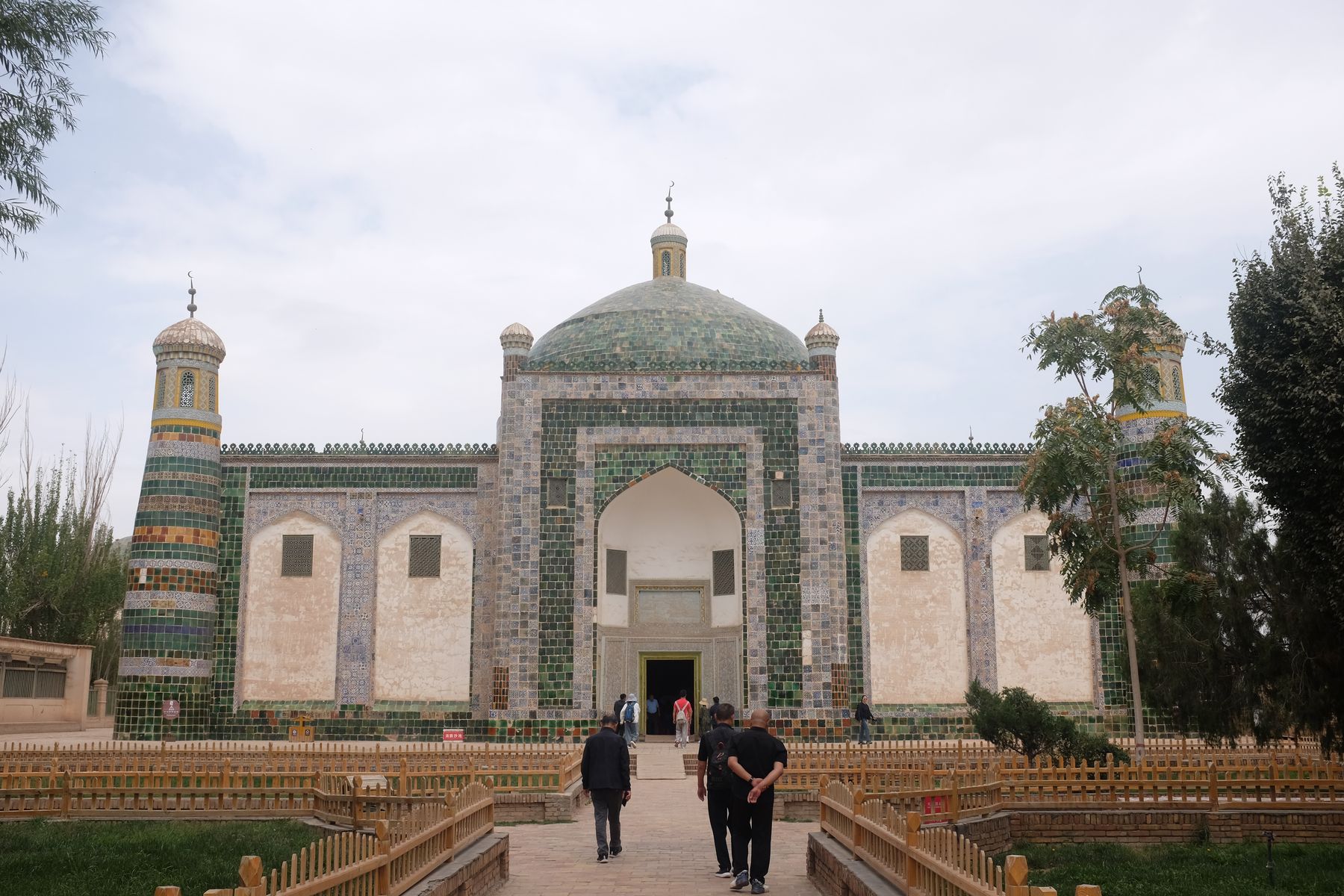
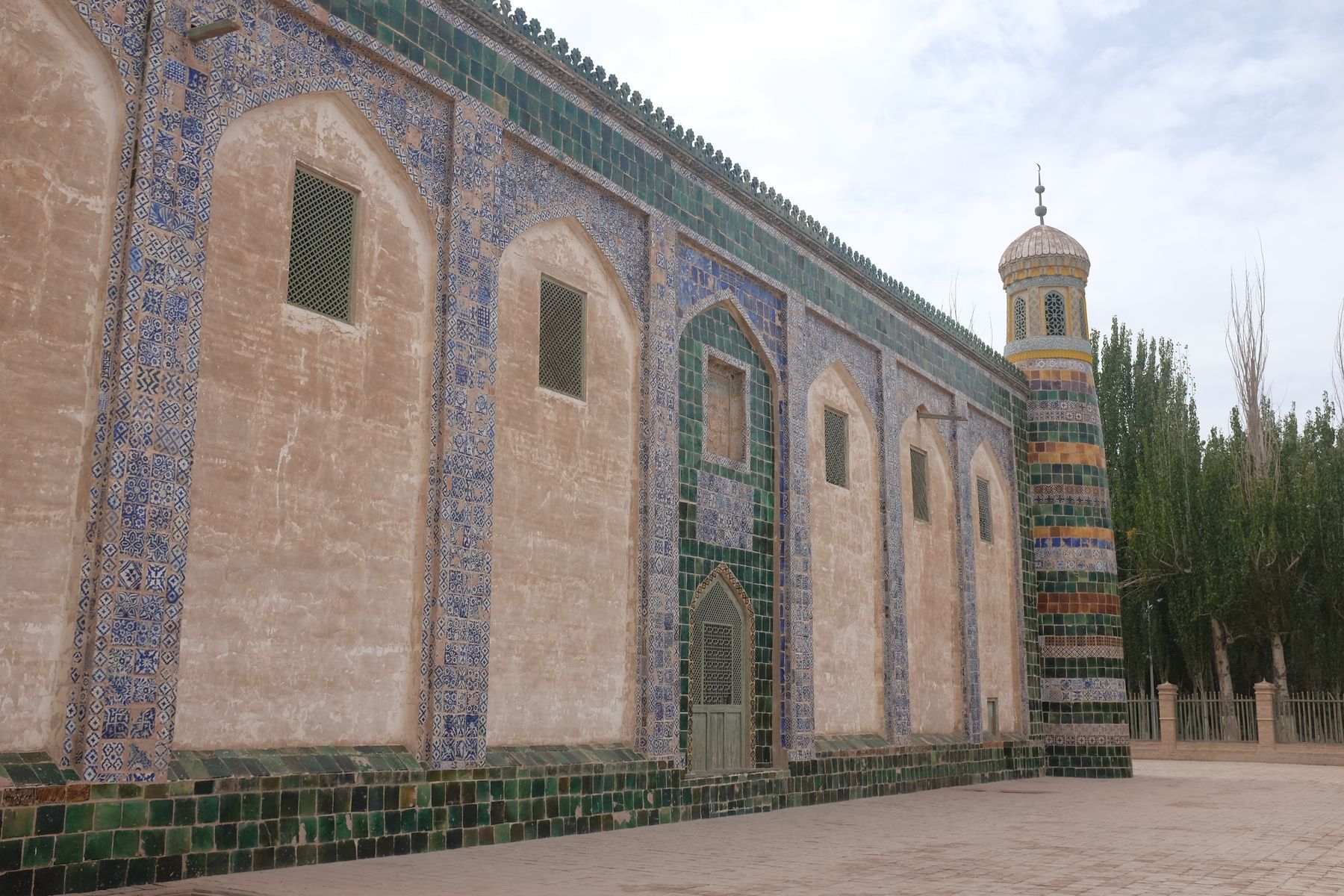
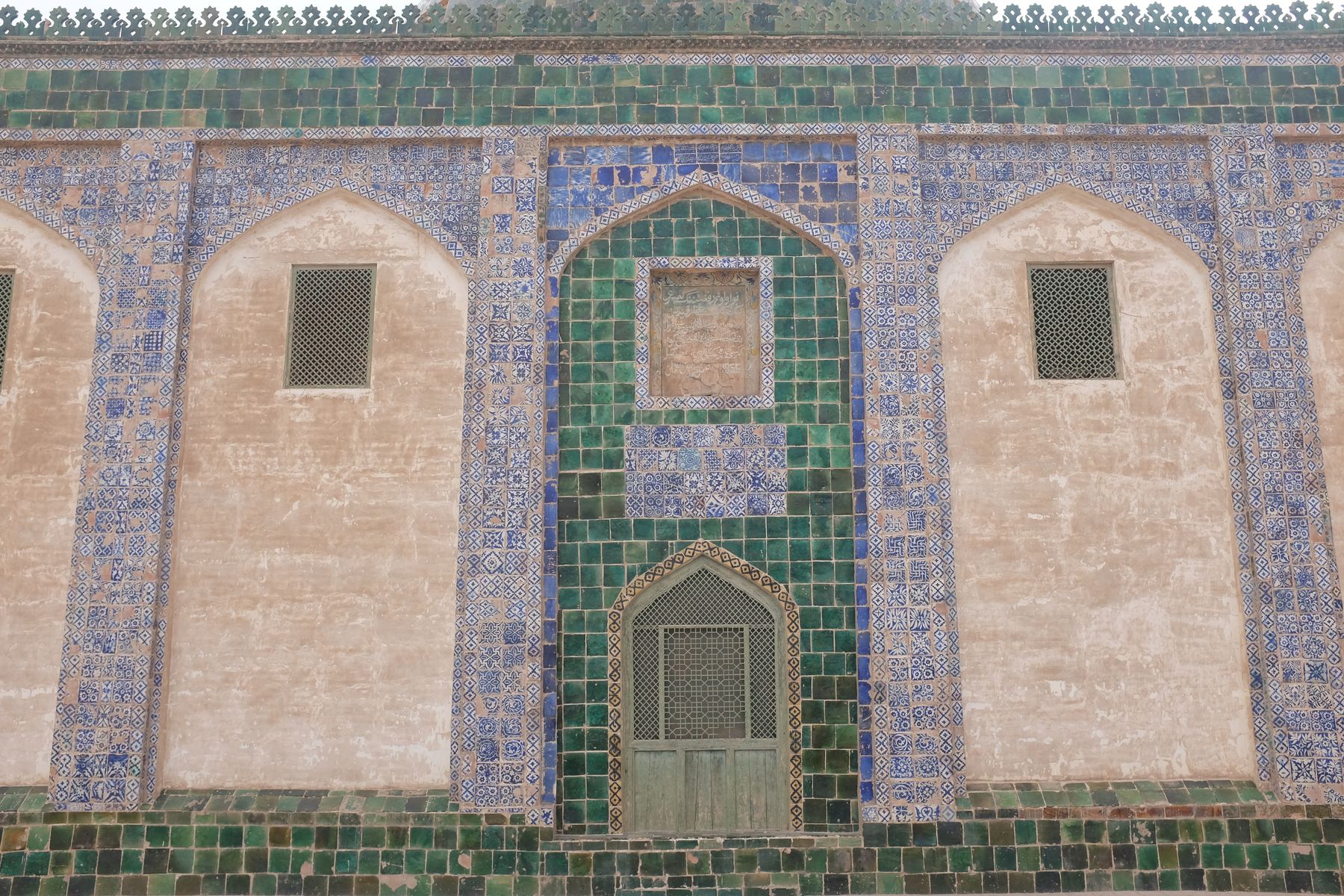
The sun finally peeks out after a gloomy day, illuminating the mausoleum.
While the park is mostly a central promenade leading to the mausoleum, there are side paths that have even more interesting history. One lecture hall, and two mosques, both built around the 1870’s, that have had far less of a facelift than the main mausoleum – and, overlooked by selfie aunties.
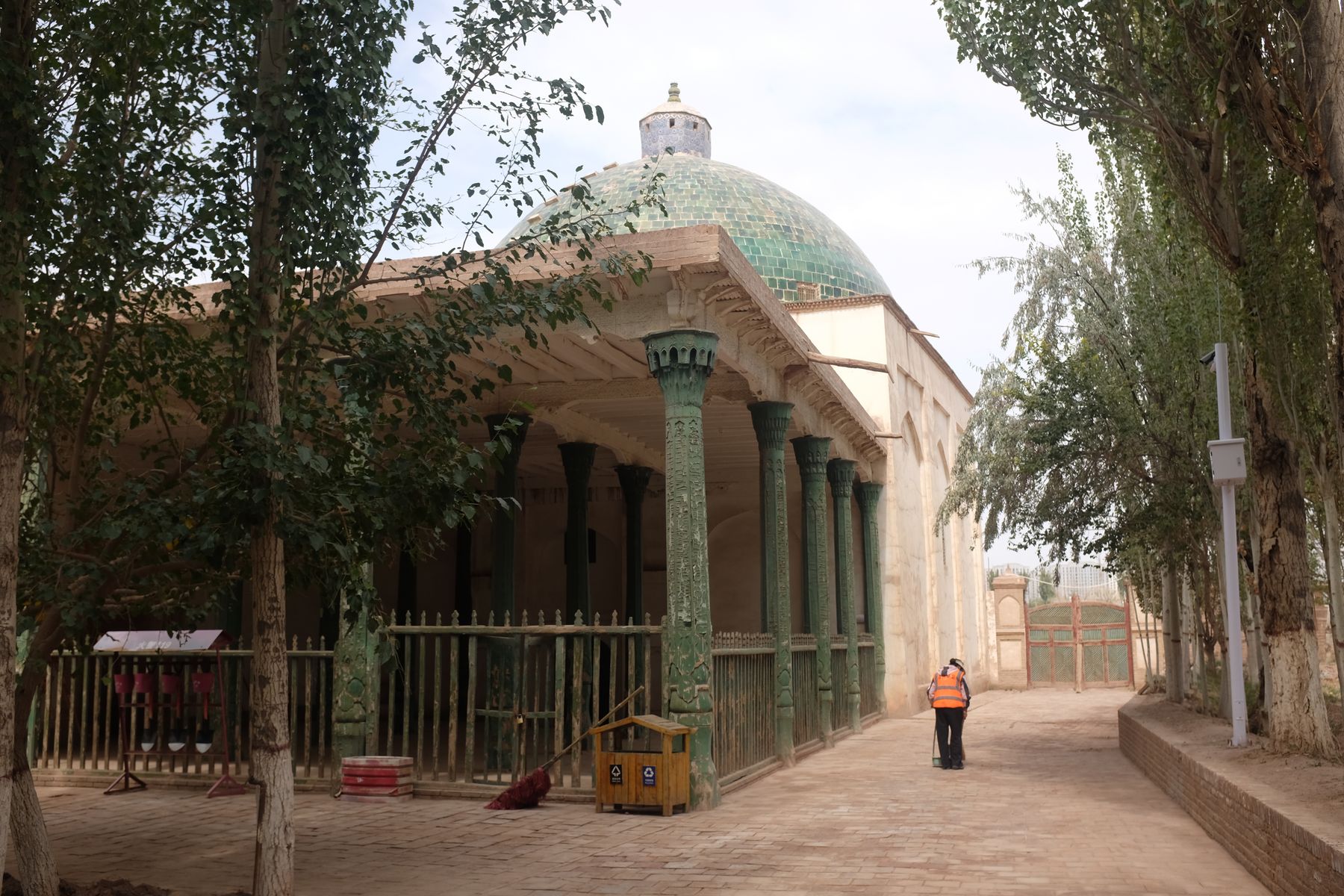
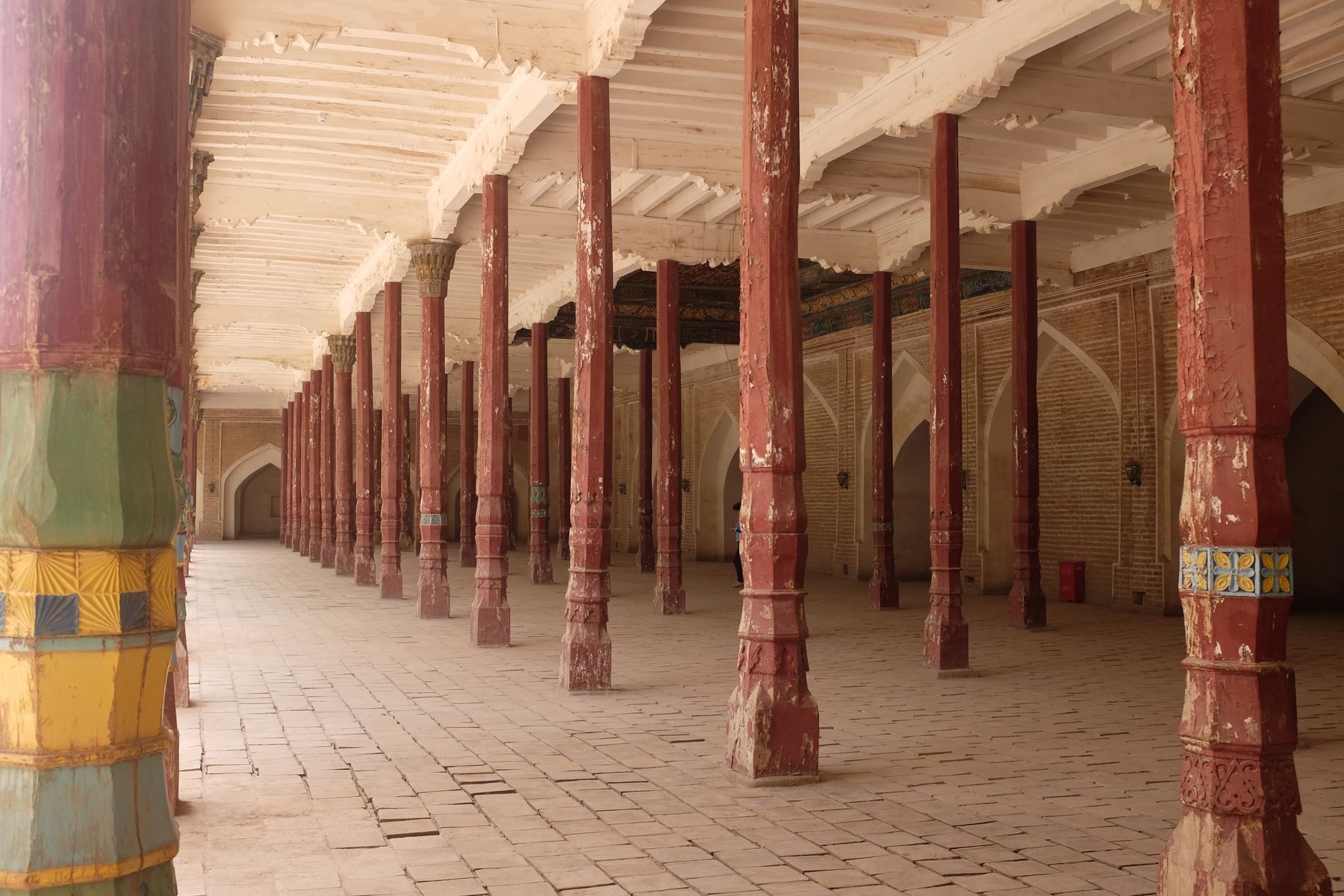
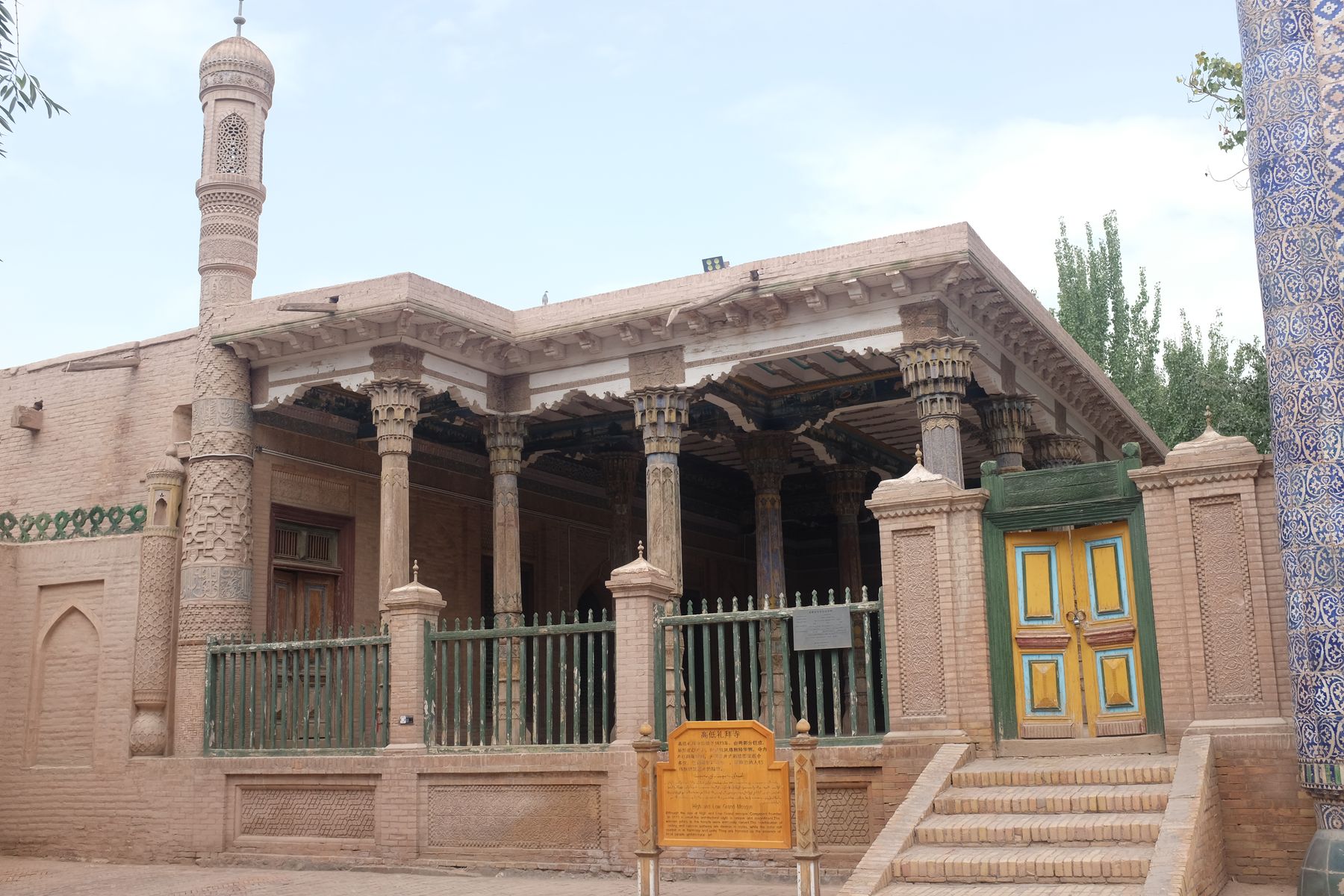
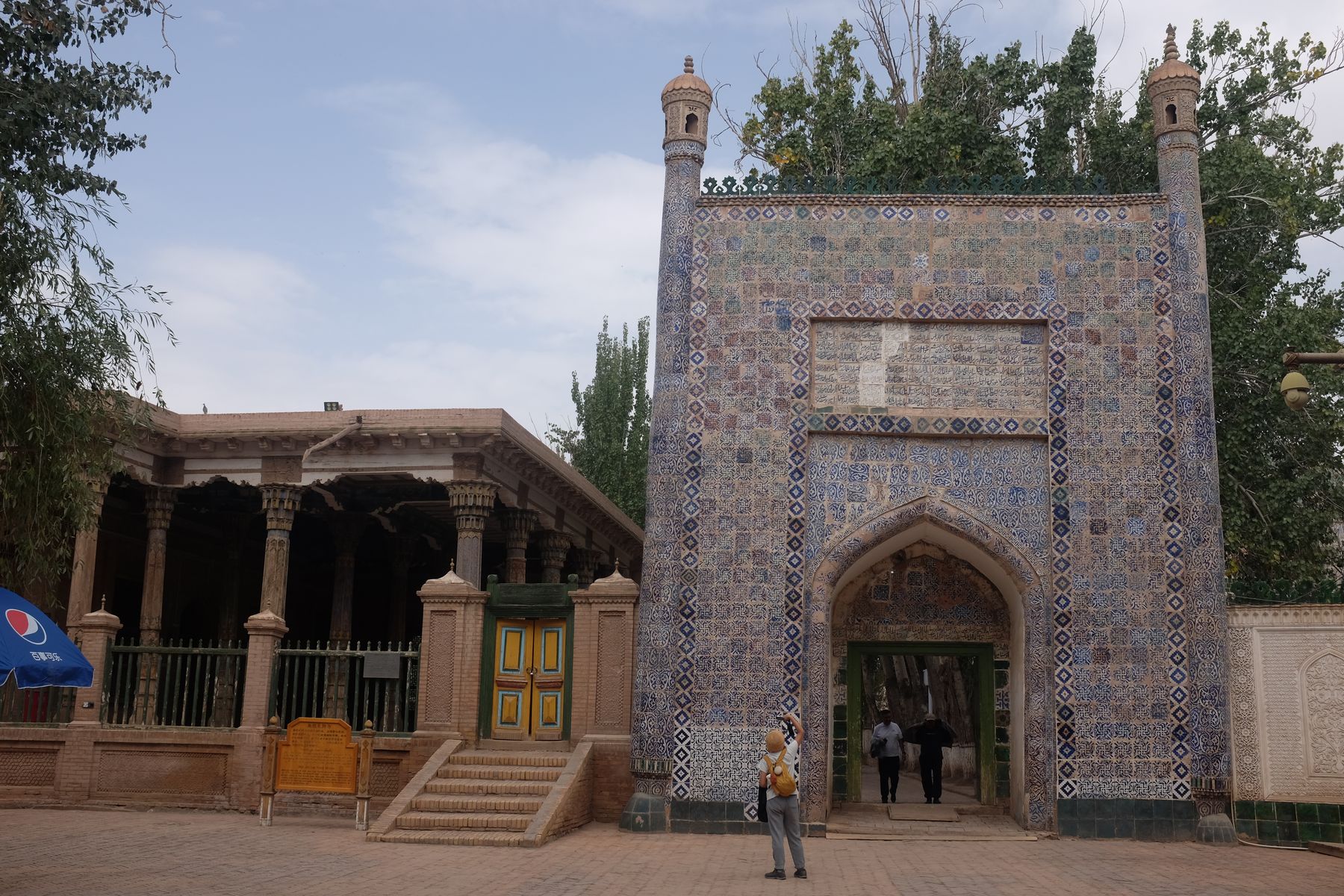
Walking through the concubine garden was a metaphor for China tourism, and arguably politics. There are a lot of great things that someone tells you to draw your attention to, but the feeling of authenticity is in the sideline.
---
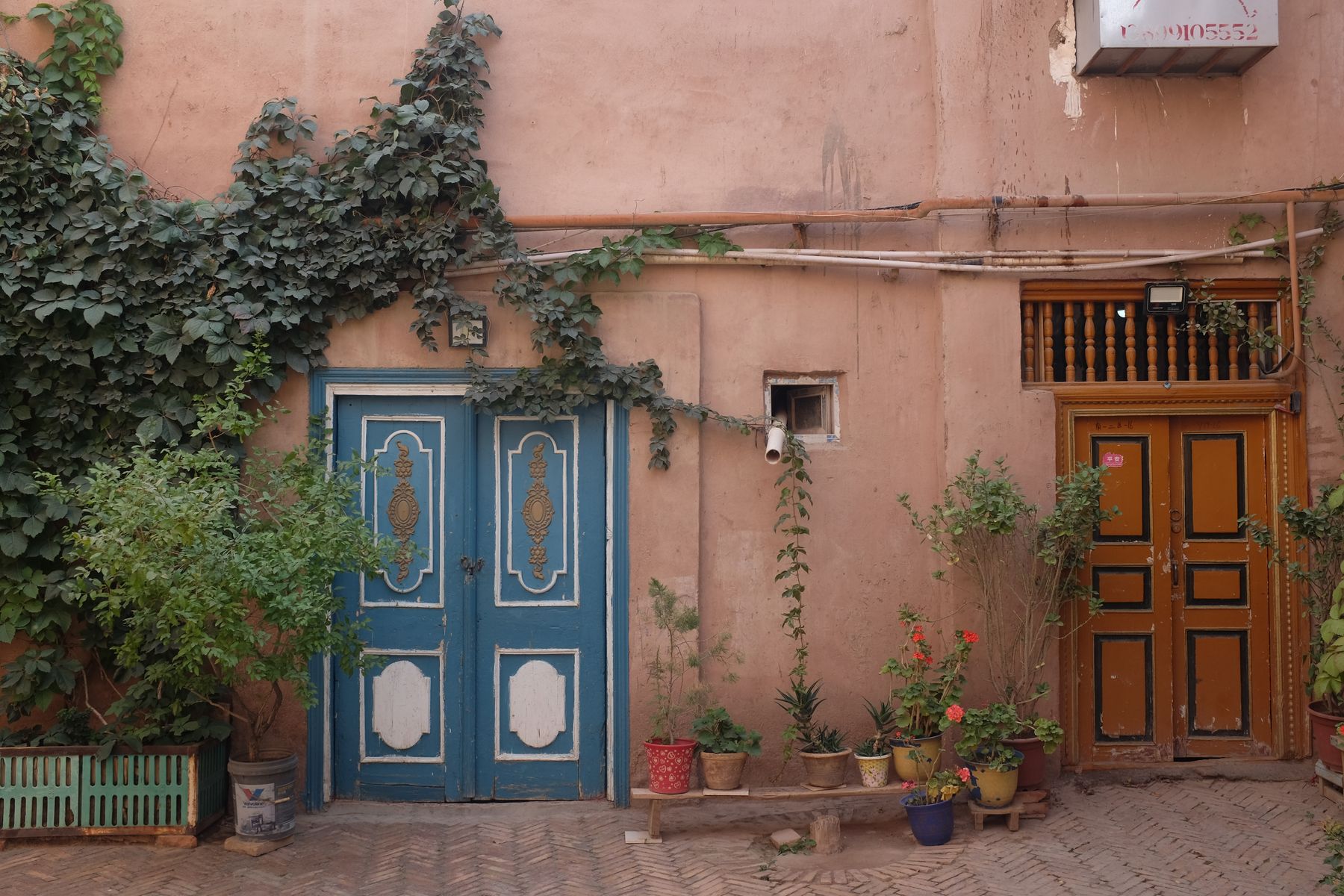
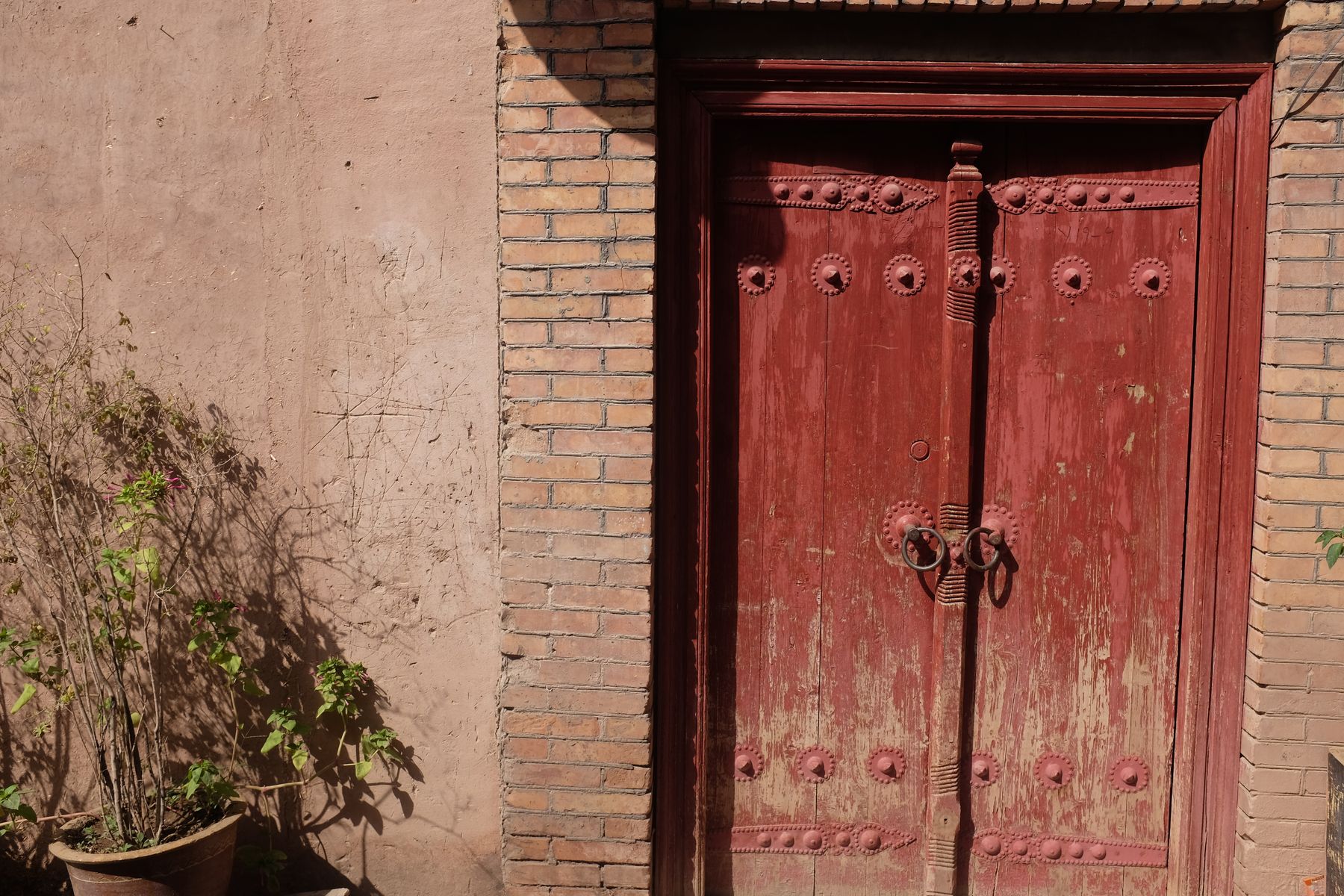
Back to Kashgar Old Town, West (喀什古城西). There are similar small alleys to those in the eastern district
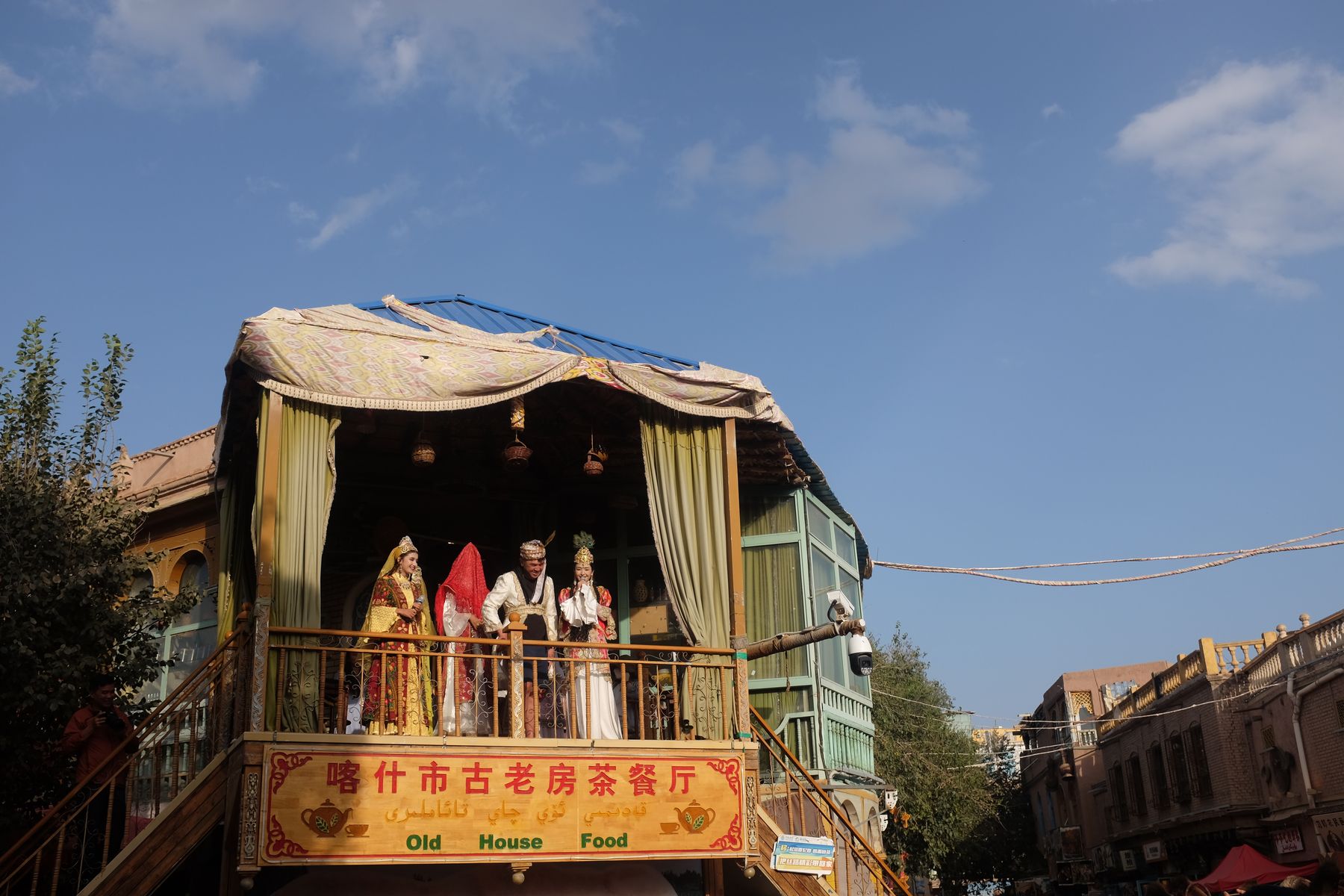
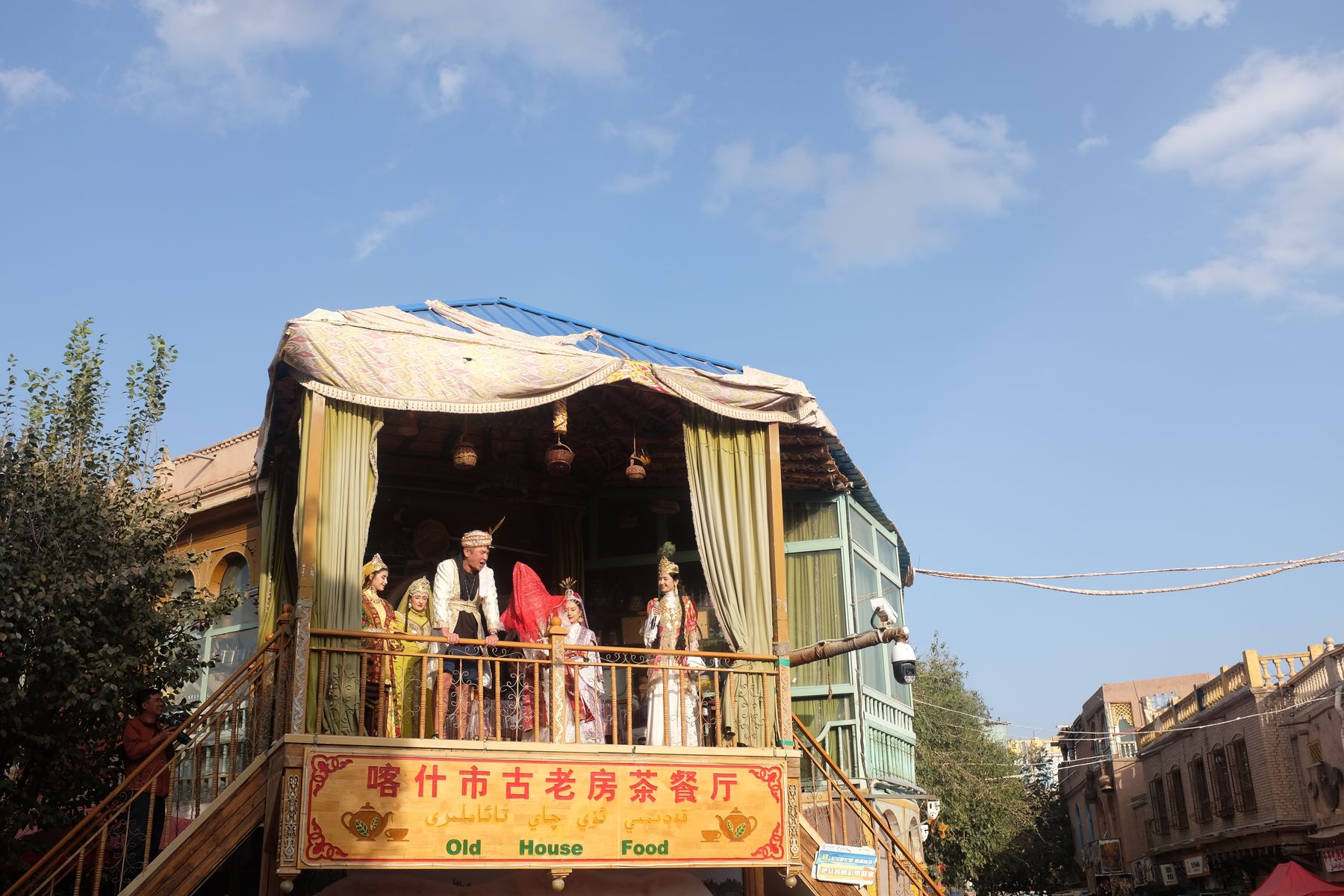
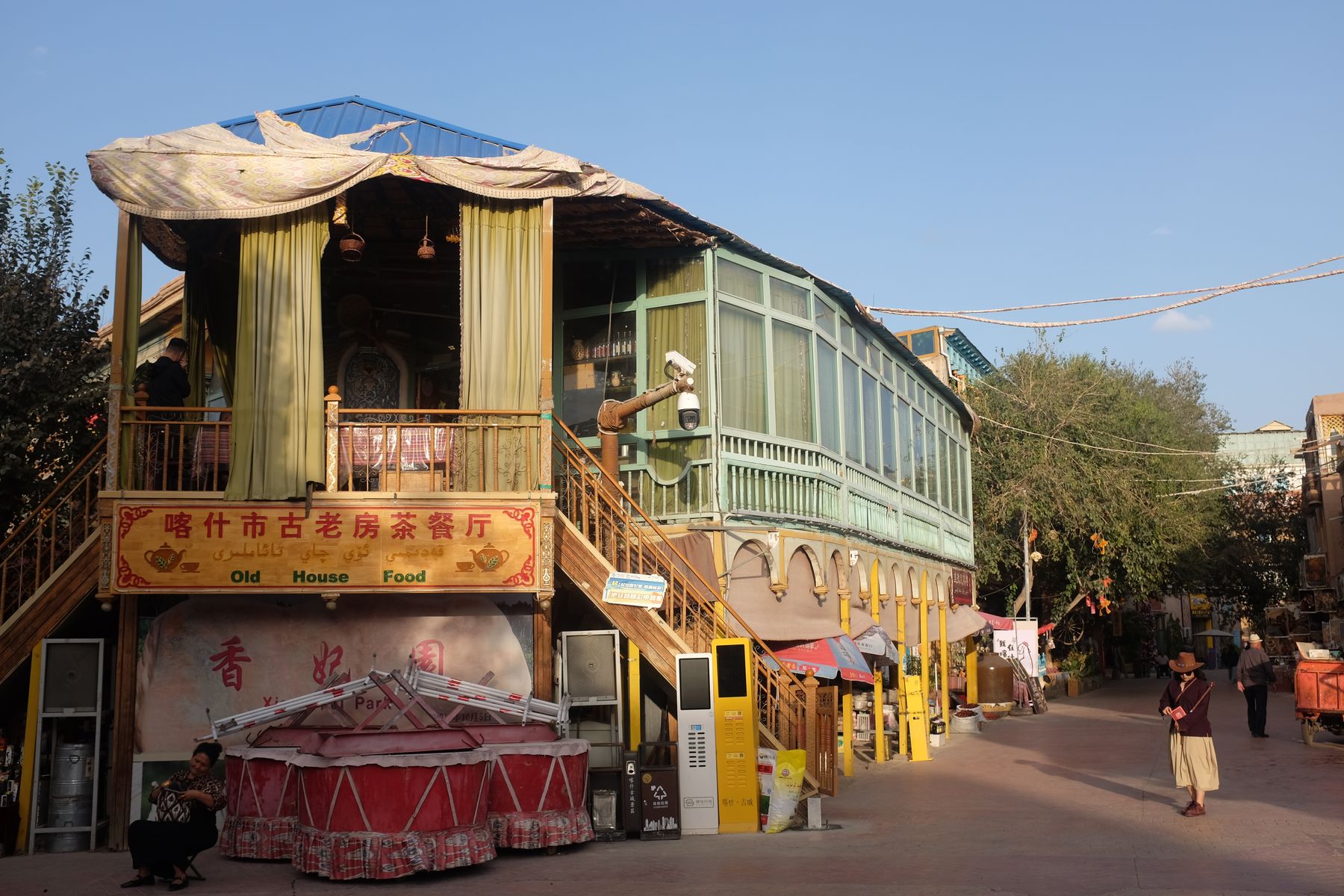
A commotion arises on one of the street corners. One of the old teahouses are hosting a crowd-pleasing event: finding a husband for one of the ethnic girls. A Malaysian man is chosen from the audience as a potential suitor, much to his chagrin. He goes up onto the stage and tries to pass a few tests to determine his suitability, fails, and gets whipped by his future bride-to-be. The crowd cheer in the punishment.
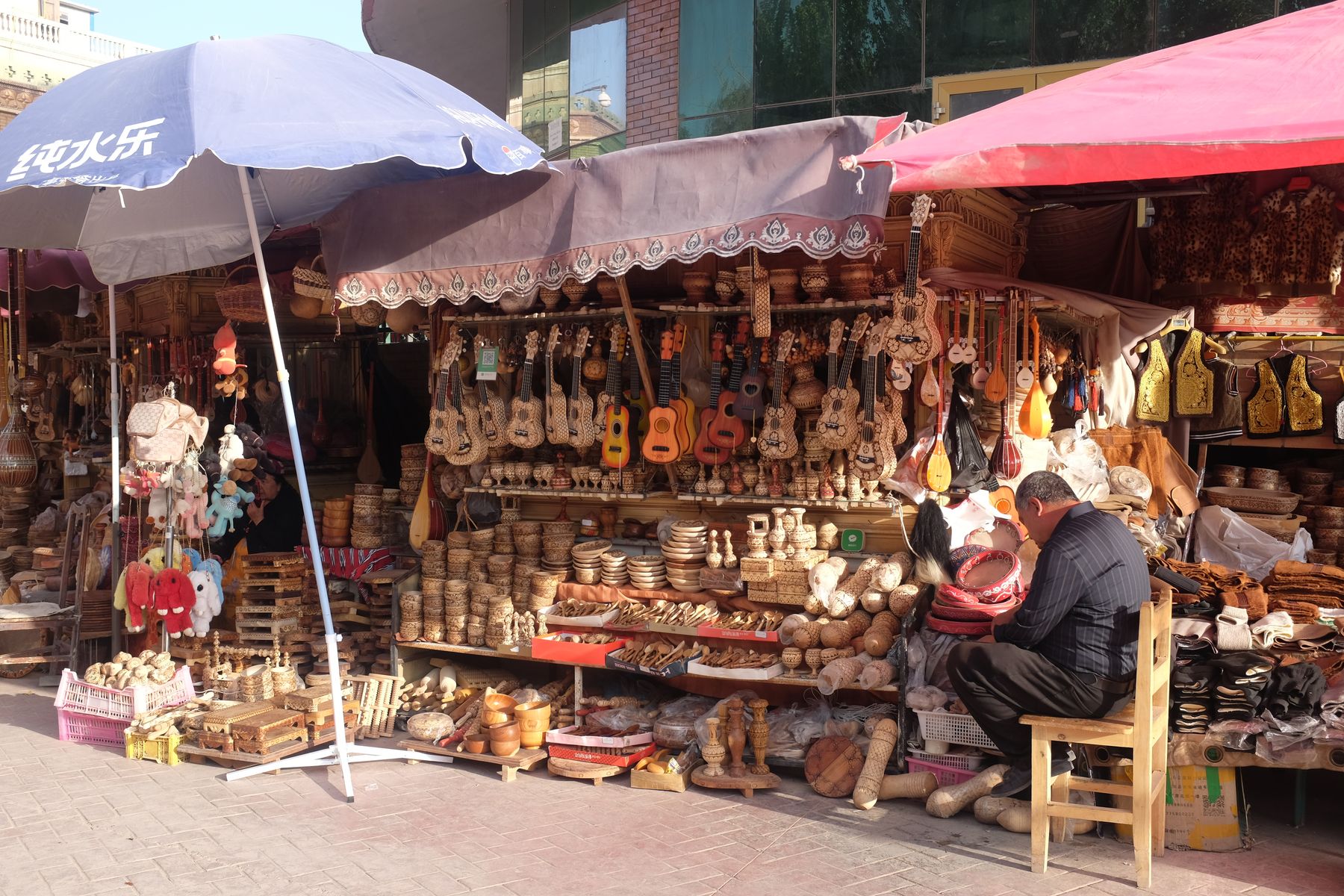
This section is considerably more built up than the east, with newer streets and more Instagrammable alleys and wall decorations. I take interest in the locals keeping on with the everyday
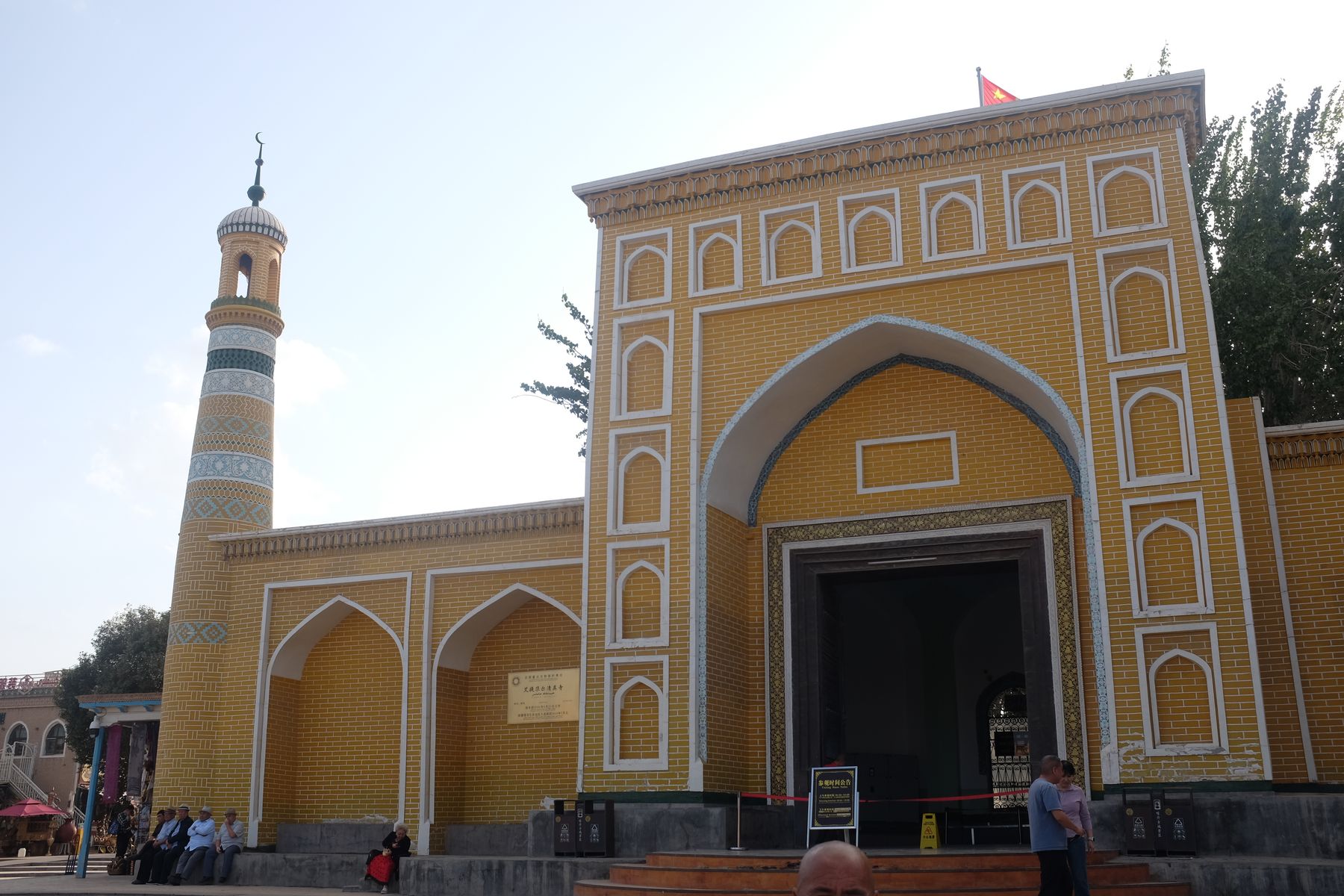
The western district is also home to one of the mosques in the region, which is notably quiet. This is Id Kah Mosque (艾提尕爾清真寺). More generally, the mosques in this town are oddly silent, without the warm hum of the call to prayer. At sunset, it should be the rowdiest and holiest time; here, it feels like neither.
I saunter back slowly to the hostel, and pass by the restaurant with the matchmaking show at the old teahouse. The sun is setting on the building and what was an hour ago the gathering point of a rowdy crowd, it is now silent.
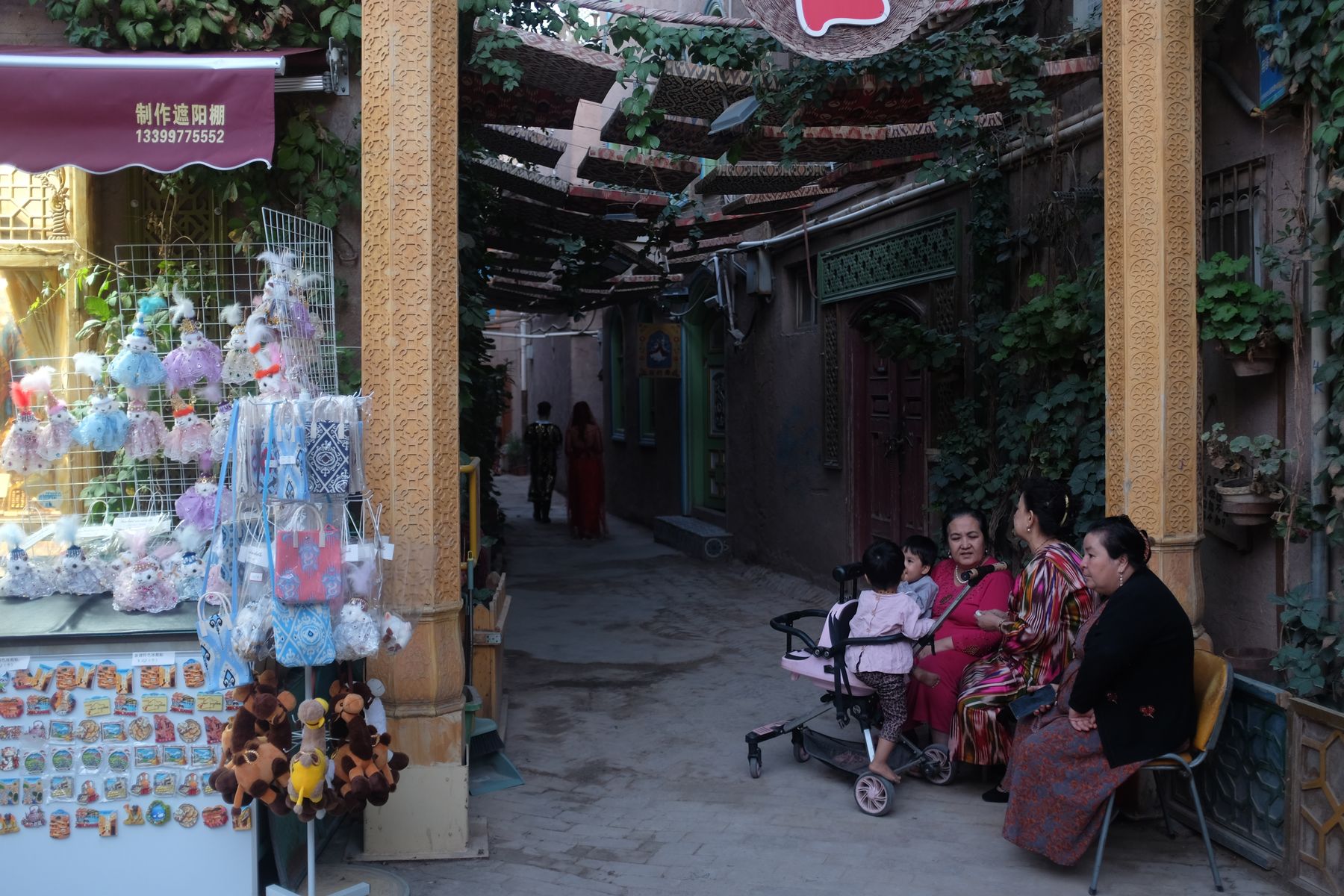
Families begin coming out of their houses as the sun sets and the alleyways cool down. The Instagrammers also try to catch the setting sun against the clay walls of the old town. They are of all ages, men and women, with some dressed in ethnic garb.
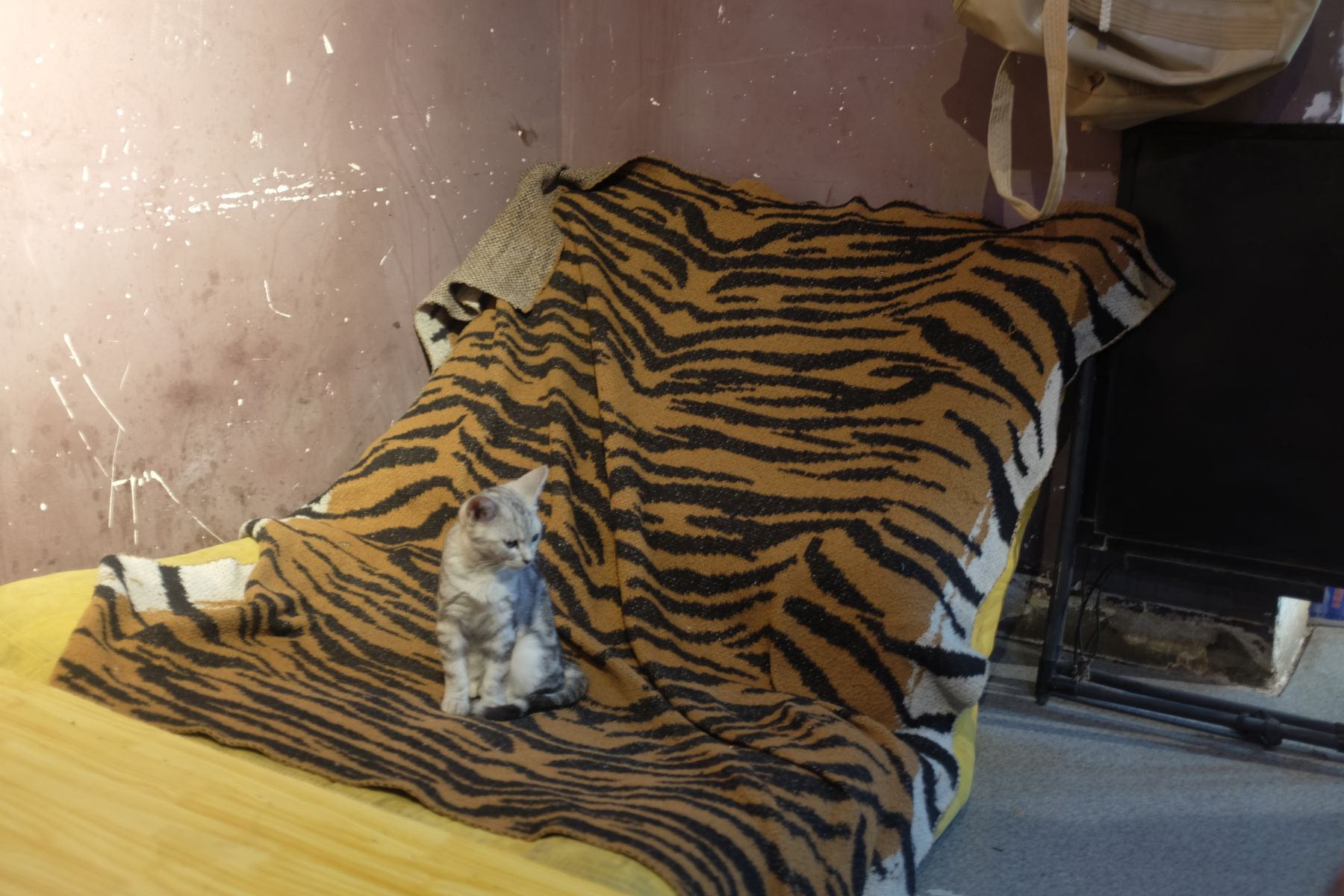
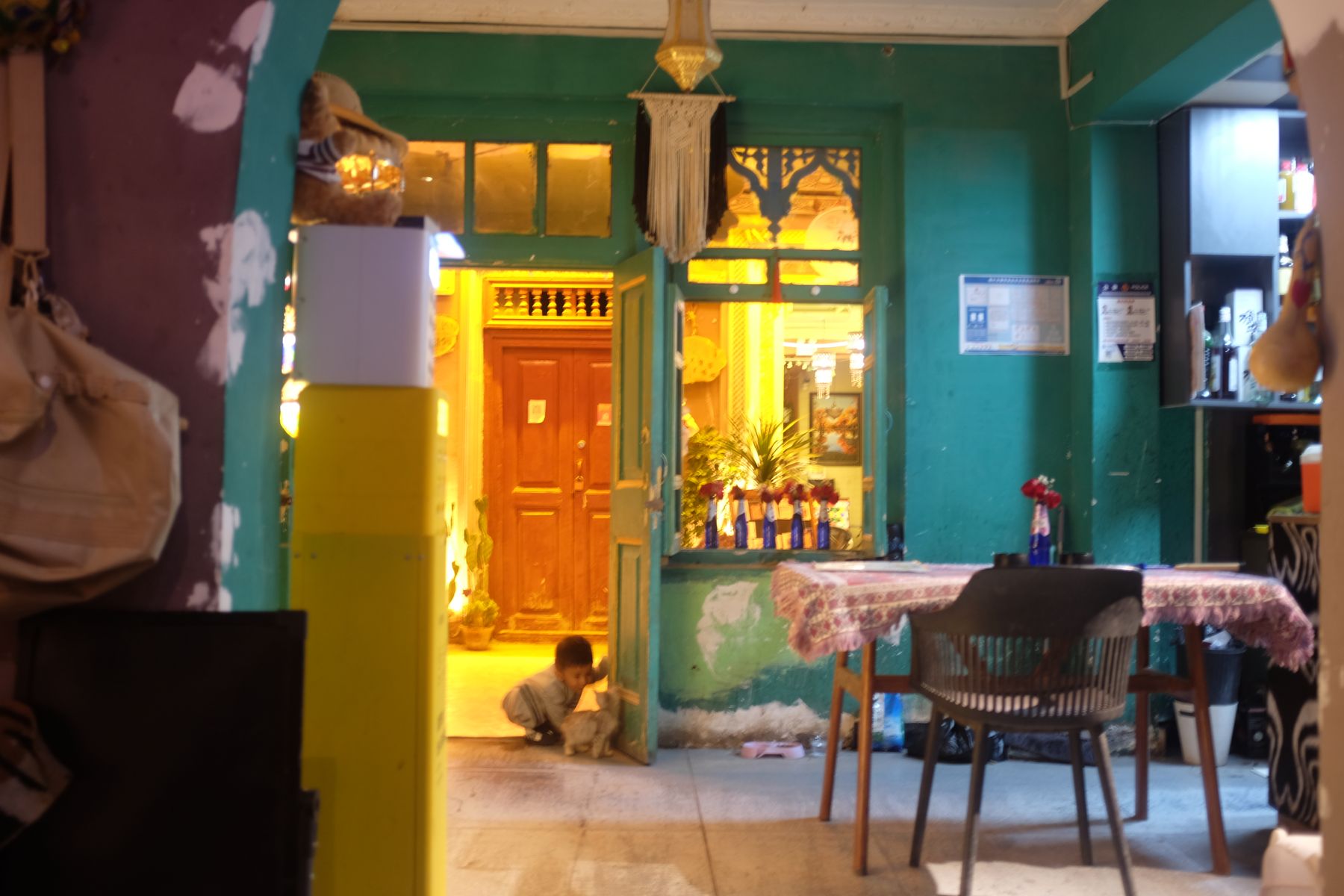
At night, the town has a low buzz to it. The bars begin opening up, as do the tiny cafes tucked into the streets. The lights come on at 21:00, and the youth begin pouring into the streets to try to get aesthetic pictures for their socials. I tuck into a coffee shop that has solicited me in to finish a book. There are some small kittens walking around. There is a cute cat purring quietly on tiger-print, and people that pass and pay them a visit. Okay Disneyfication, I see you, and I don’t hate you.