DAY 2: Kashgar (喀什) > Ao-i-ta-ke Red Rocks (奧依塔克紅山口) > Baisha Lake (布倫庫勒水庫) > Muji Volcanic Spot (木吉火山口, 十八羅漢峰) > Subashi Village (蘇巴什村)
2026-09-15
Stay: Meet-Muztagh (遇見)
I meet my driver out on the main road. Tall, thin and Uyghur with a toothy smile. He looks young and smiles and carries a conversation for a few minutes.
The rest of the journey is occasional comments on sites, and the rest of the time spent on the phone. He is coordinating tourists and cars with his brother for the next round of tourists, and also chatting with family. Every two minutes, he switches the conversation to someone else. And in between those calls he flips through WeChat “Moments” (Instagram story-equivalent in China) and looks at his map. He drives at a steady speed, but wavers around the middle line. It’s not total confidence I have in him, but not total doubt either.
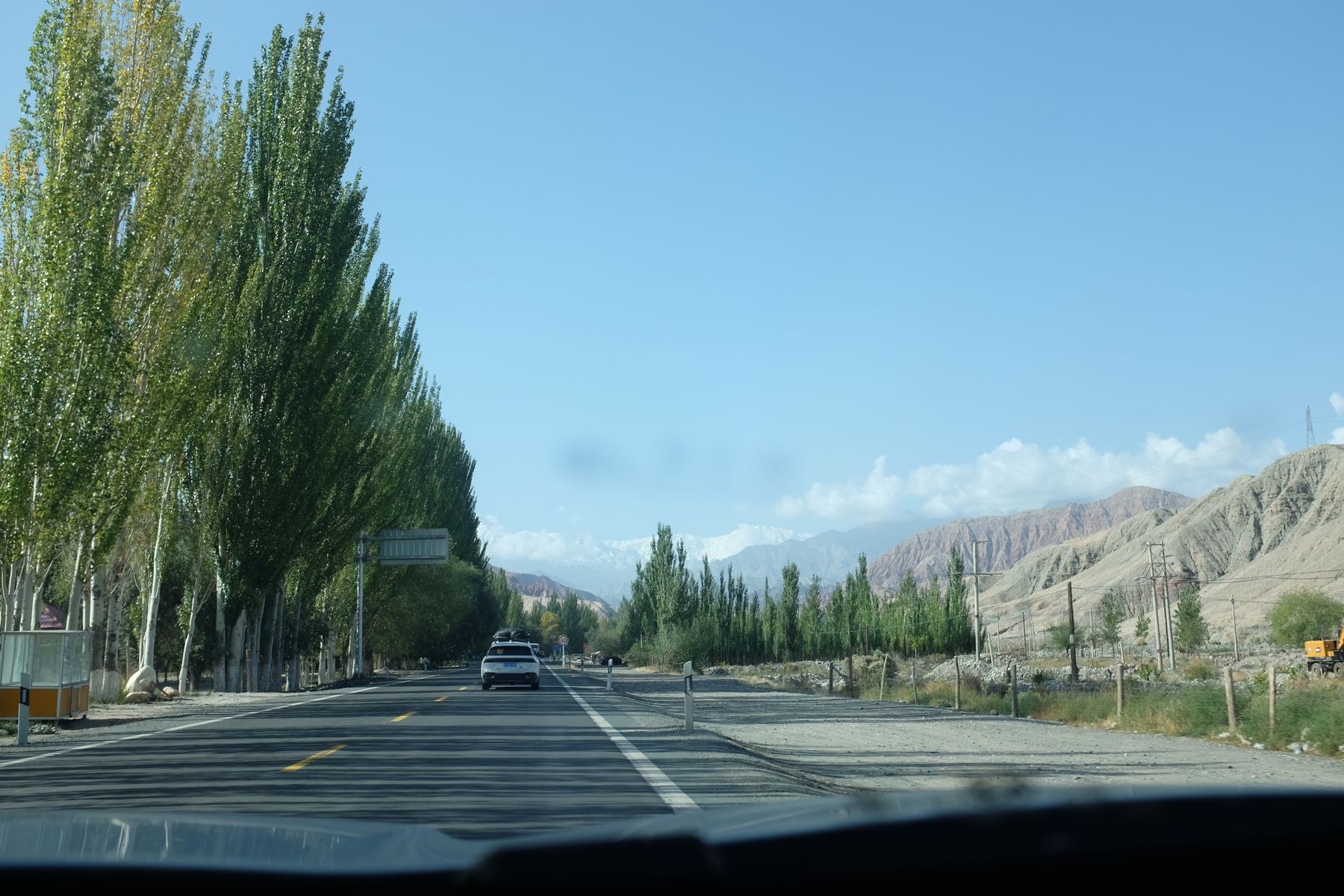
There is one road on the way out lined by trees. While the rest of the place looks browned, the one road south is not. Cars jam as they make their way south to the national park area.
The “borders area”, a heavily regulated zone, requires a checkpoint with many police. The megaphone is put on repeat for drivers to roll down both windows, and prepare their documents. A female Uyghur guard checks my identity and pushes me along quickly.
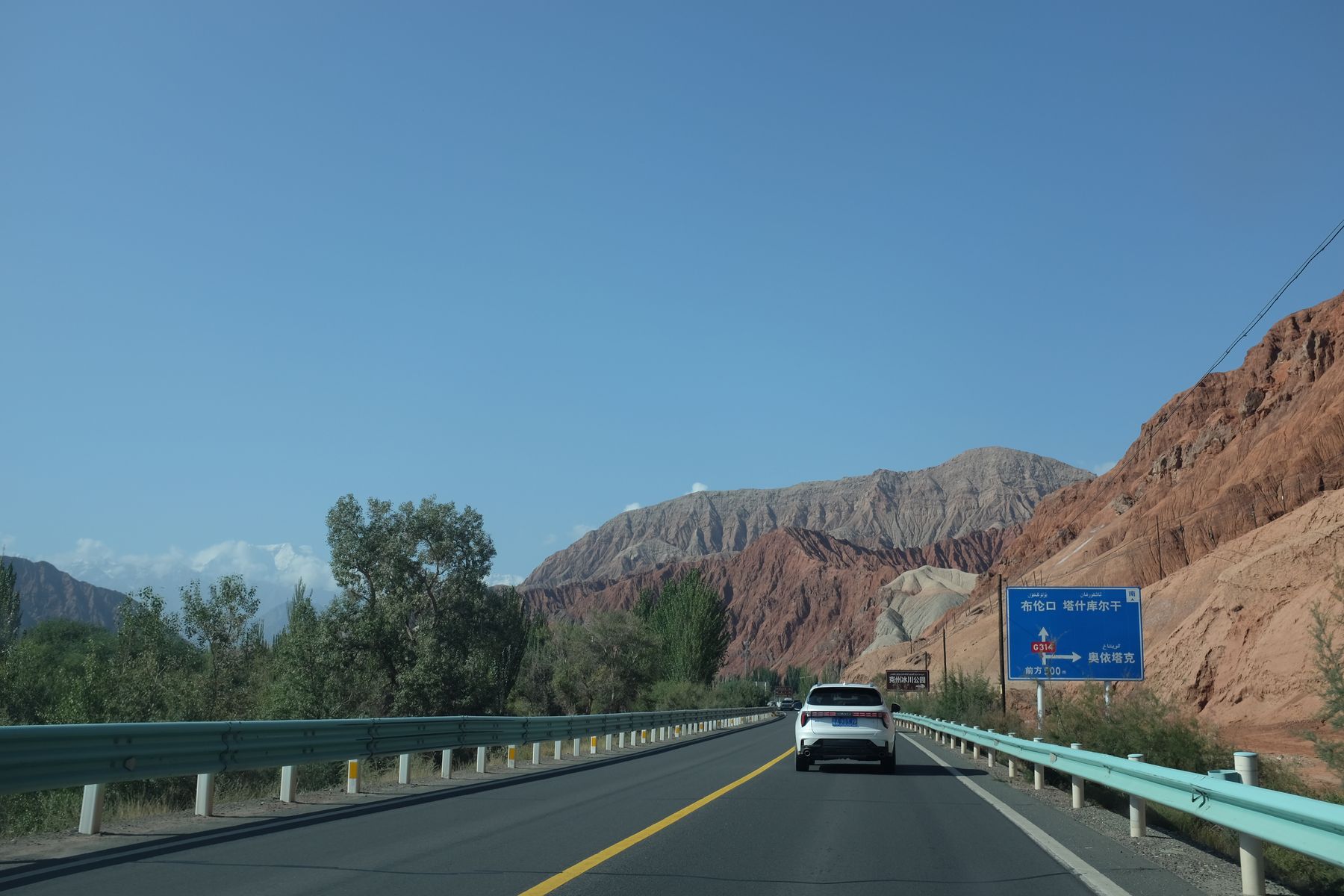
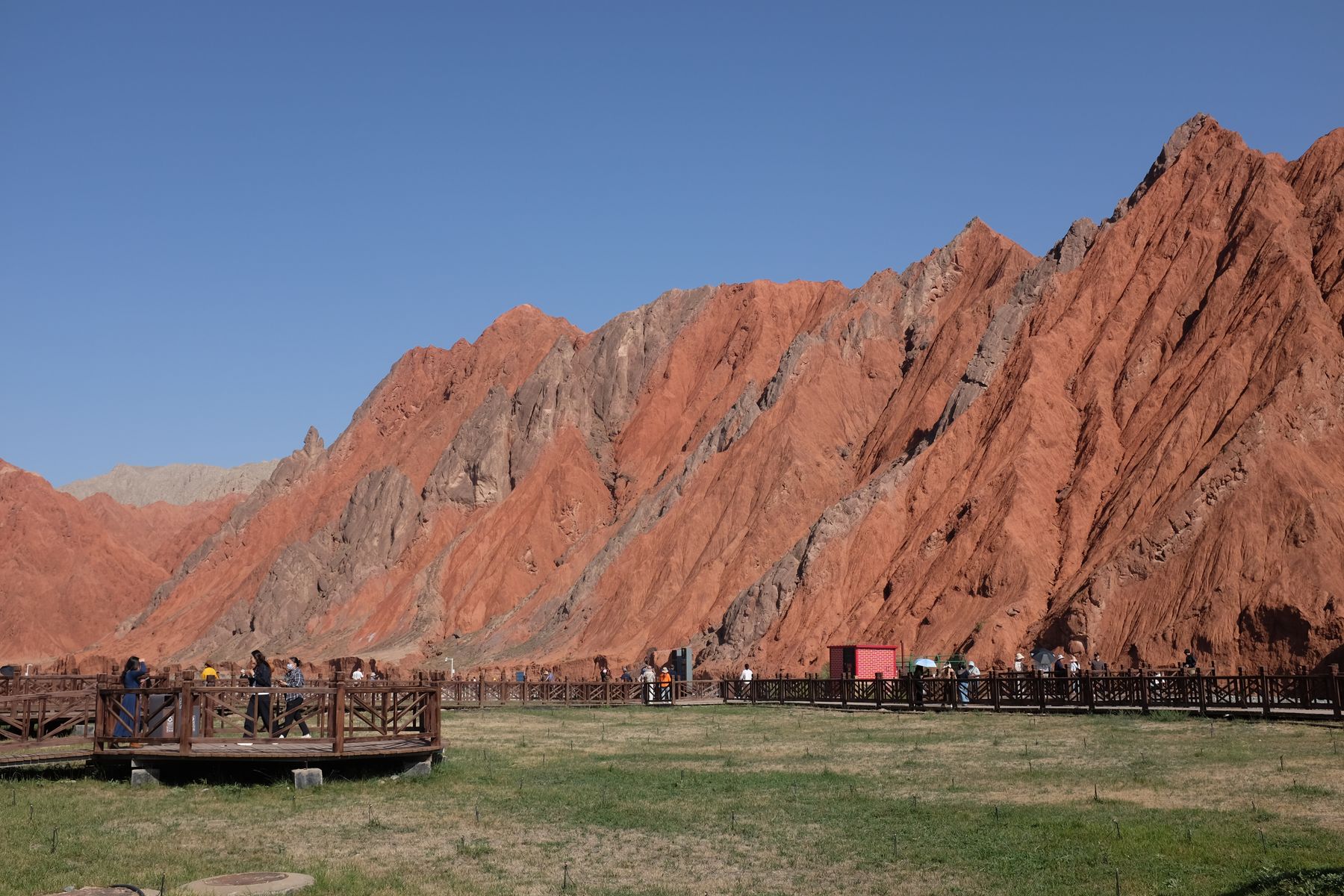
Every moment after that is breathtaking. Massive mountain formations, some snow-capped, and a winding road through it. The last time I saw a summit like this was in 2017 on the way from Amritsar to Ladakh. It is just as breathtaking as the Himalayas in Chandigarh. At the expense of trying to describe everything, here are pictures.
First, from Kashi to the Red Rocks (奧依塔克紅山口)
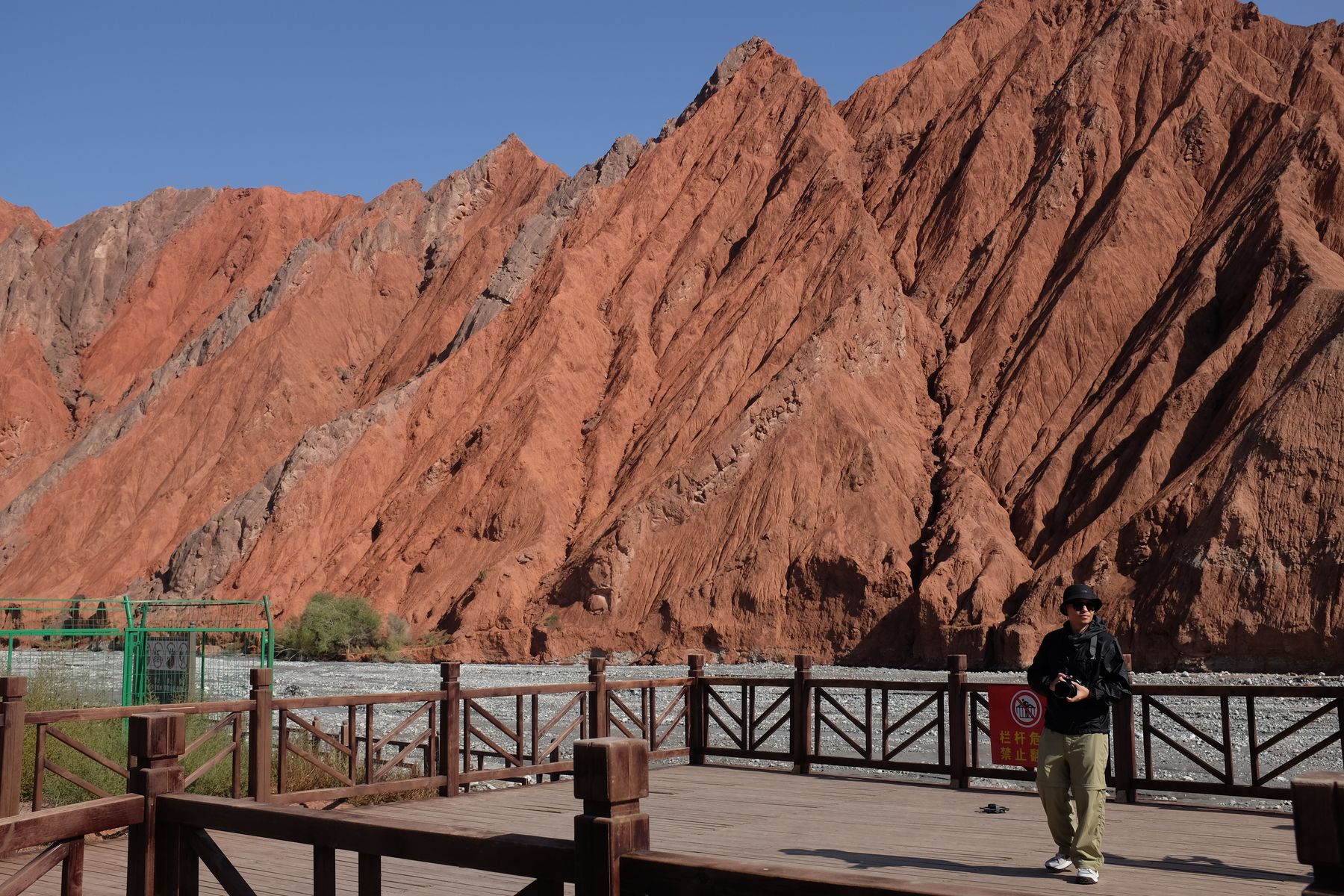
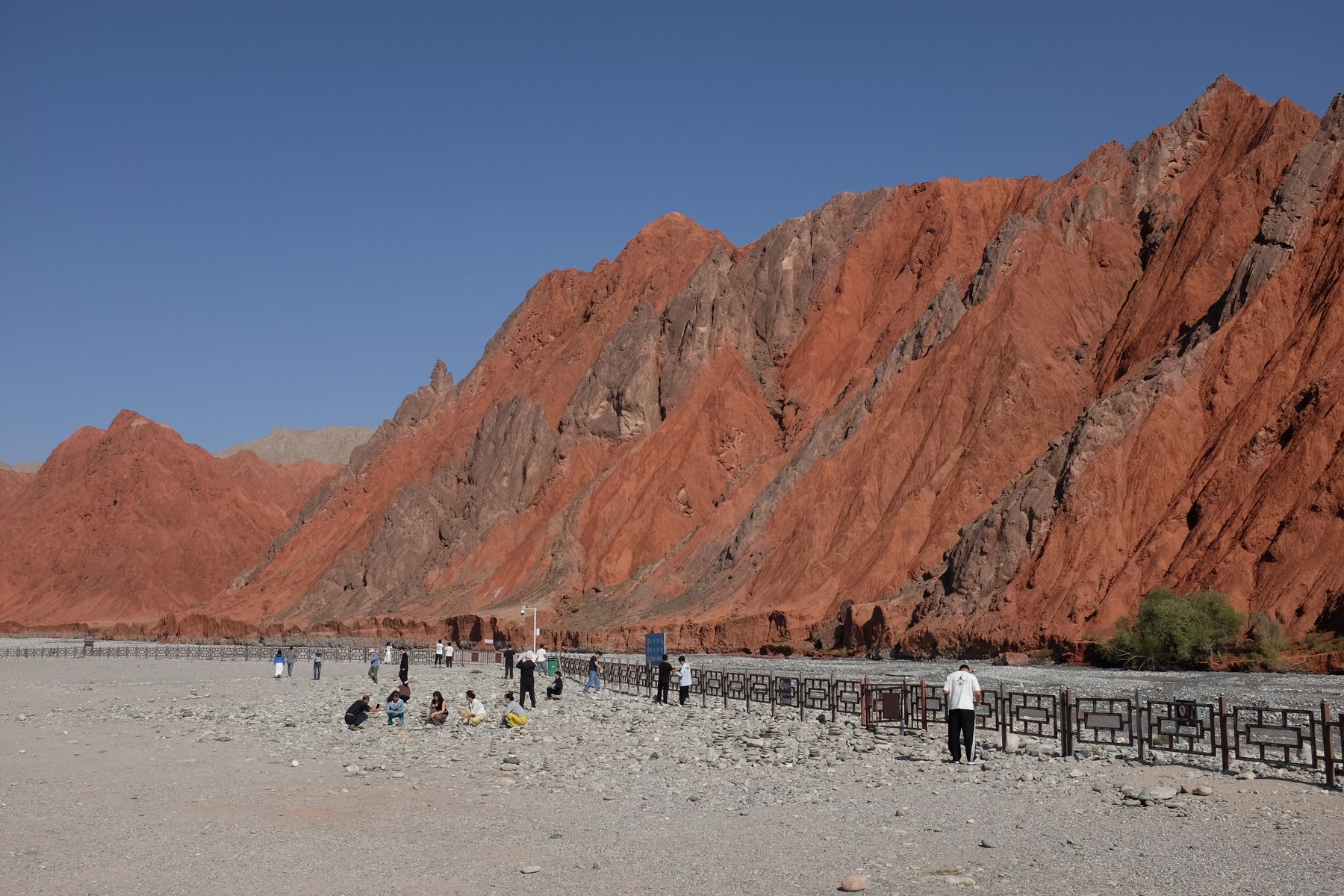
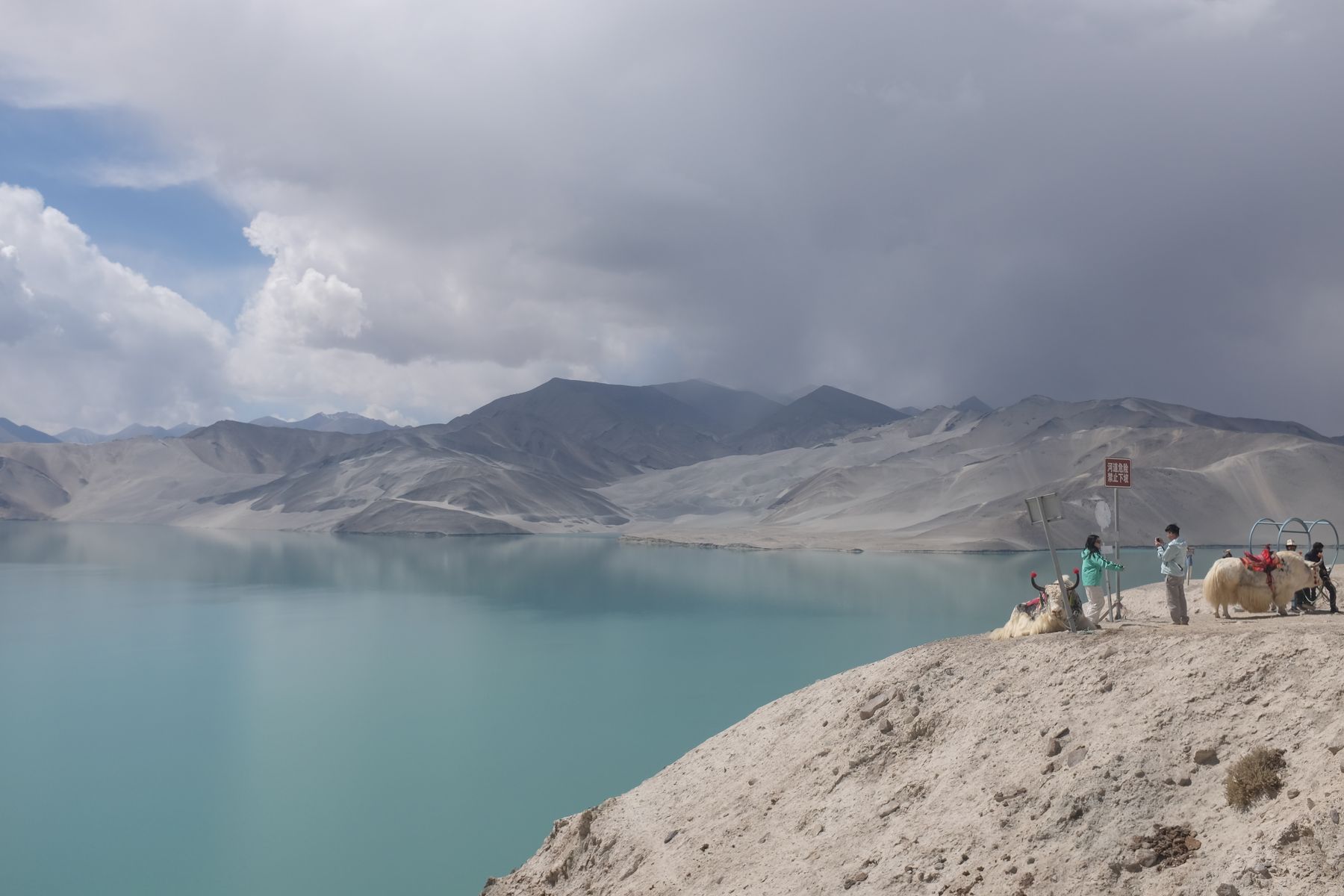
And then from the red rocks to Baisha Lake (布倫庫勒水庫).
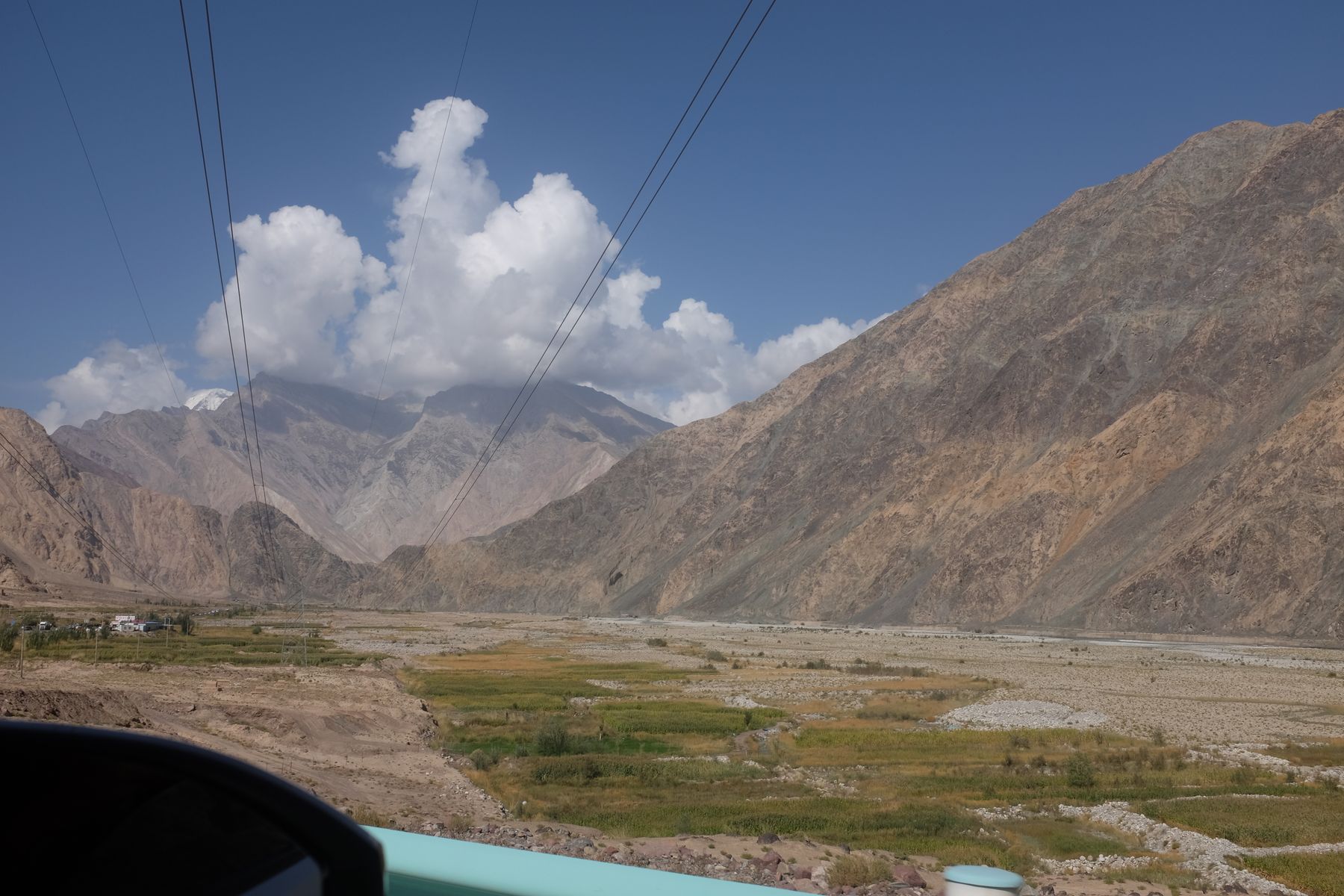
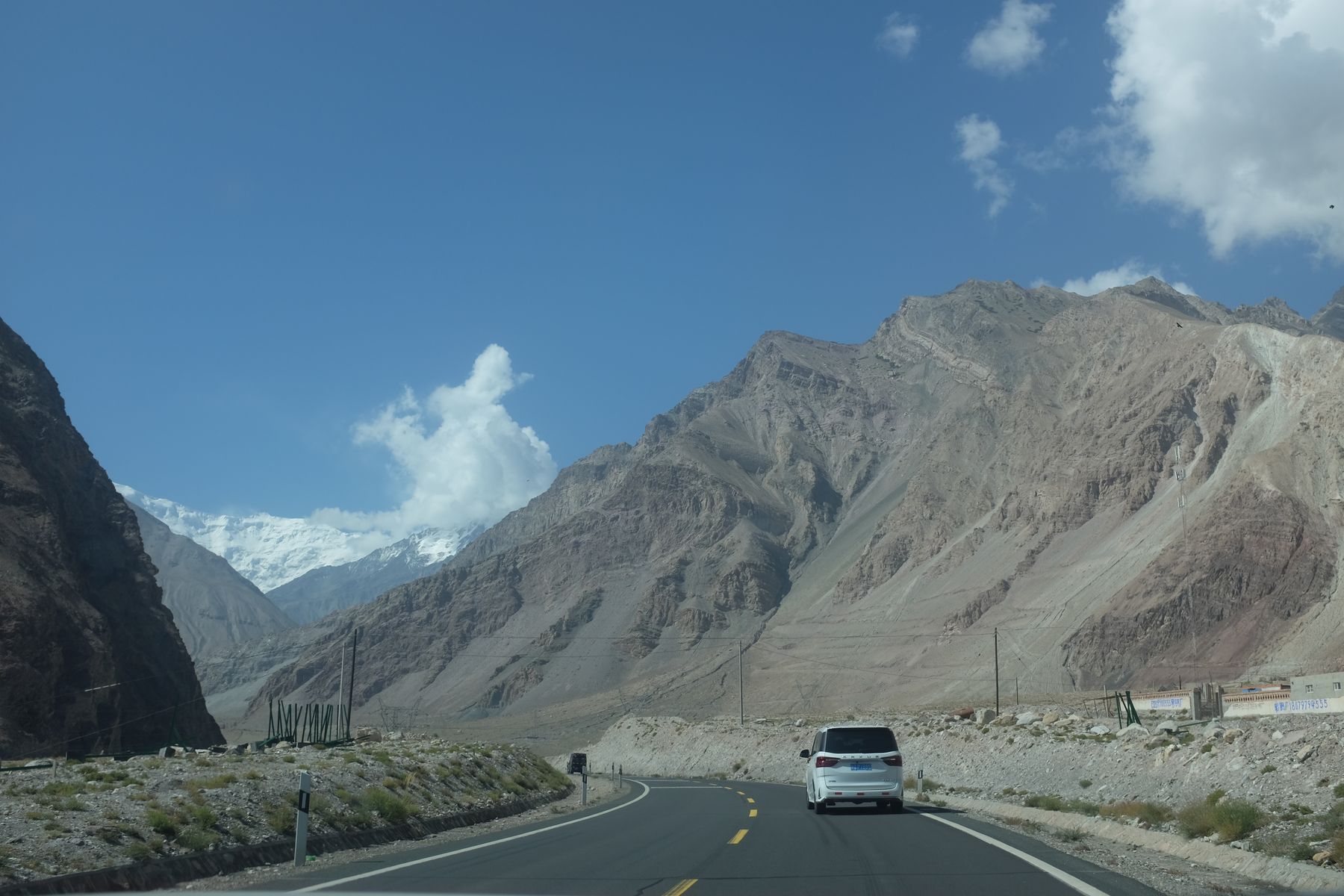
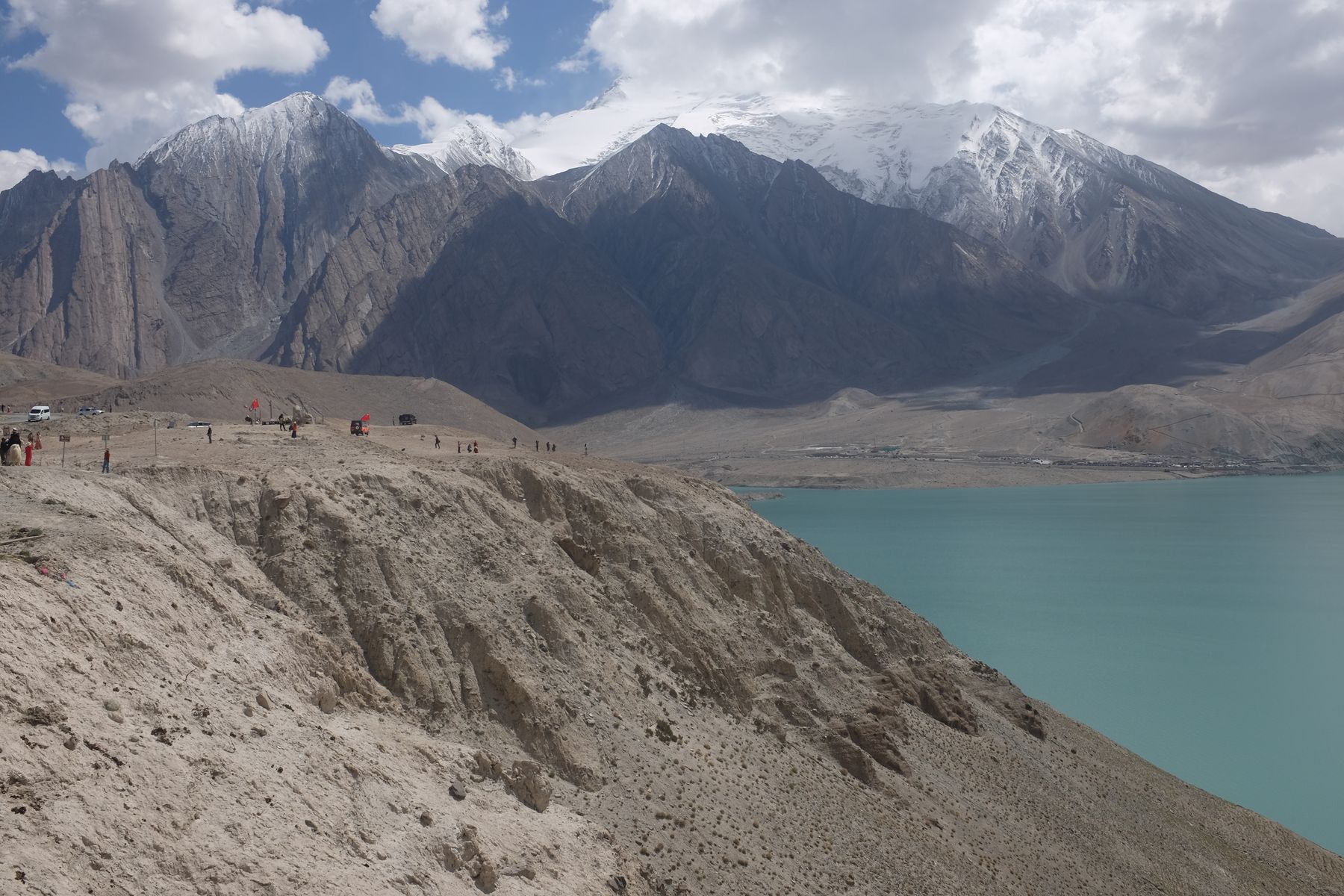
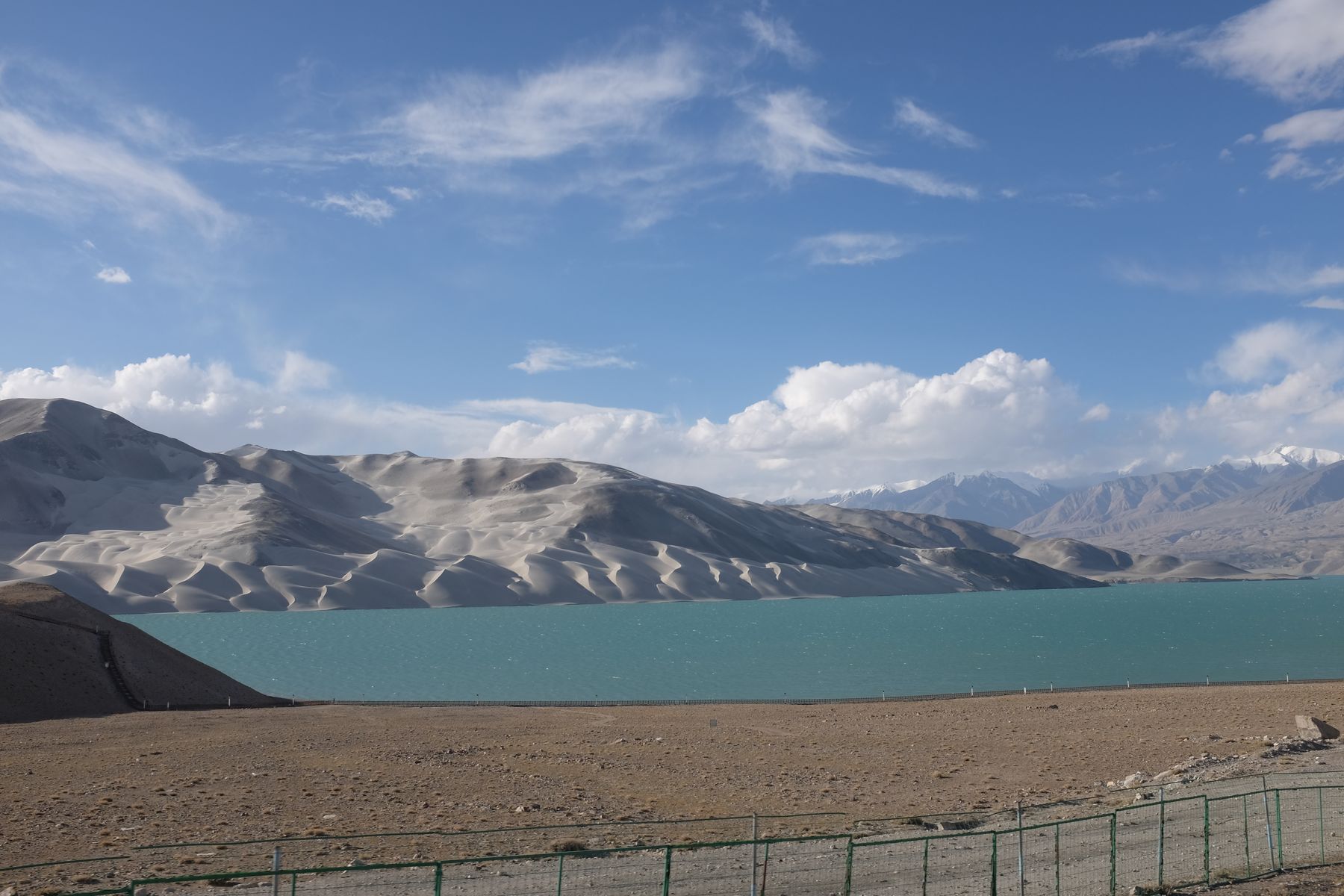
The Chinese love a gimmick at a site, since it brings business, and so there are gimmicks of yak-photo taking, posing with Chinese flags on jeeps, and “love seats” for couples to take pictures. Still, the lake in front contrasted with the peaks behind is stunning and needs no gimmick. Well, insofar as the lake is actually a reservoir, but it still makes for a stunning view.
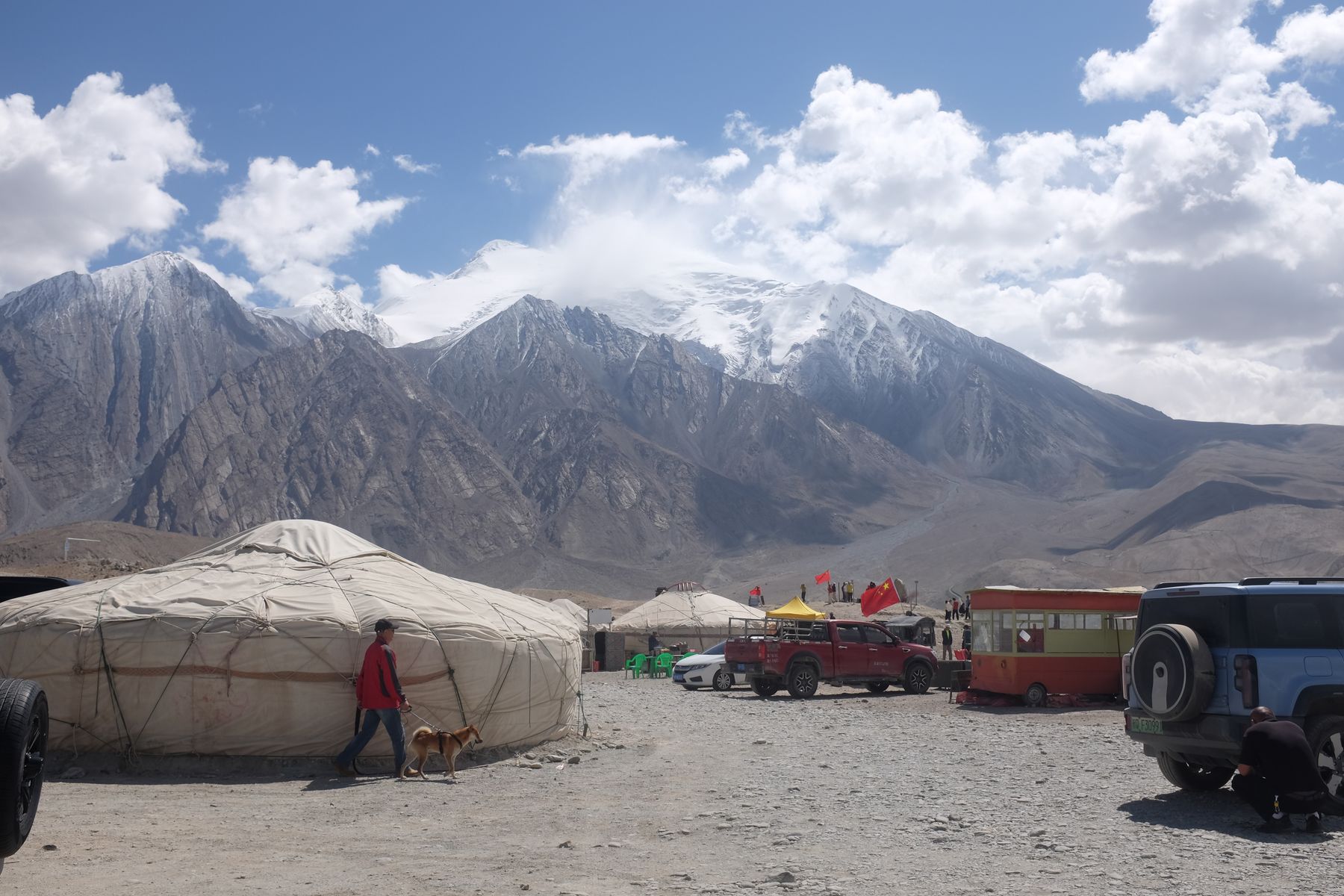
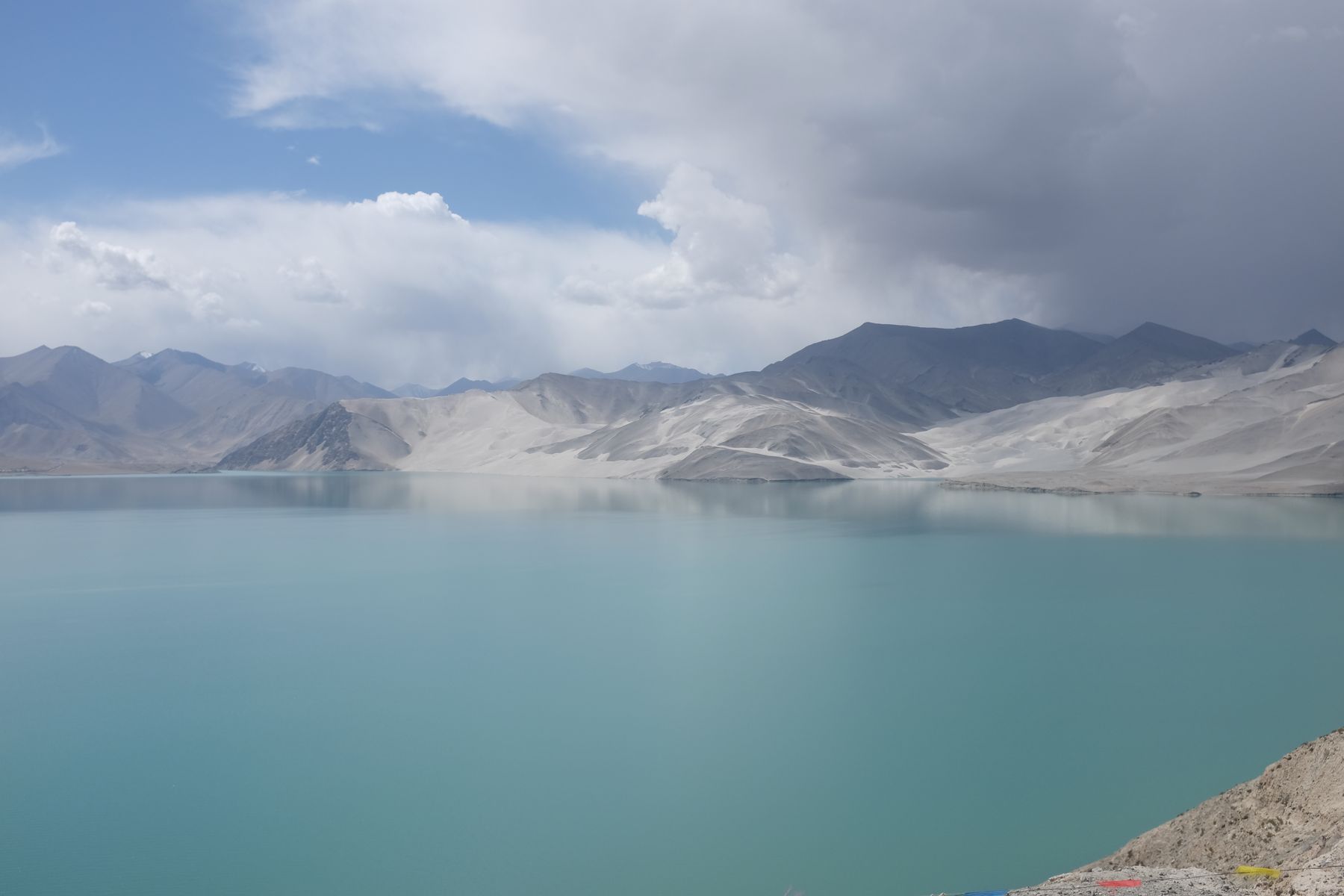
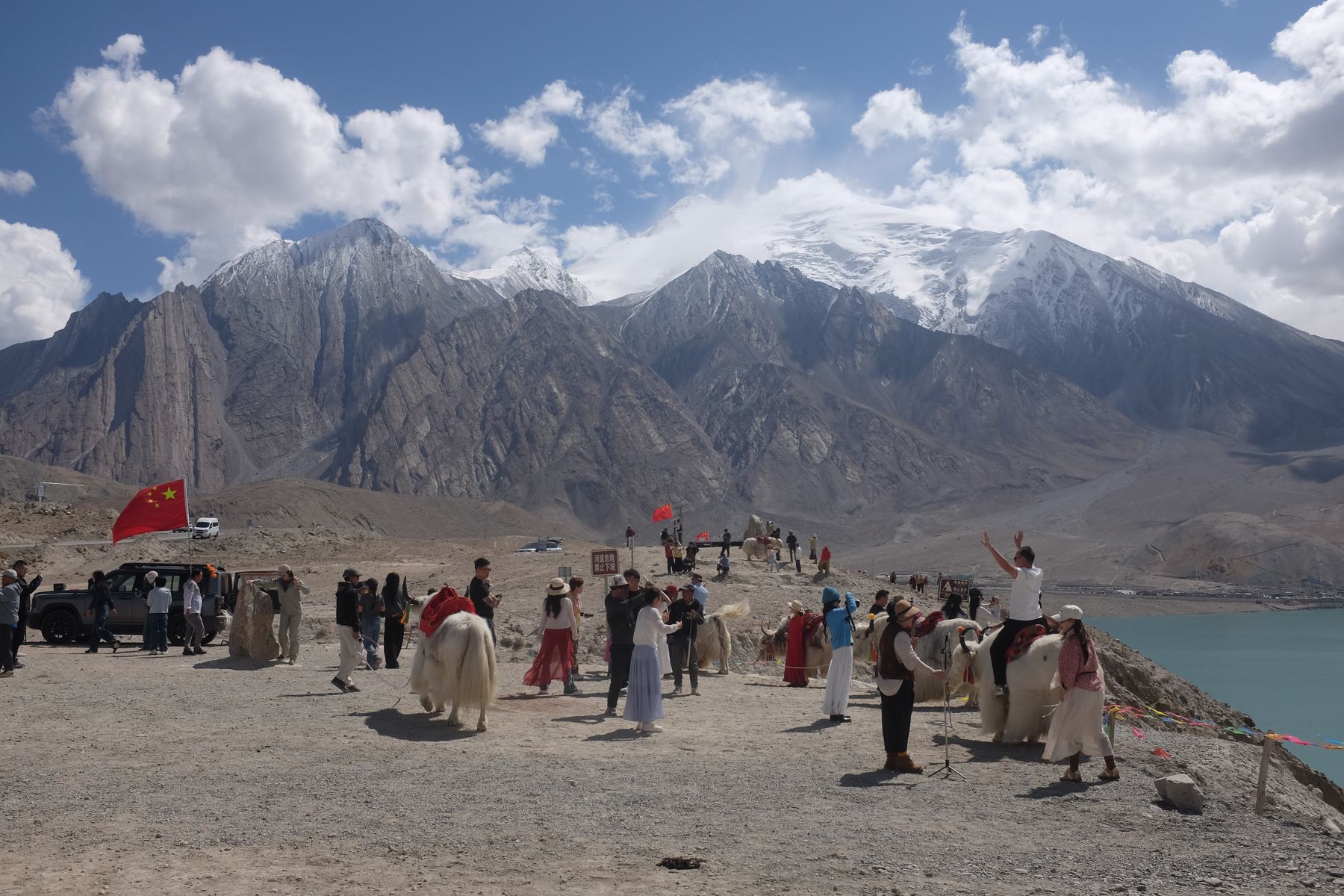
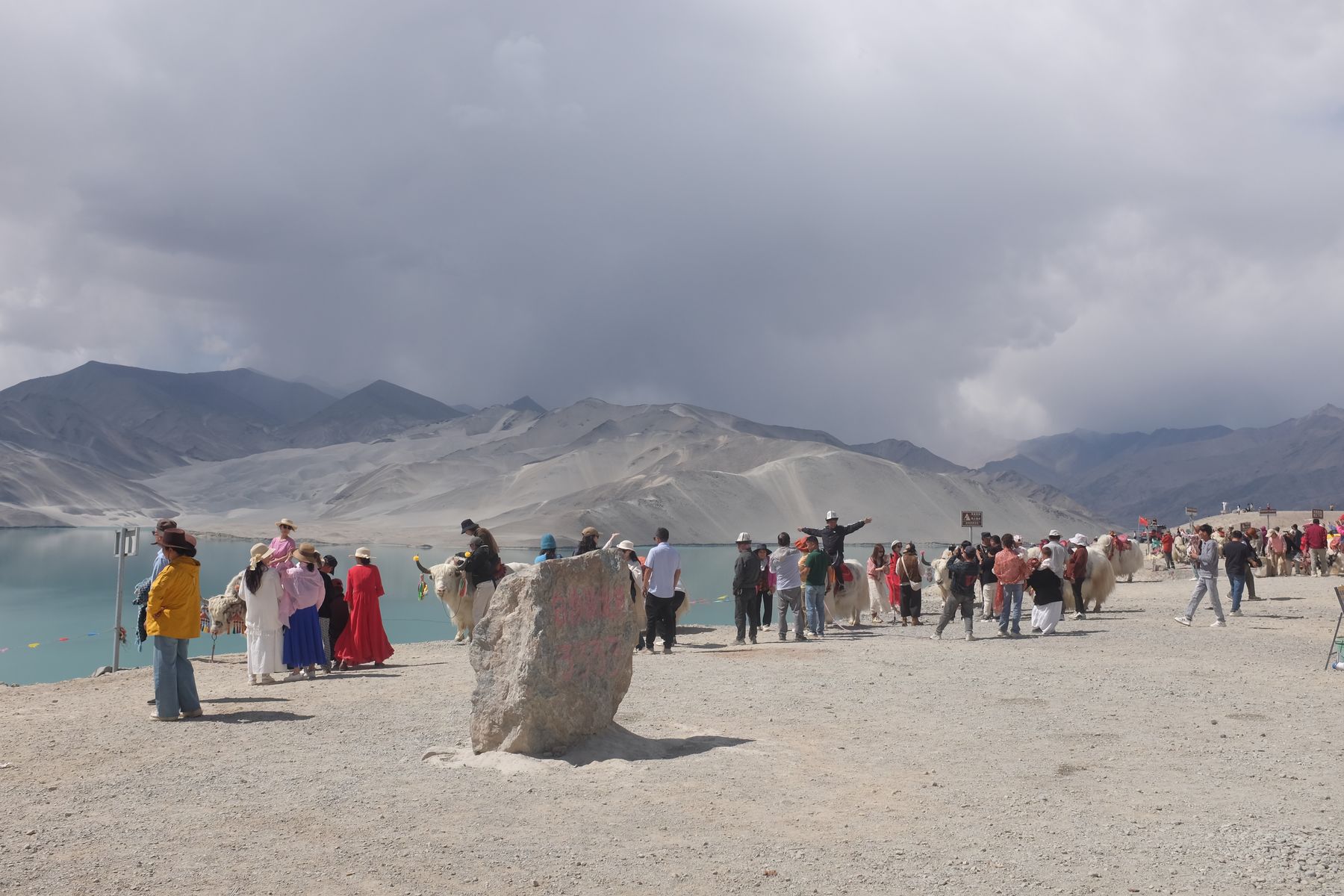
But taking a look around, and “behind” yourself if you look at the lake, you’ll see that the surroundings are stunning.
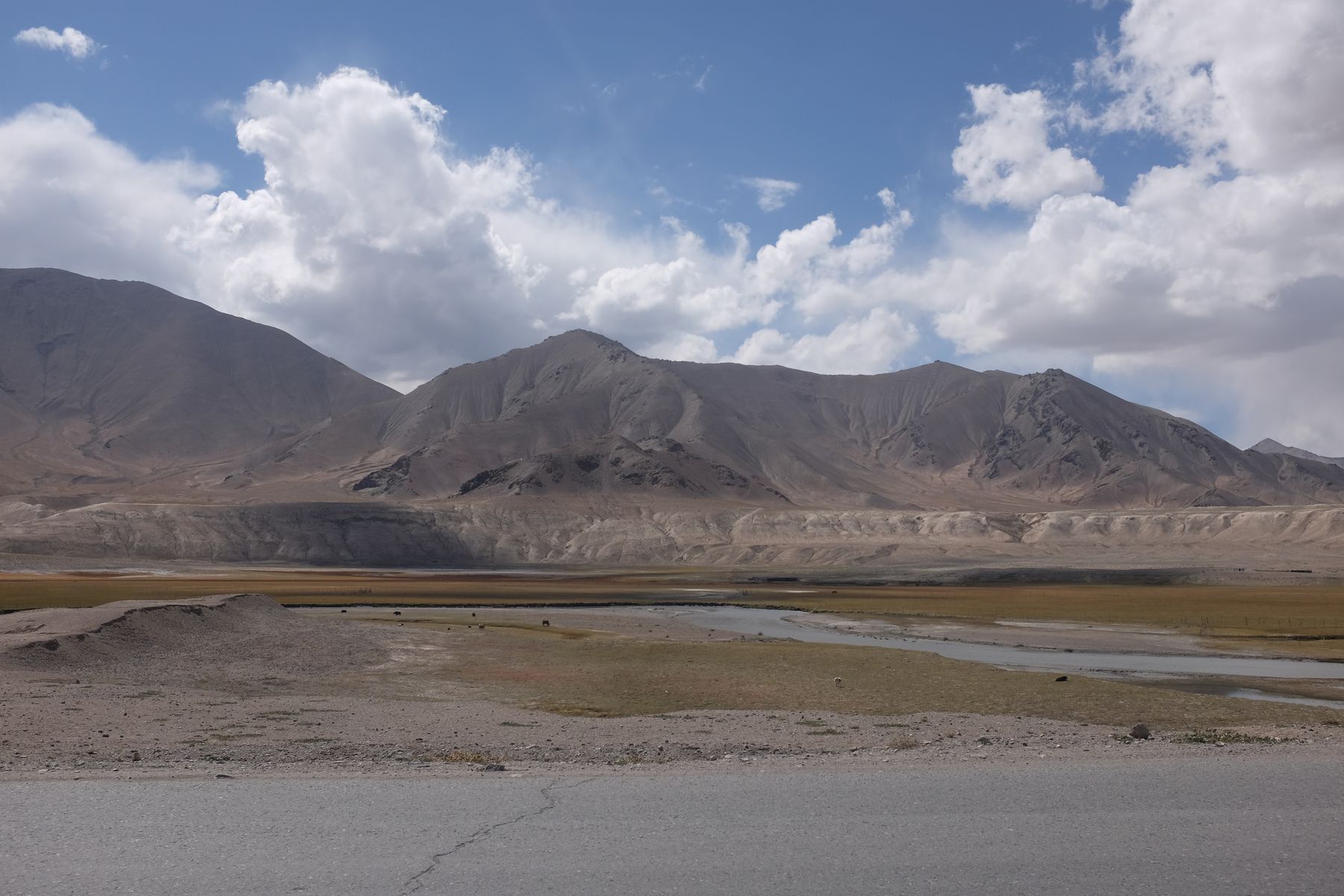
From Baisha Lake onwards towards Muji Volcano (木吉火山口) entrance, you pass by a long, winding plain with rivers cutting through. The sun hits it perfectly, and shepherds are herding their various cattle and yak through the riverbed plain.
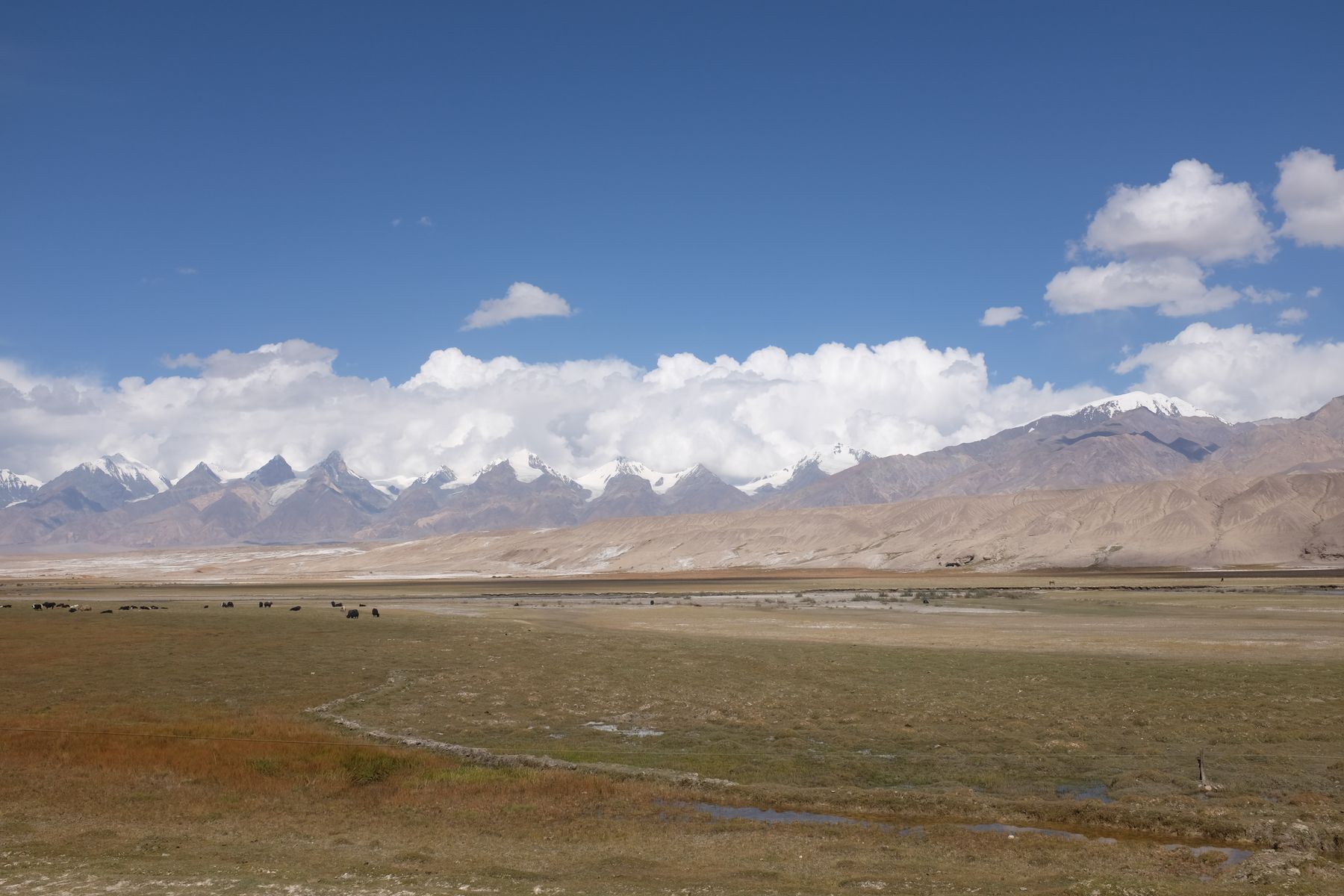
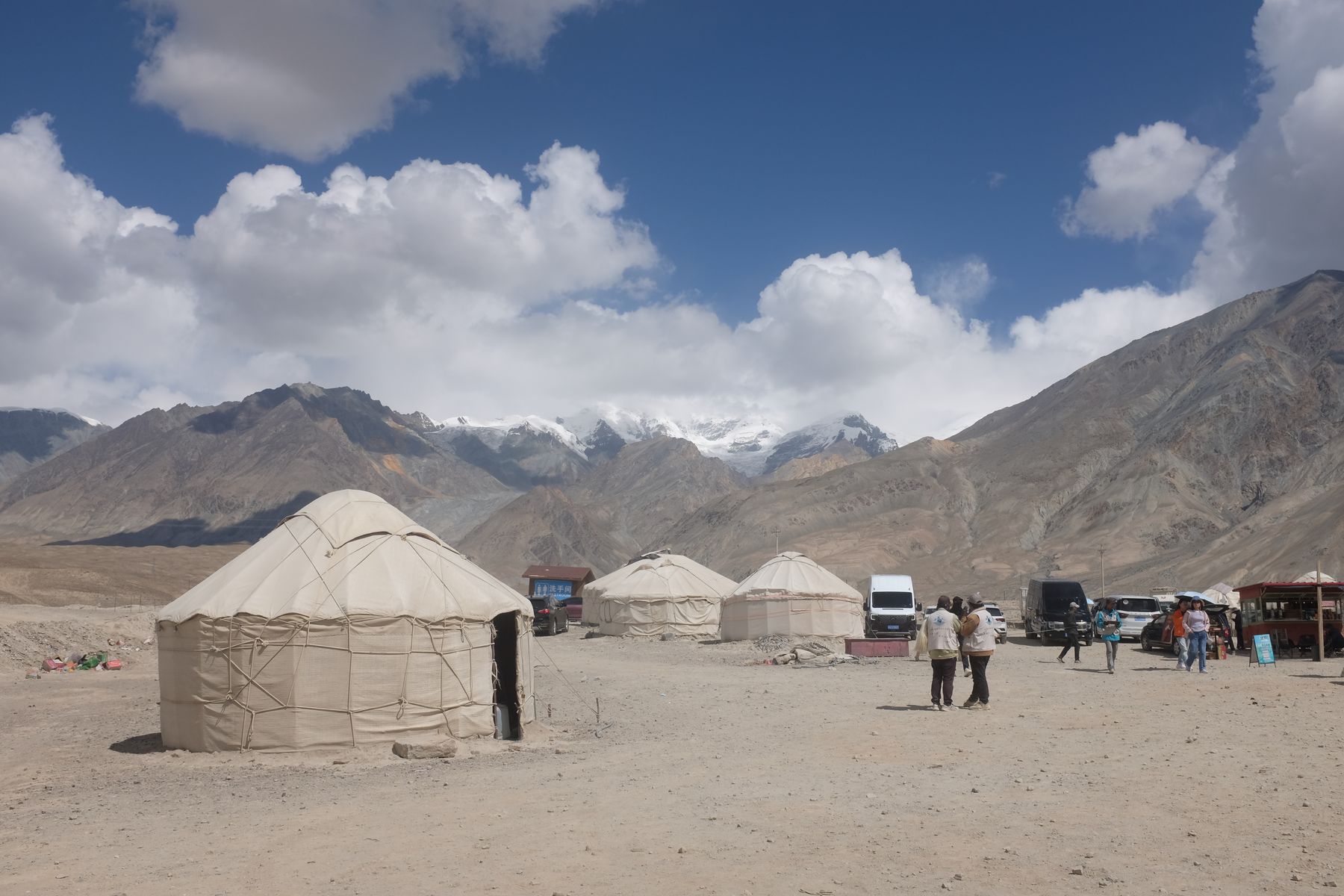
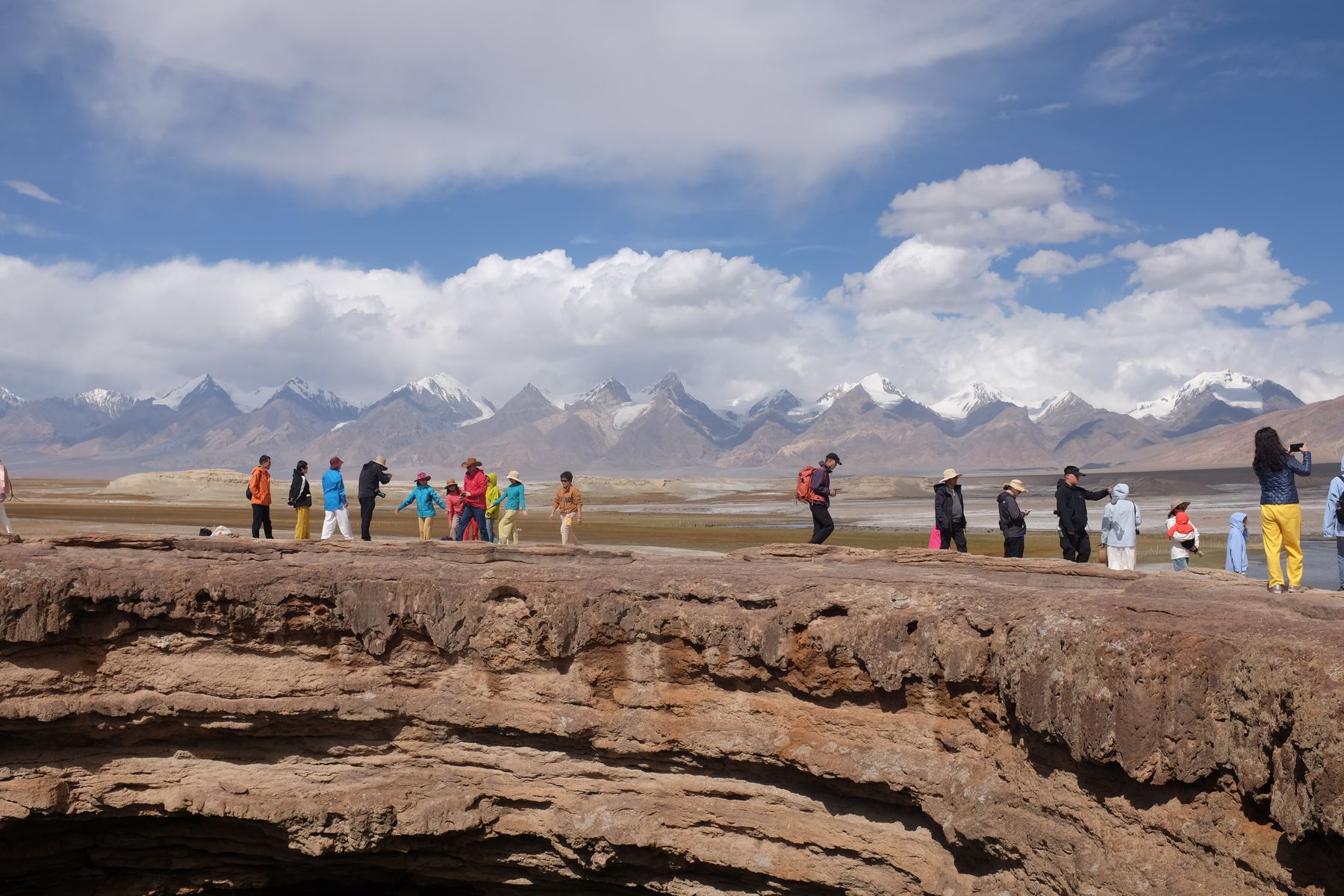
I arrive to Muji Volcano Park, which is a small volcanic geyser hole – underwhelming. But the area gives a view of the 18 summits – very worth it. As soon as the shuttle takes me to the man-made designated tourist walkway, some local men come sell a horse ride through the valley and across the river. Another gimmick, kind of. But from the walkway looking out to the Summits, there are the expansive plains from earlier, and some local men riding horses freely.
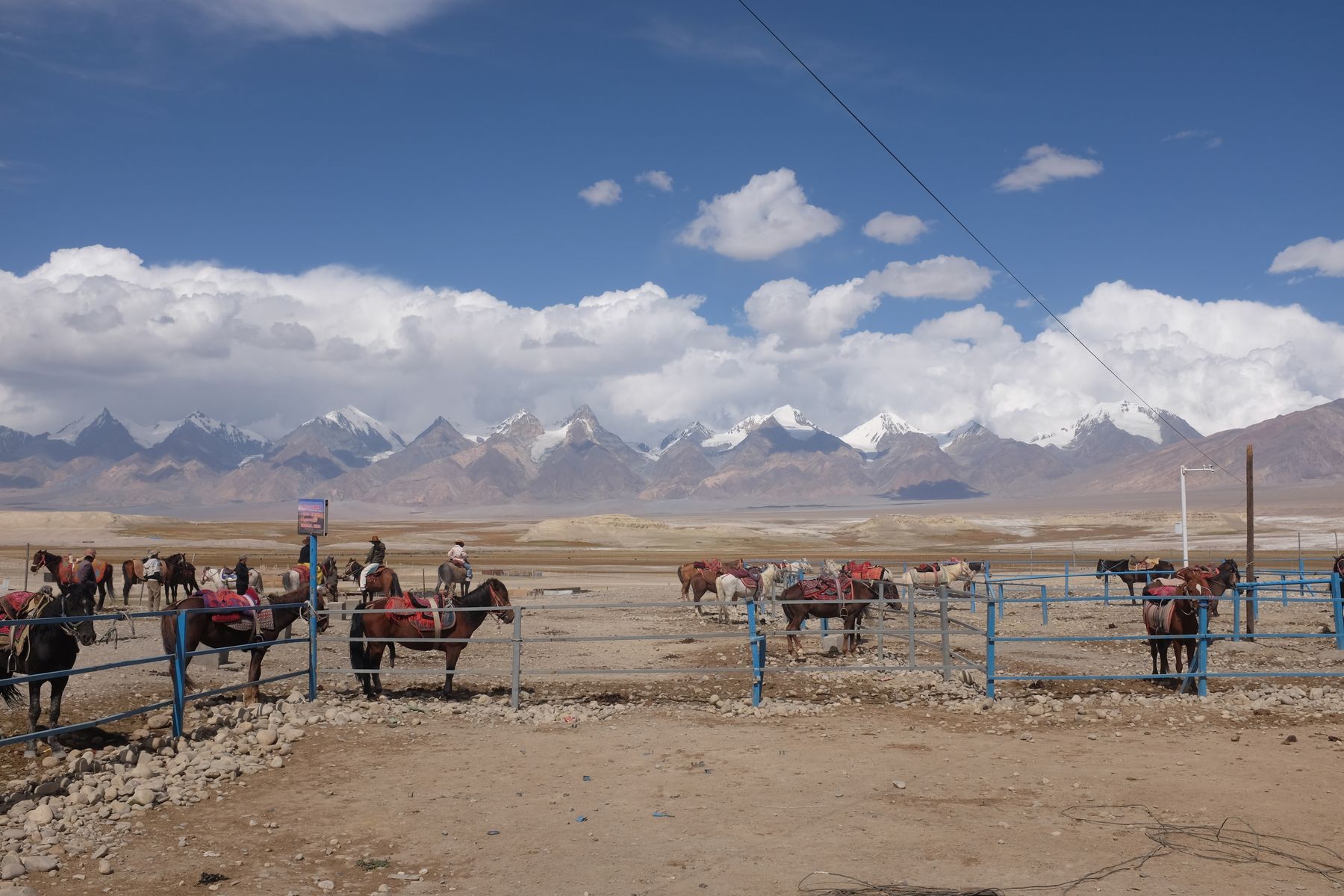
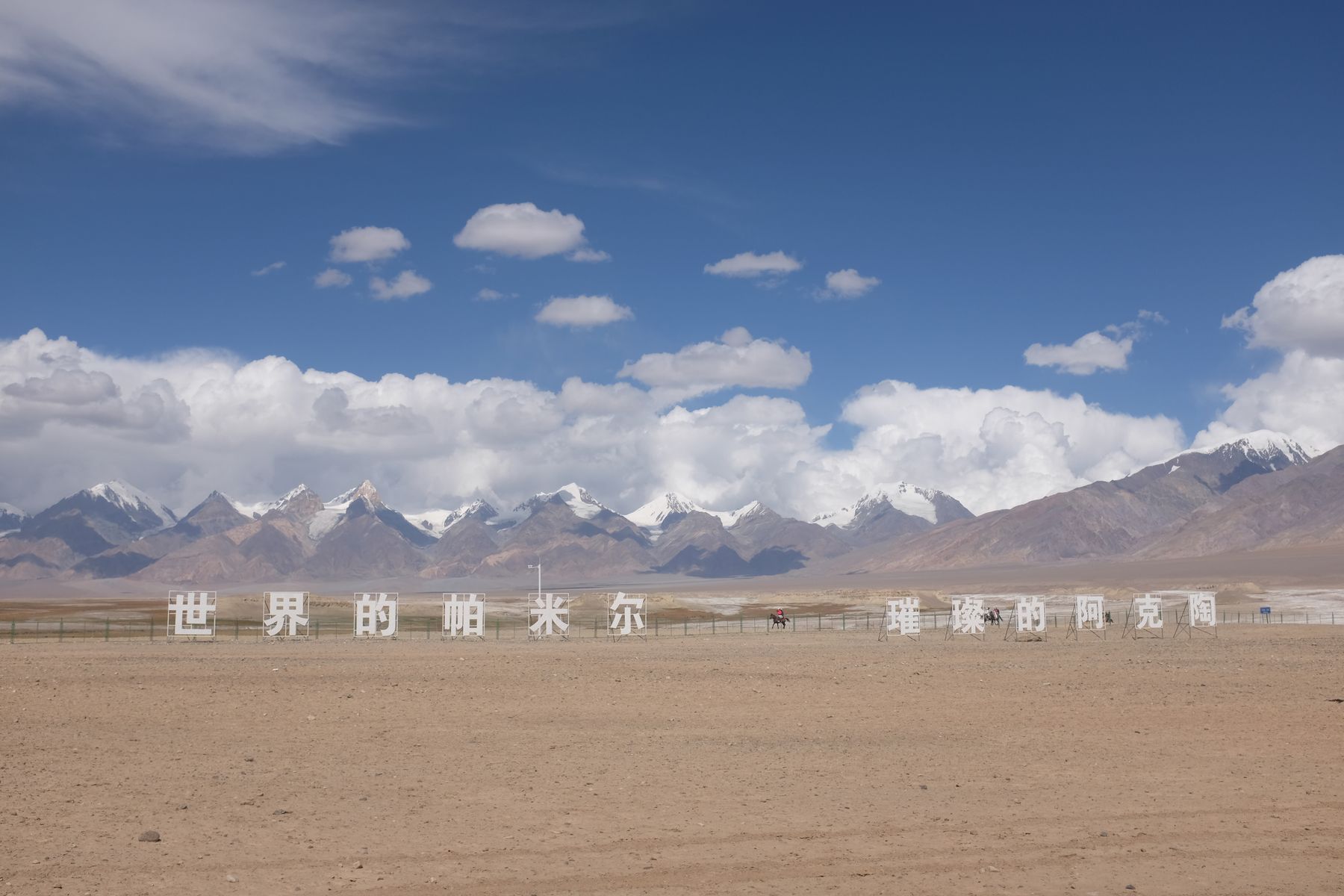
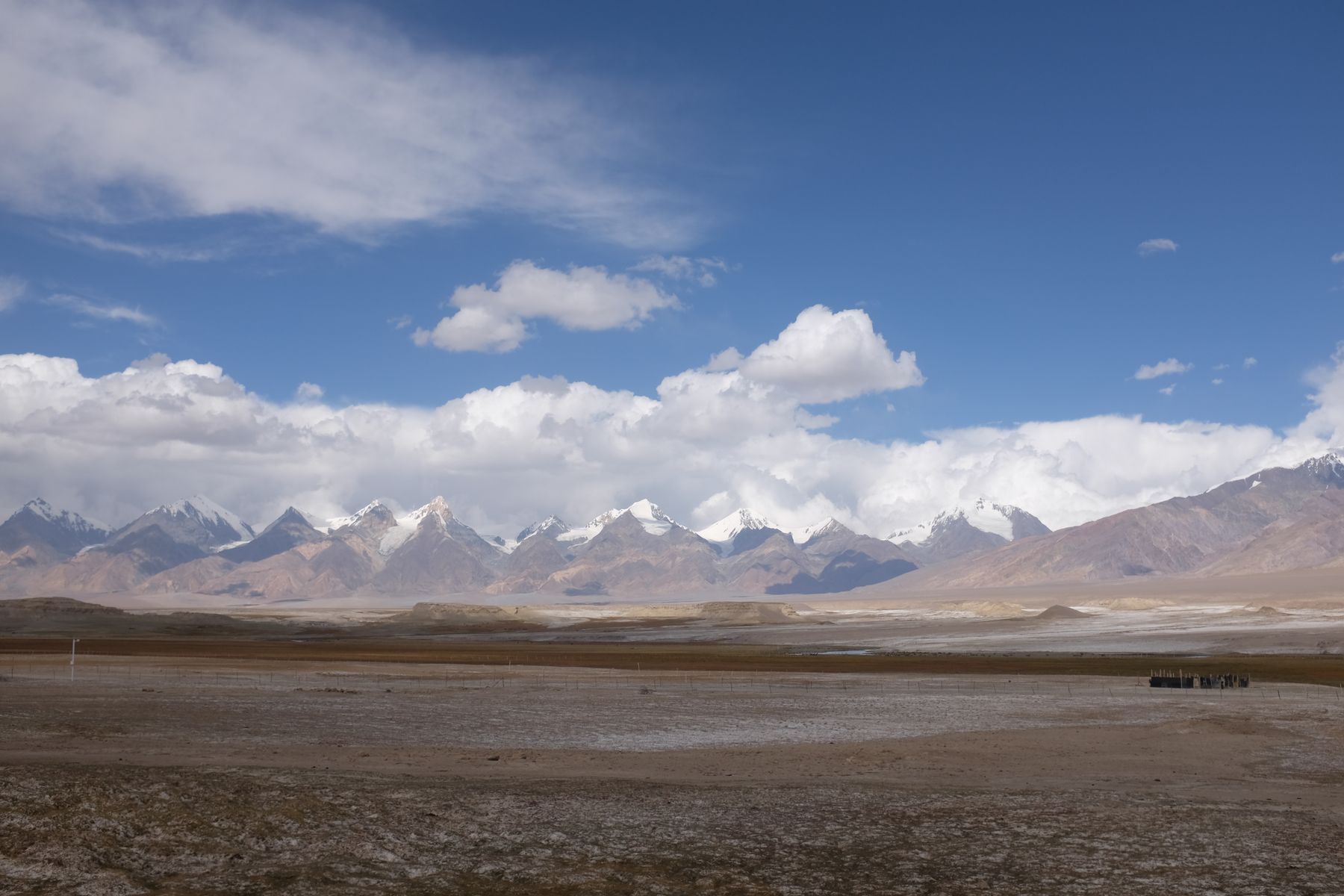
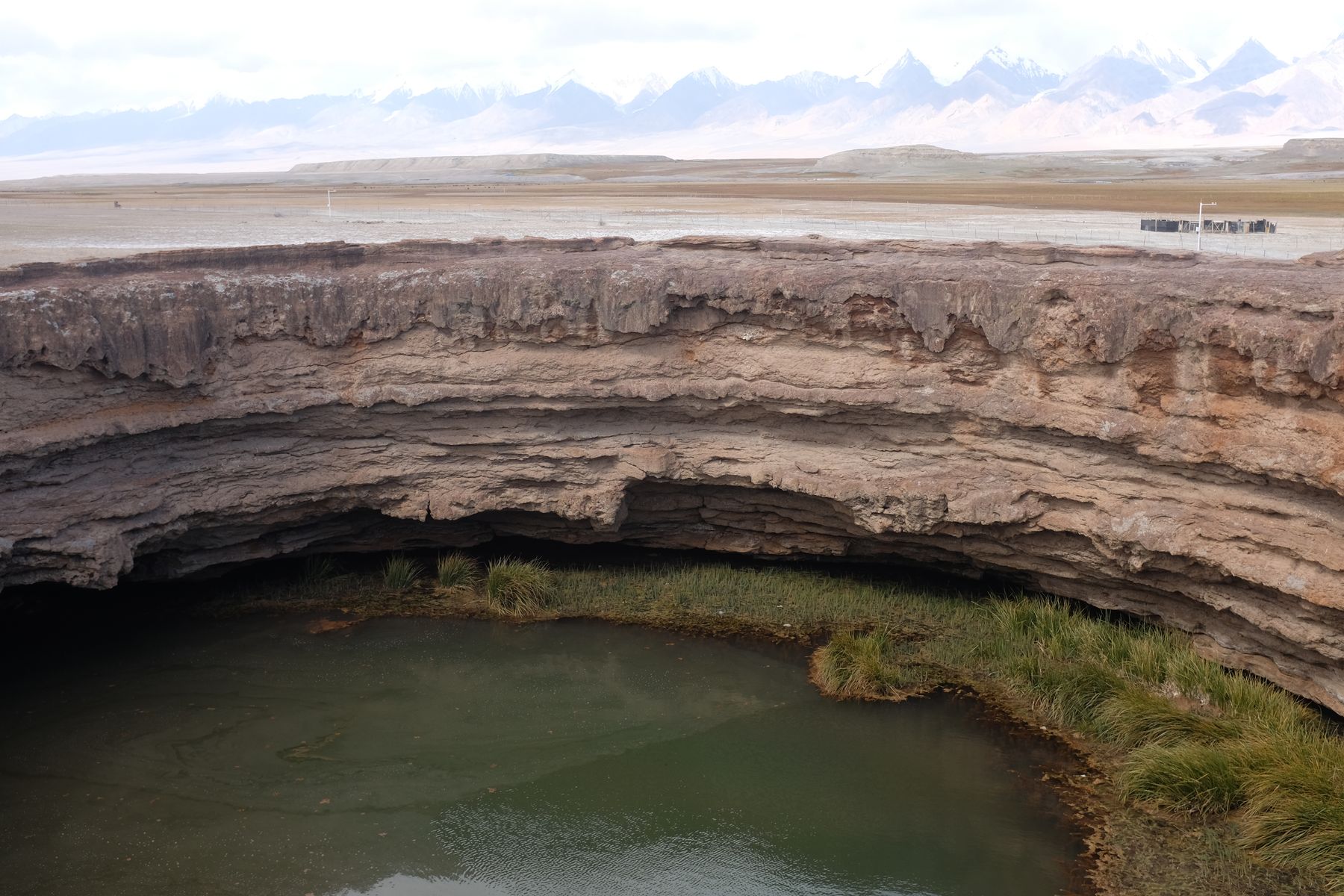
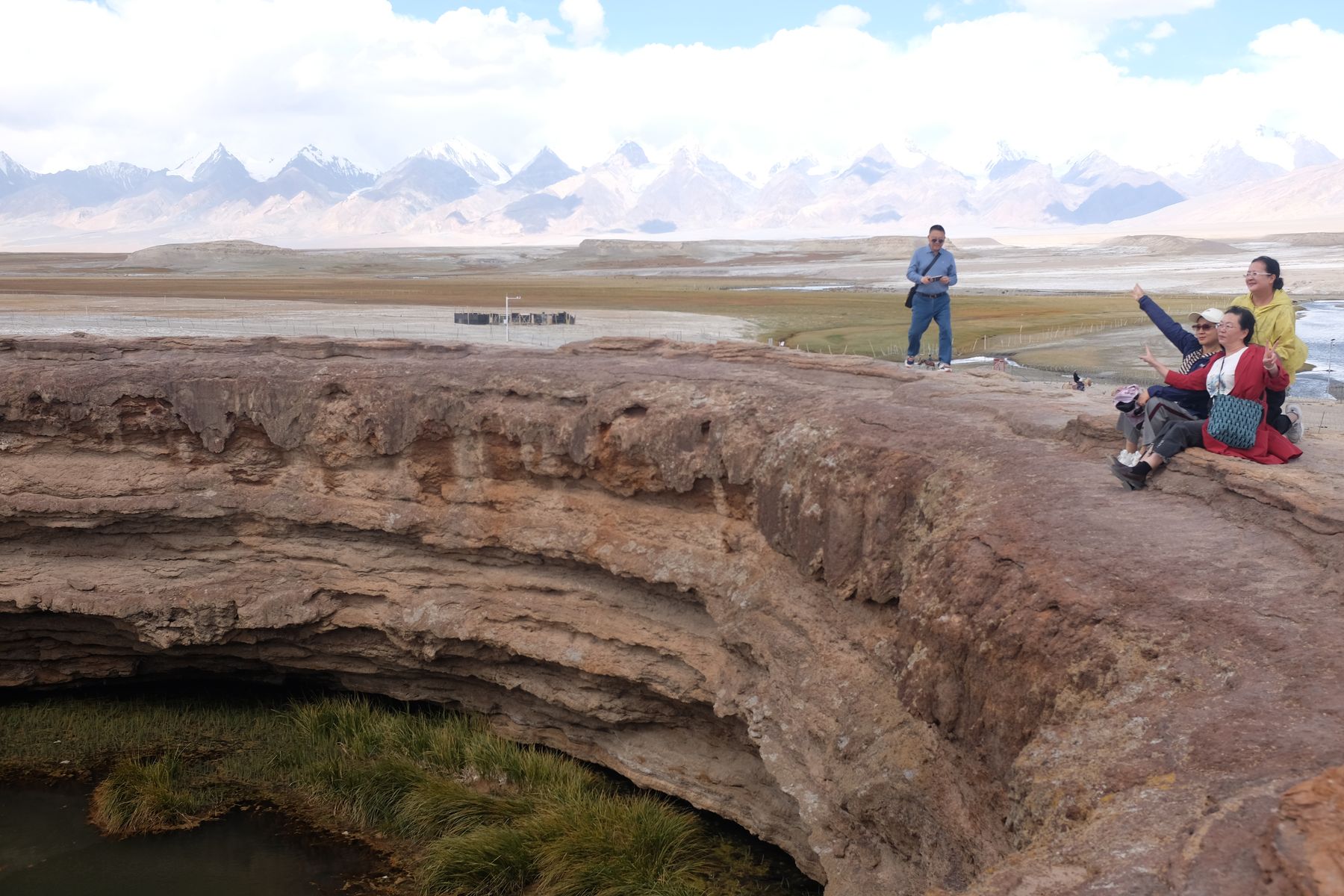
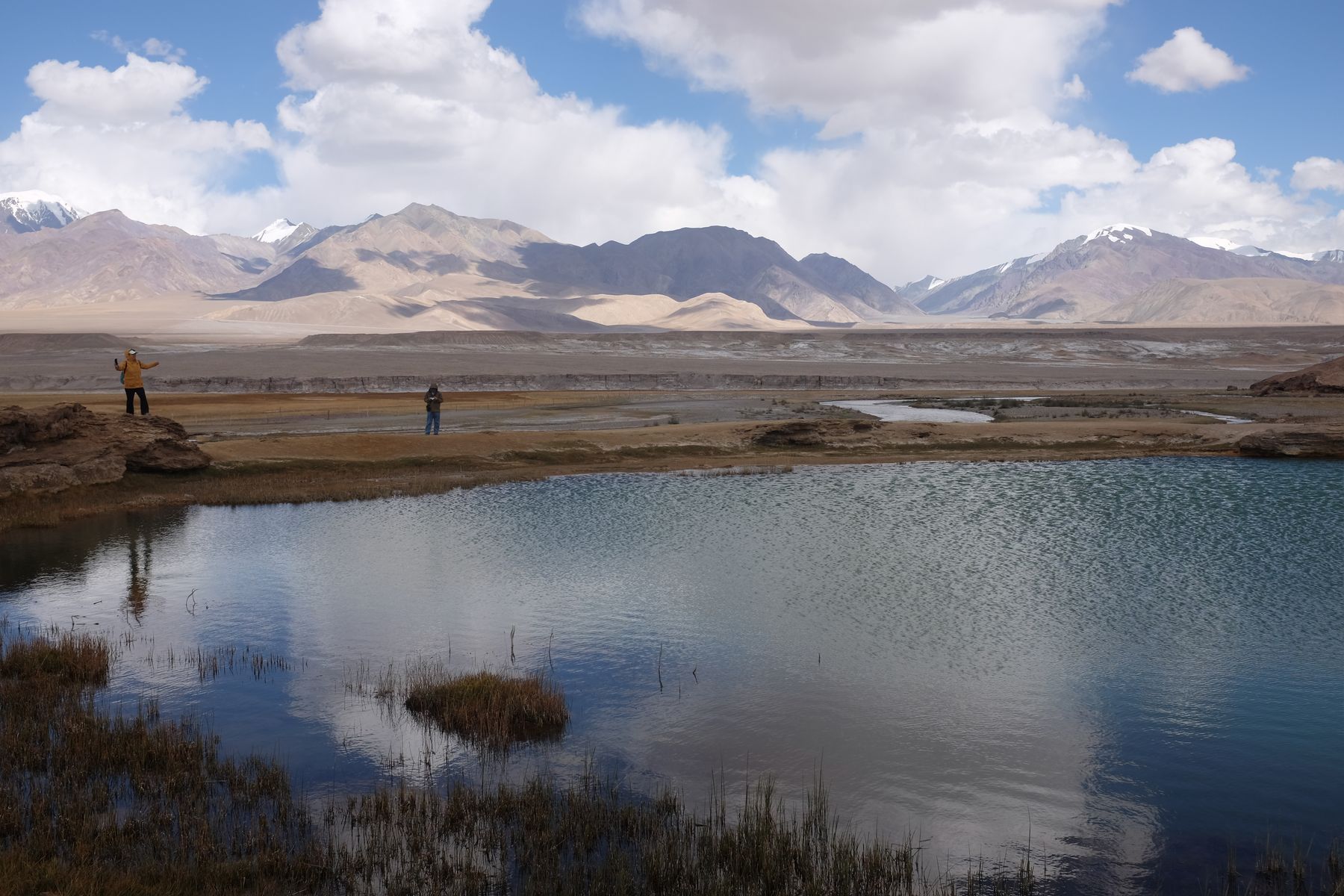
The tourists gather at the mouth of the volcano which is a shallow pit, and I take some pictures of them instead.
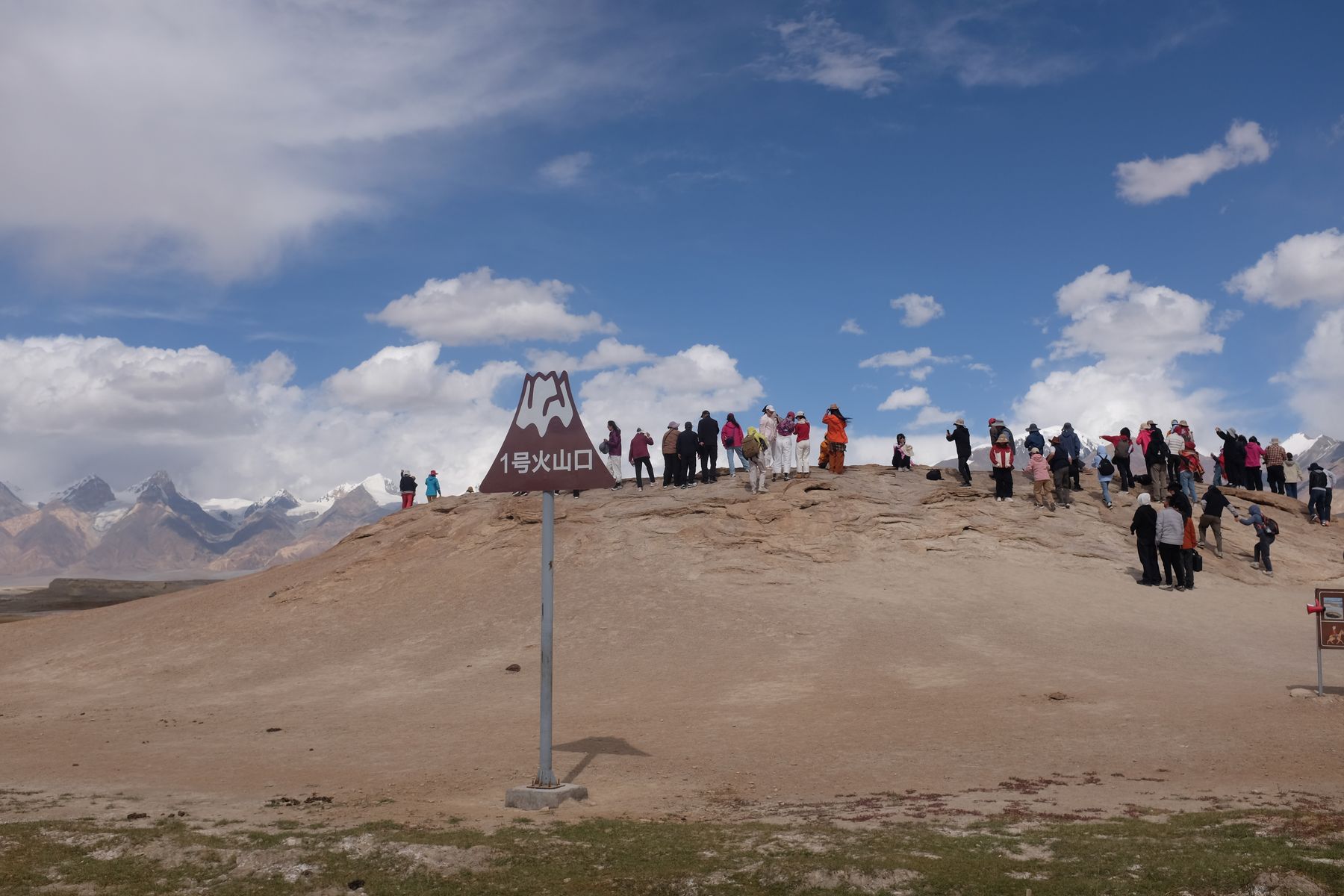
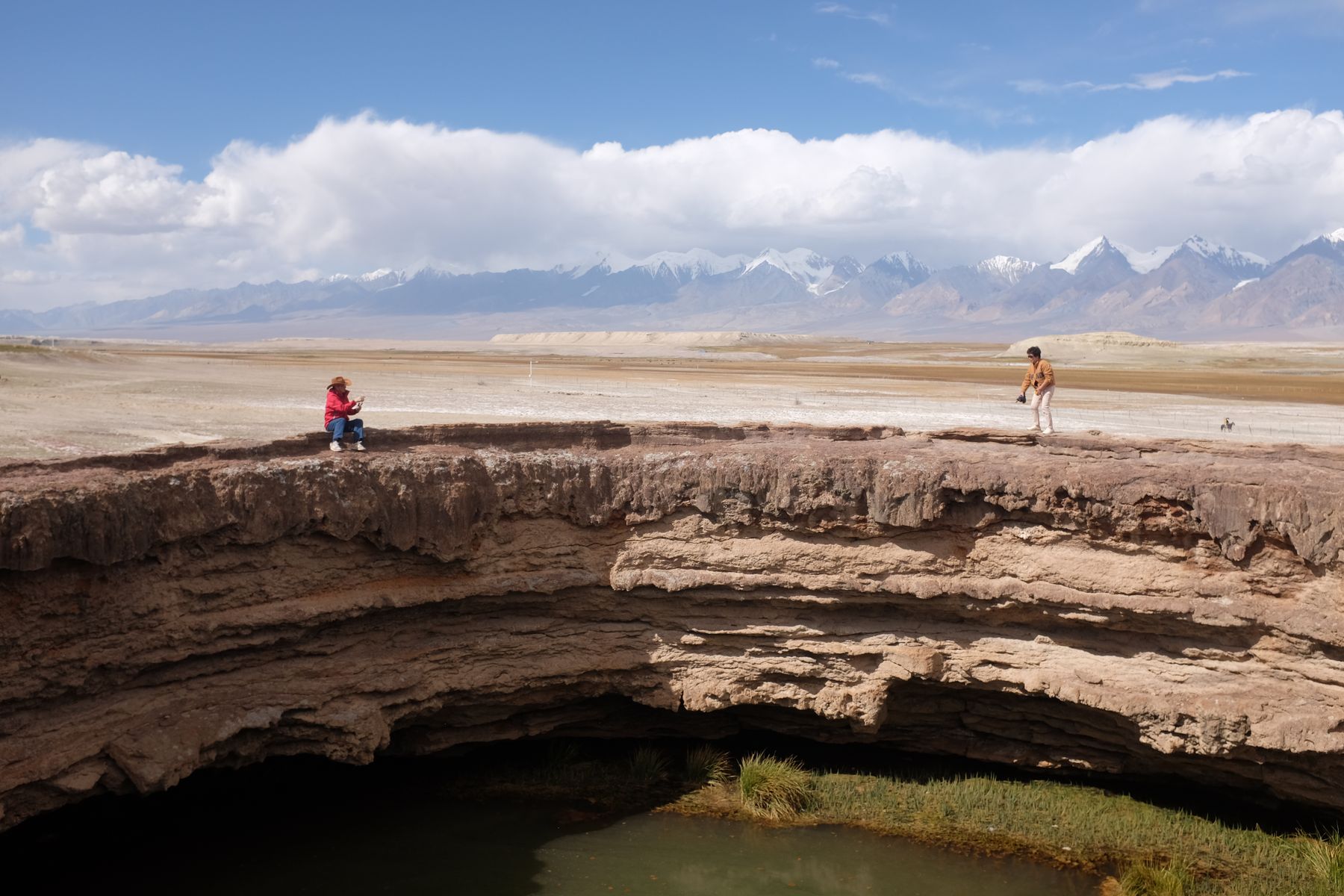
On my way out, I walk back to the entrance (~1km) and I take one last look back at the mountains, which are stunning. There are also some pod-like hotel rooms that are empty but interesting contrasted against the white, snow-capped mountains. Sort of like a scene out of a dystopian planet settlement. My breath gets heavier from the altitude.
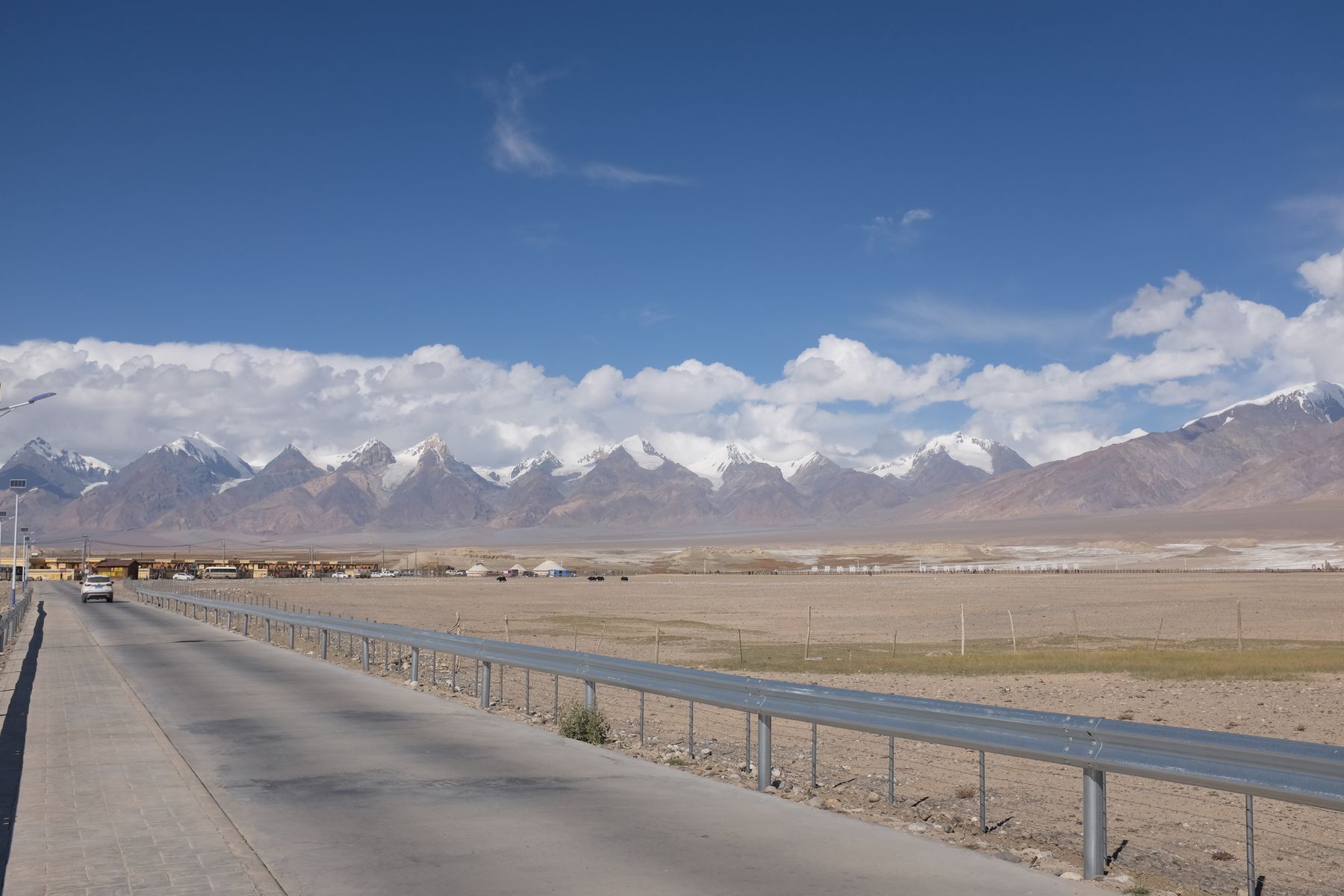
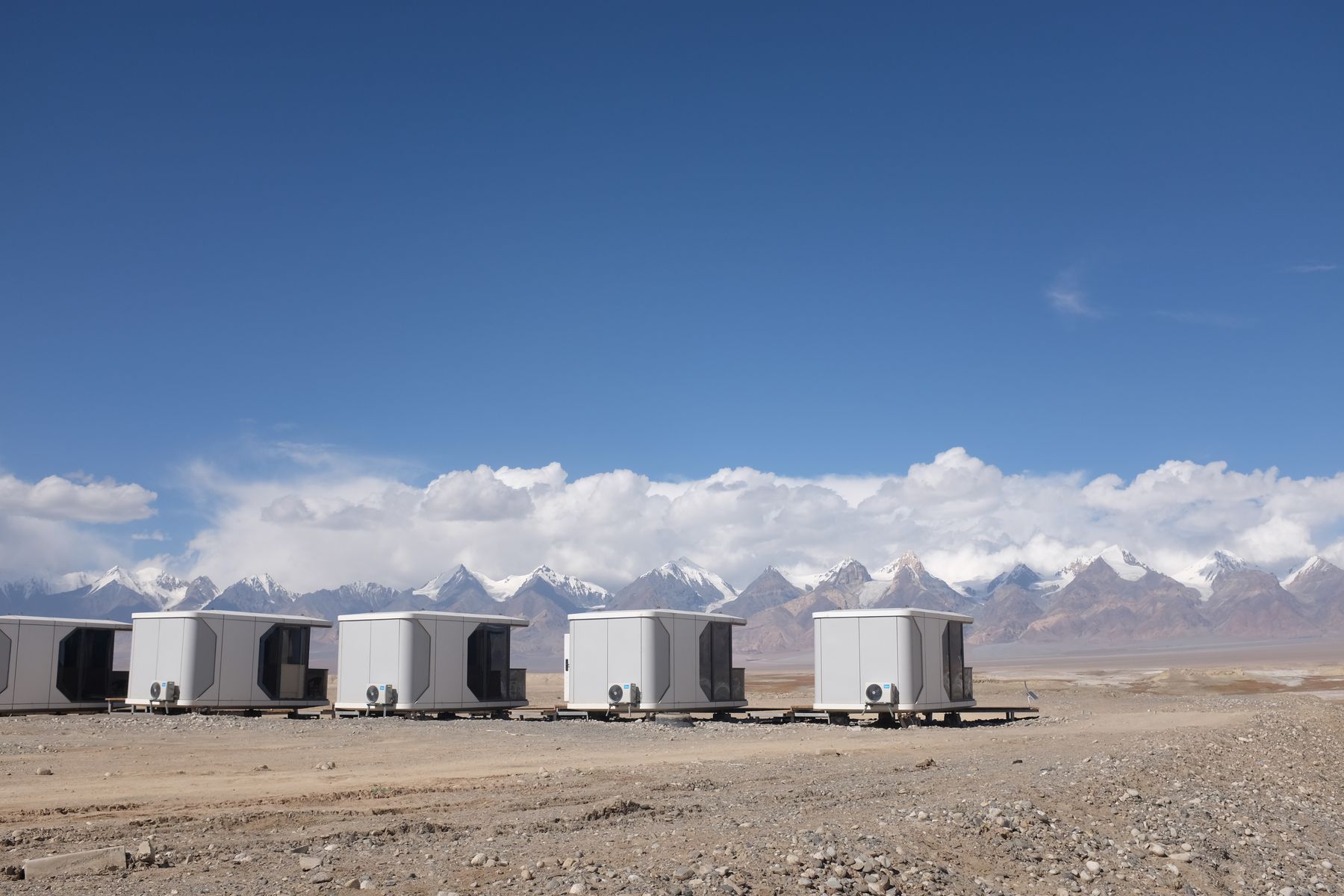
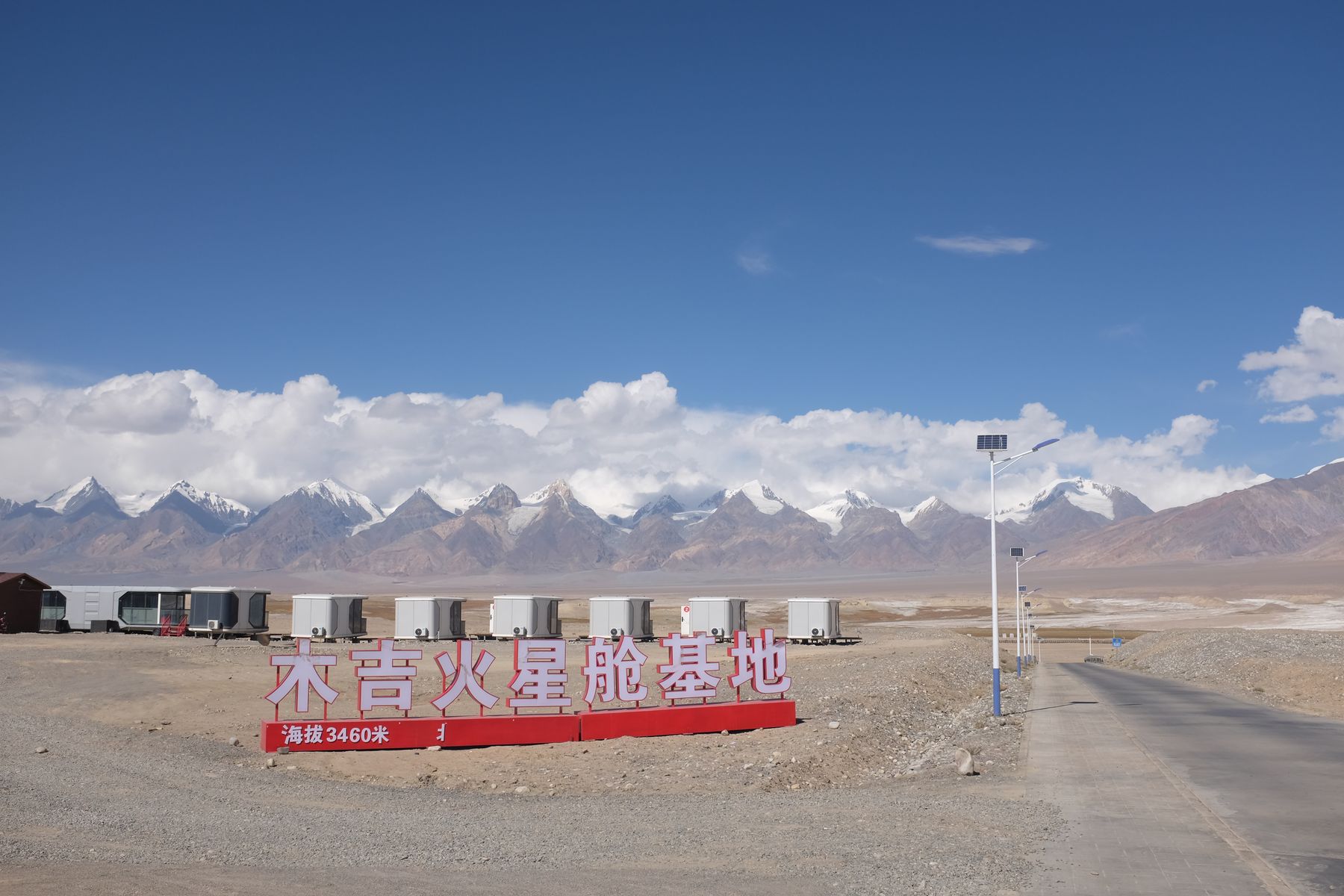
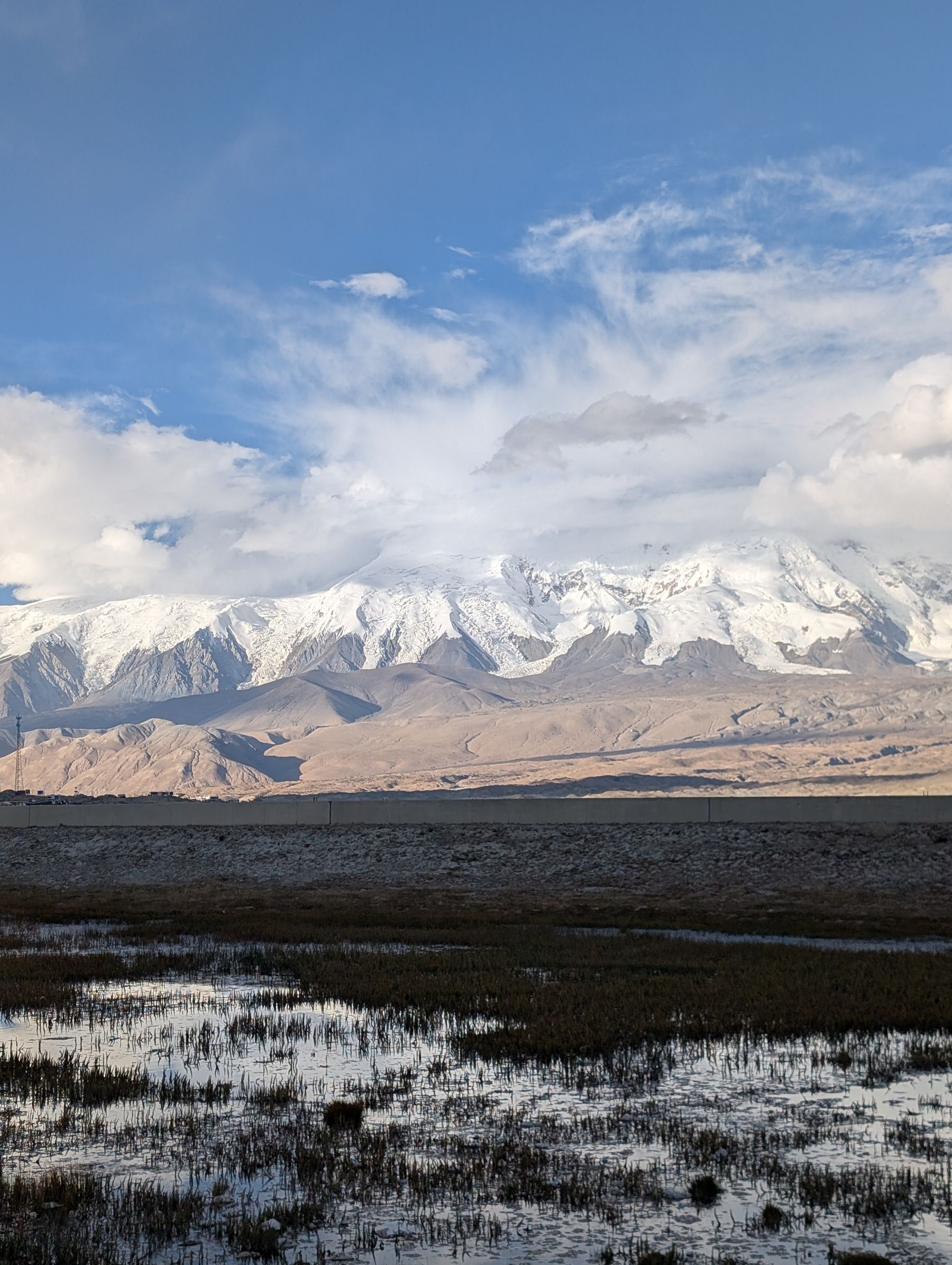
There are random traffic jams out at the roads here, since there’s just one route, but as it is. We head out to Karakol Lake (喀啦庫勒湖), which requires us to double back on where we came from. I take a few more shots of Baisha Lake from another end. We then head to Subashi Village (蘇巴什村) where we are going to look for accommodation for the night. As we pull in, a view of Muztagh-Ata (慕士塔格峰), tomorrow’s site, against a dusky sun.
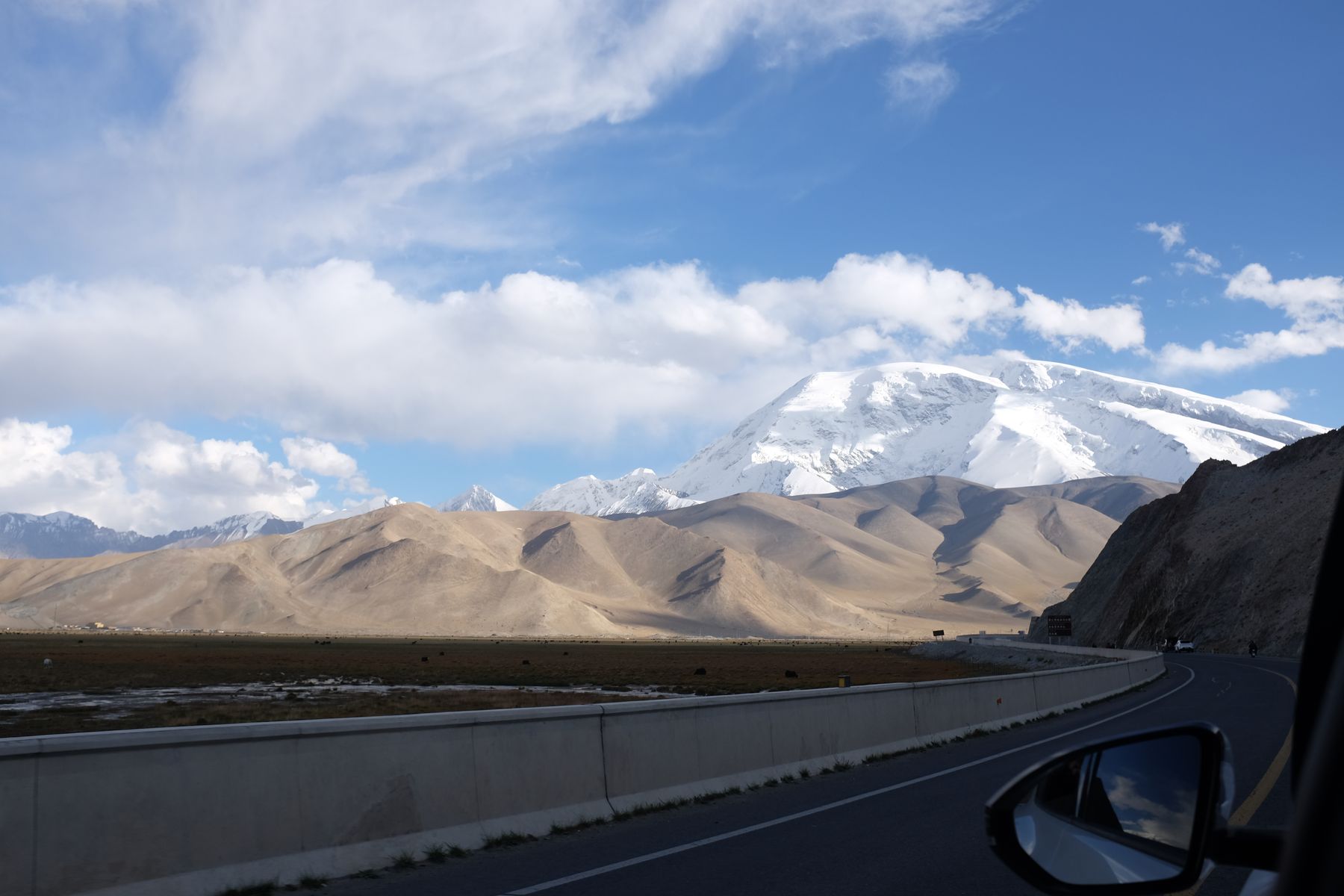
When we get there, we find the bridge blocked. We must drive to a neighbouring homestay, and there is room -- luckily. The place is called 遇見, or, “Meet”. I find it later, and it’s called Meet Muztagh (the name of the summit nearby).
An interesting administrative hurdle upon asking for a room: I find out my driver has no registration. I give my passport to check-in, and he is without an ID and sheepish about it. So he can’t stay the night at the hotel, and will instead stay at the rest stop nearby.
It unfolds like this. He says he doesn’t have ID, and the lady at the front desk, a Han Chinese woman, says it’s heavily regulated in these border towns so he must have one to stay here. He says he will just stay in the car, and for me to sort out my own accommodation alone, and no need to consider him. The hotel staff don’t prod anymore than they need to as to why he has no ID, so I pull him aside to ask. He gives a perfunctory explanation, and I’m not sure entirely what his explanation is, so I pencil it for tomorrow.
The views from here are just as stunning as it was all day. I’m glad to be among these giants for a few days.