Yongding (永定), Fujian, CHINA
Sites: Tulou King (土樓王), Nanjiang Tulou Cluster (南江土樓群), Longyan Valley (龍岩大峽谷)
Stay: Dulv Hostel (讀旅民宿)
BUDGET
2025-08-10
We decide to go to visit some Tulous (土樓) for a friend's birthday. They are earthen, communal living structures of the Hakka people. At the largest, some tulous had entire communities living within them.
The Hakka built these structures during the late Ming and early Qing dynasties to defend themselves against bandits. They are nestled deep within the Fujian mountains, which are lush humps of modest height that surround the tulou structures. Usually, as rivers carve through mountains, these settlements will also feature a river.
As they are now celebrated cultural heritage, tulous -- and areas where they are built -- have received tremendous funding for repair and Disneyfication. Still, the residents and shops inside a refurbished tulou are still all allegedly run by locals of a village. There are, however, some that have not been approved as tourist sites by the Tourist Bureaux. These versions preserve a more local flavour to what a tulou may have looked like back at its inception; and instead of its residents as vendors, they are average, everyday Chinese aunties and uncles with children.
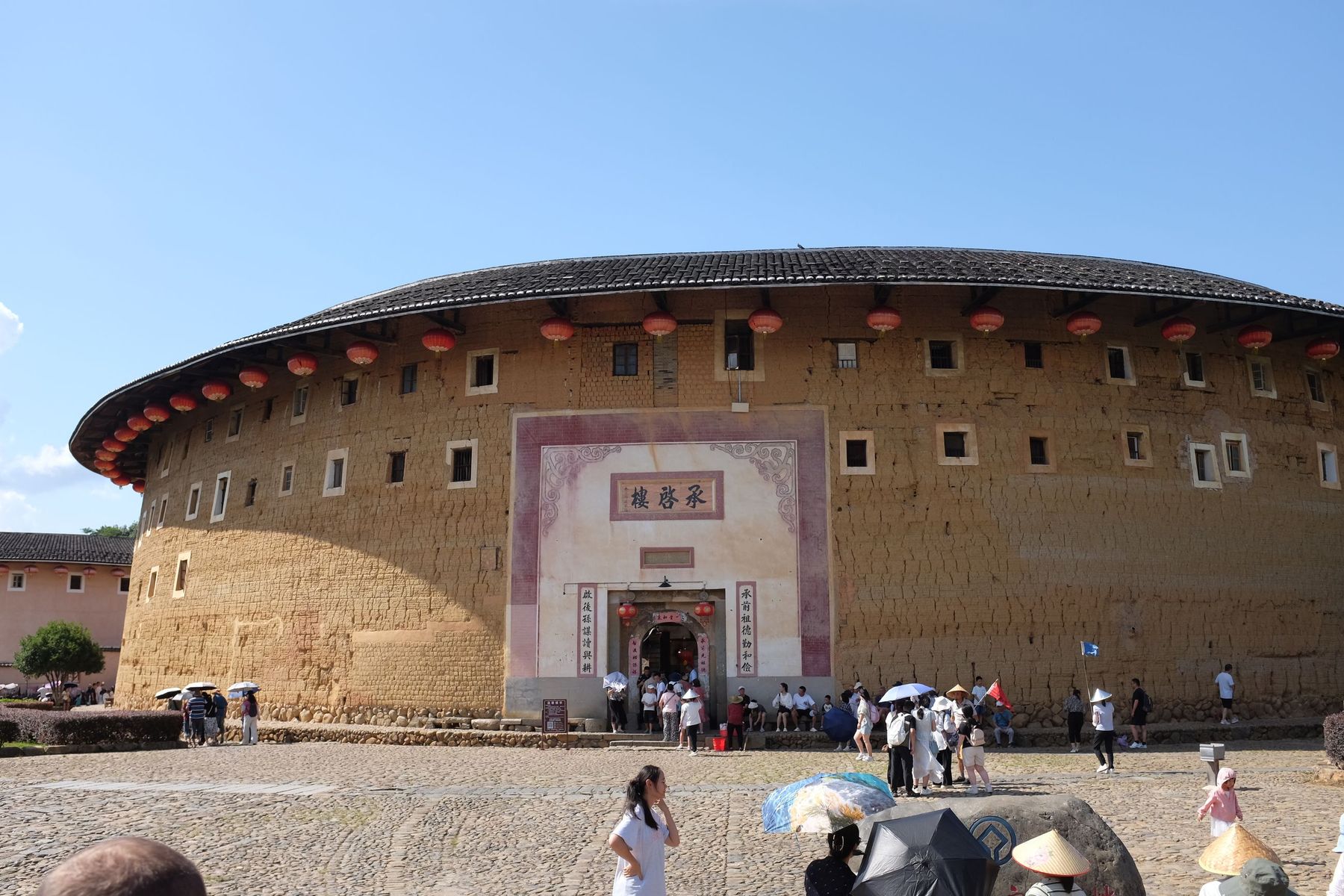
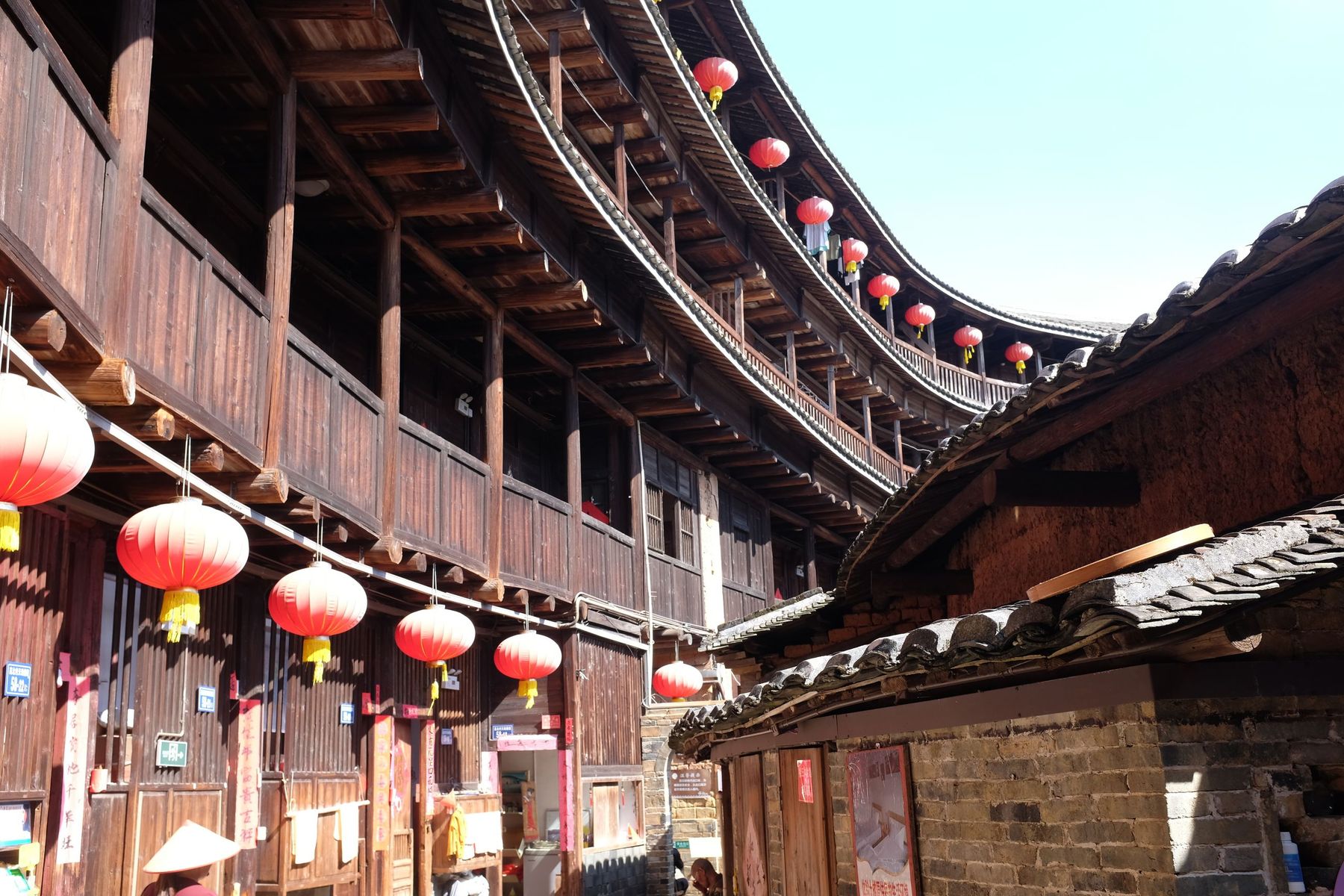
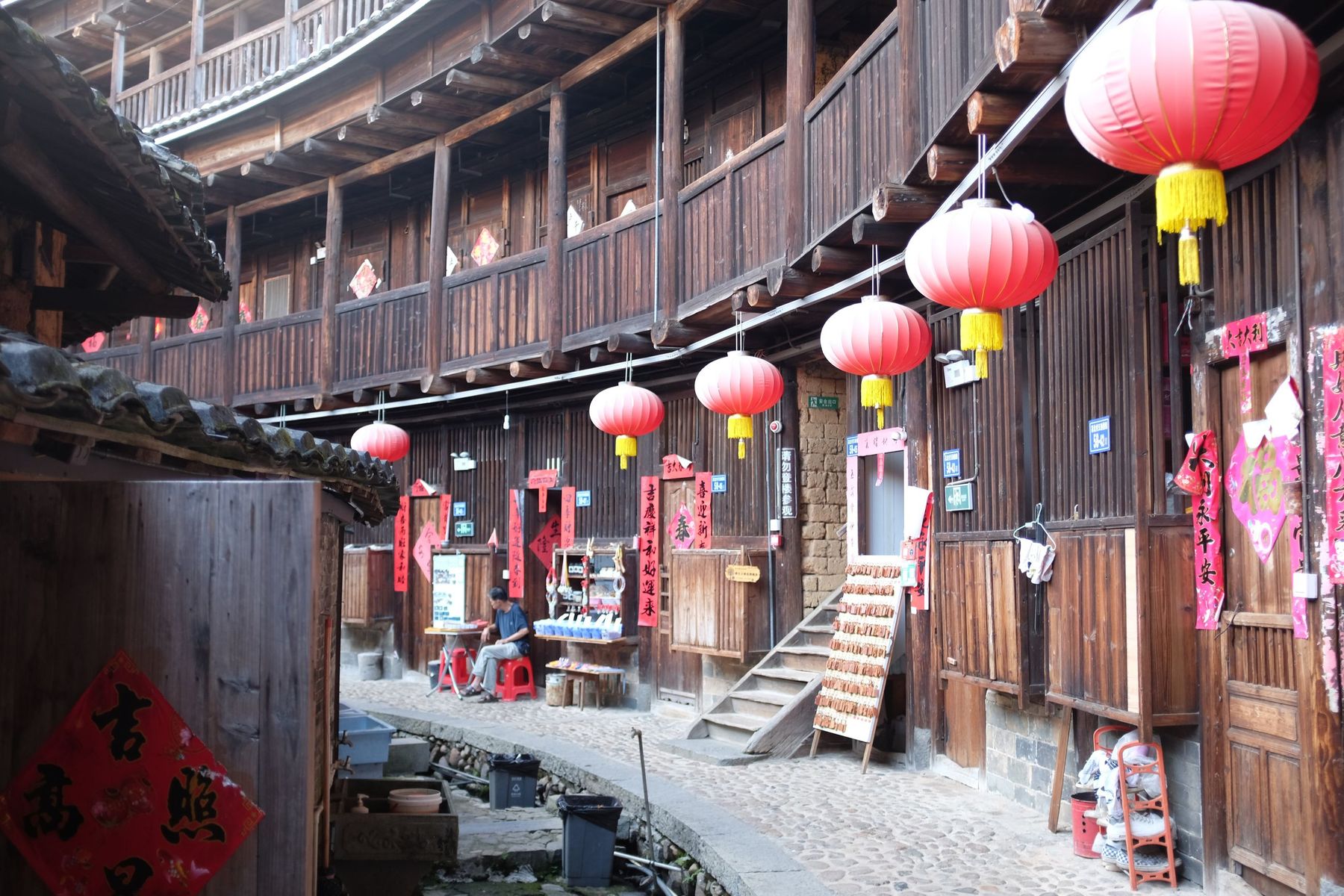
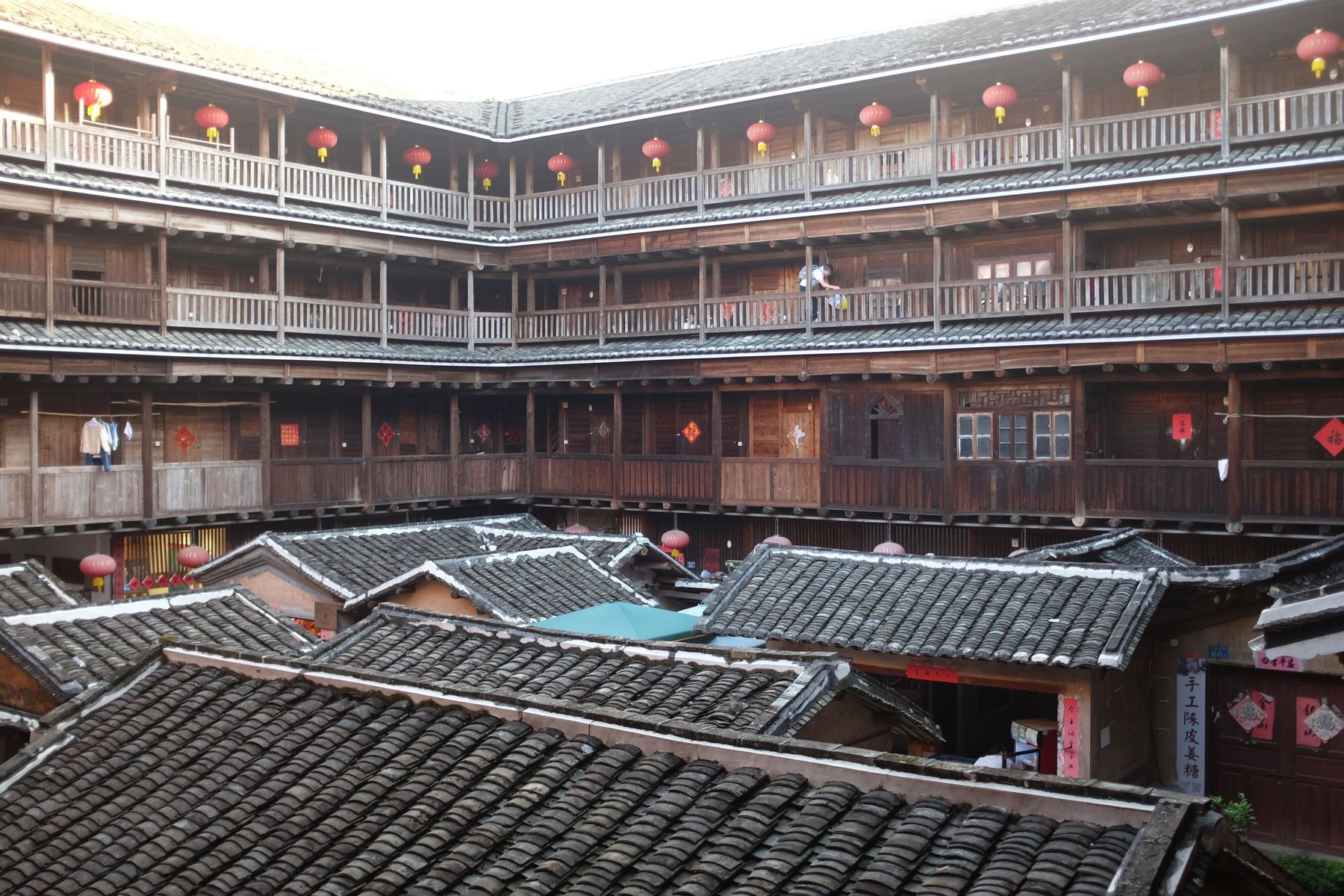
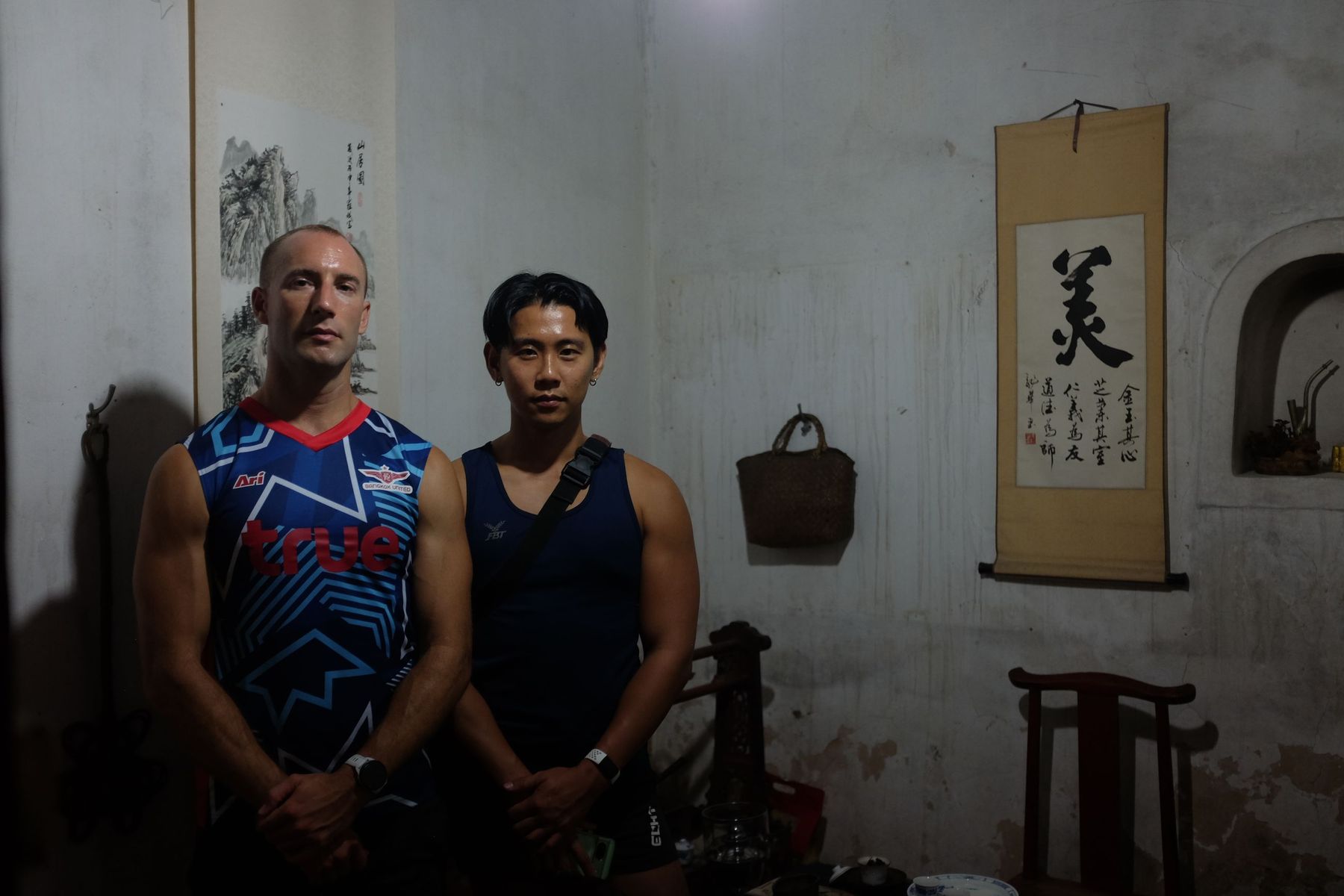
We get into Zhangzhou station, and take a Didi cab to Tulou Wang (lit: Tulou King). It's the biggest tulou unit in the world. Three stories, without windows on the first floor to prevent invaders from entering. Inside, hoards of Chinese tourist groups crowd the narrow rings of the circular structure, eager to take "the picture" that everyone else is taking. Fair. In the centre is a Buddhist shrine and place of worship with no courtyard. No tourists are allowed to climb up the structure to the second and third floors, where residents still live. A lady beckons us into her shop with tea on the first floor; we are suspicious, but we oblige. She seems to have a sincere smile, and she tells us that drinking is for free. (There is, however, an upsell at some point, but very subtle to the point of unbothering.)
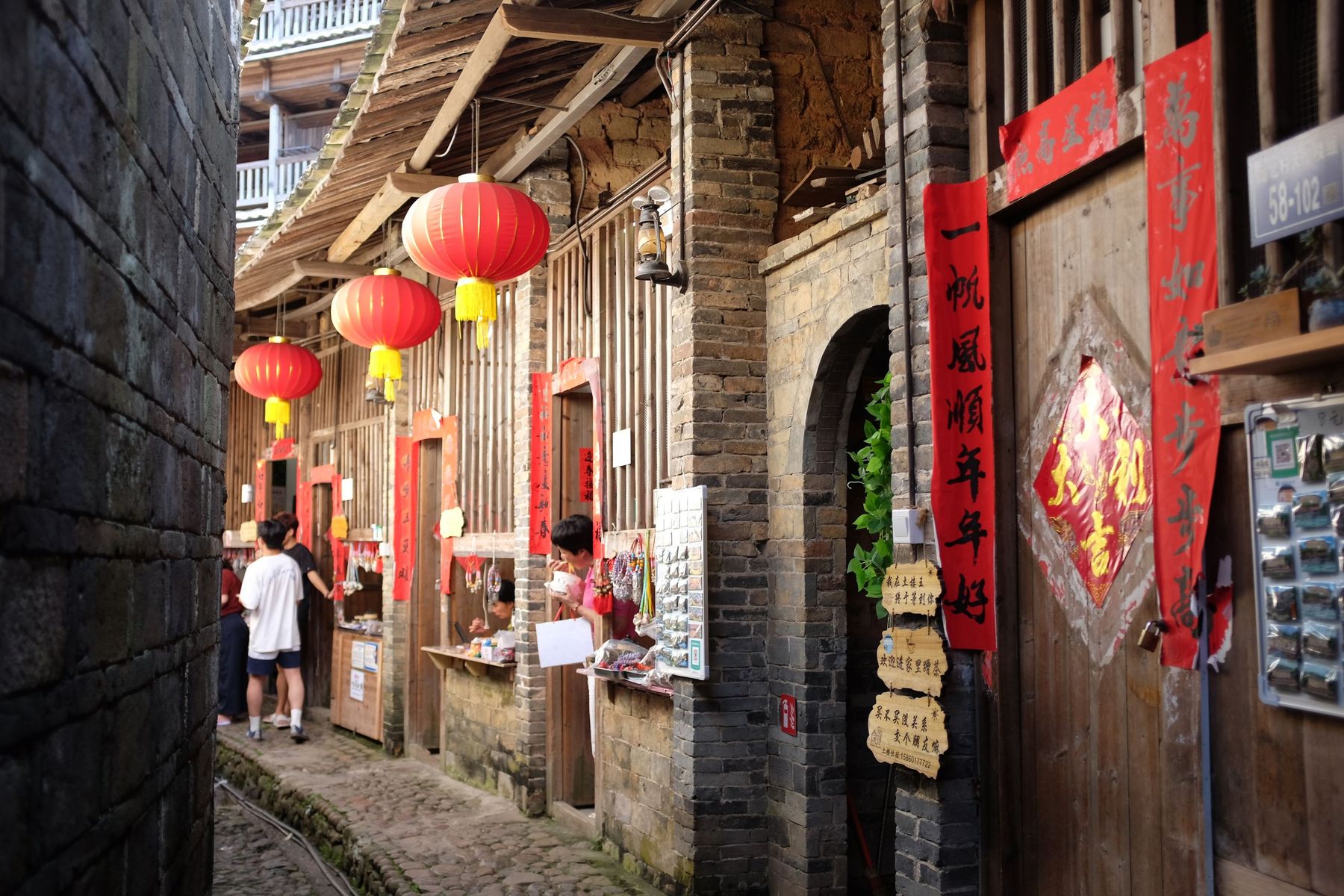
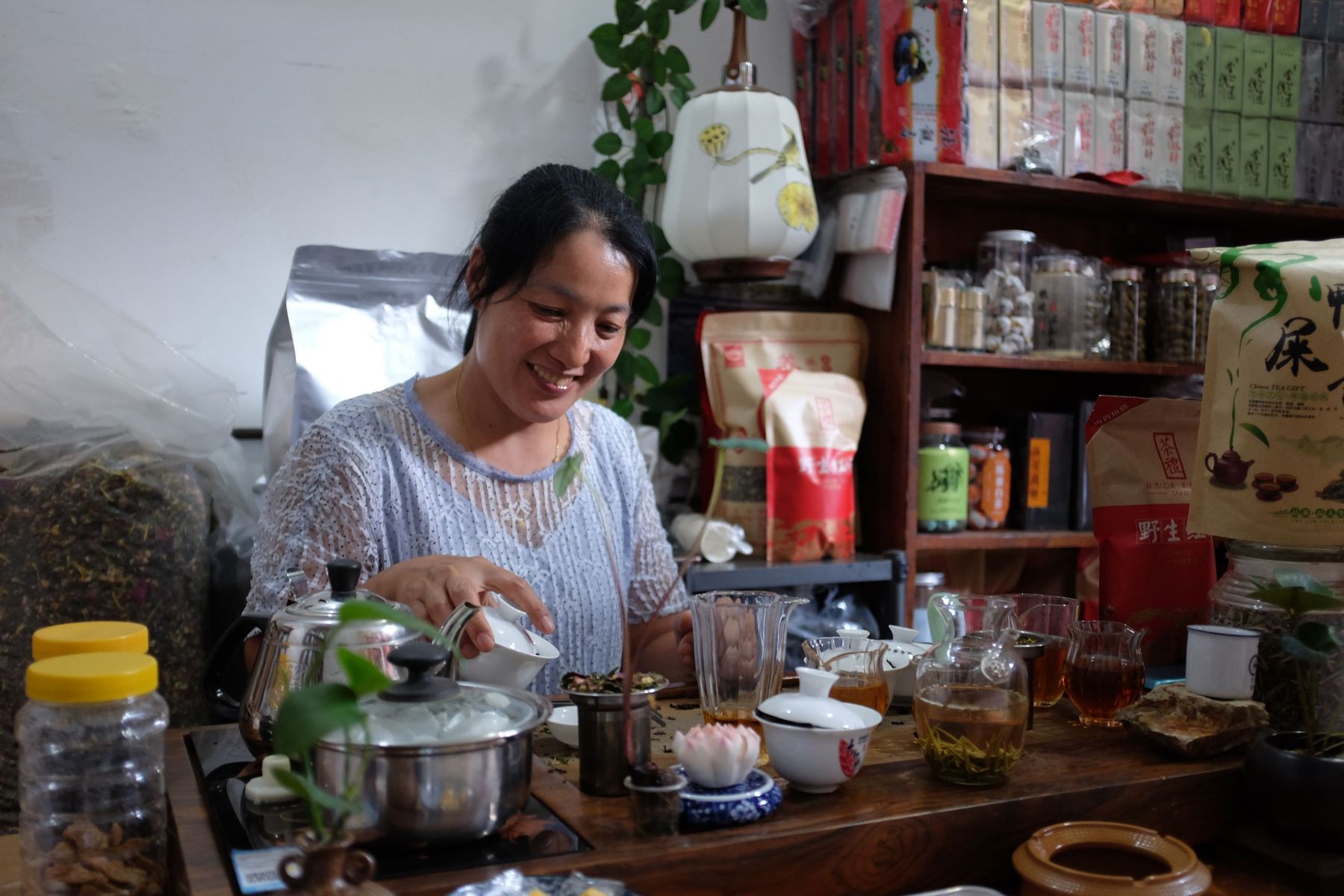
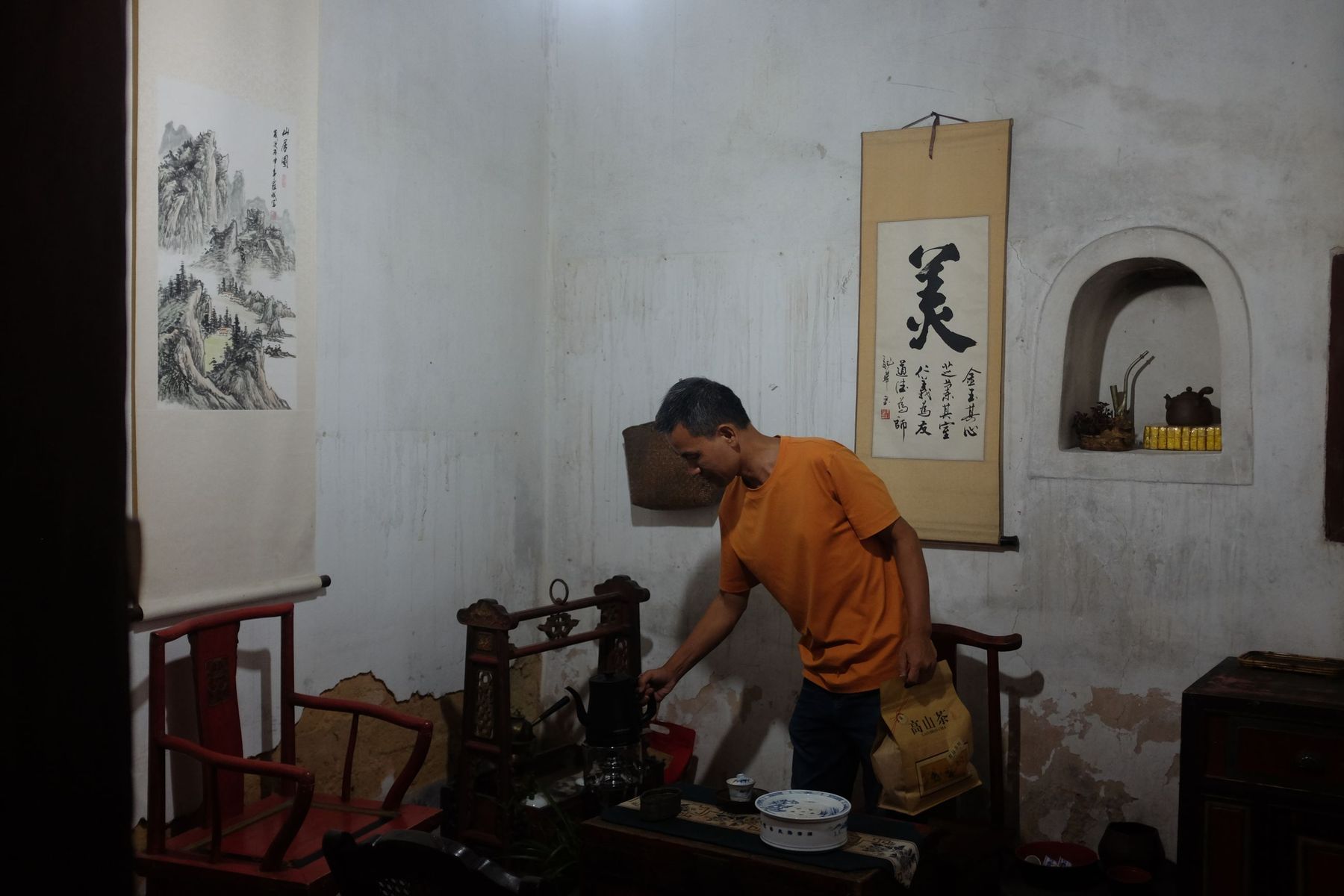
On her table, a tea set: a tray with holes to drain the washed teacups, first wash of tea leaves and unused tea. I'm not sure where the water goes. On the right, a temperature-controlled kettle to boil water to the temperature at which the leaves need to brew. She boils the water, scoops out a palm of tea leaves from a massive stock behind her, and brews it. And then she begins talking effortlessly.
Preparing tea is a way to receive guests. She moves effortlessly between conversation, smiling and introducing the tea leaves. It's like wine, everywhere from the harvest and brewing method, to the taste and the medicinal effect. She does not treat the knowledge of tea as something borne from books or qualifications, but rather from the experiences of having brewed tea for guests since she was 15. Like an apprenticeship of hosting through the medium of beverage. She then ties this effortlessly to getting us to buy teas, since after 1.5 hours we would have spoken through the planting, cultivation and flavour profile of the tea we were drinking in addition to the history of the tulou and its structure. An entrepreneurial mind, indeed. One that married into the tulou from the neighbouring Zhanghou city and gave birth to two sons. Who told us that the tradition of the tulou is to put a coffin up at the highest room of their section of the tulou for their daughter (in law I guess?) so that one day she would have an earth burial nearby the tulou and always be near home. One that turned her kitchen room of the tulou into one for selling more popsicles to make an extra buck; who had not worried about sales or foot traffic since she was in the wholesale of and not the B2C sale of her family's tea leaves. One that had sung, almost as a caricature of her culture, the tea leaf picking song for us and recited poetry about the feeling that tea gave her when she had it. She had relayed all of this to us in the 1.5 hours that we sat there drinking at least six different teas. Most delightful.
She said if we wanted to, after 20:30, she could take us upstairs in the tulou, free of cost. We politely declined. This one, after all, received a lot funding to bring in people and refurbishment to the structure. This proably meant that the place was built to be seen, and not have the local flavour breathe through the wooden piles that were spokes to the tulou...
...At the neighbouring tulou, for example, we walk in with a mom yelling at her daughter to not provoke the boys taking a bath in the communal tub at the centre of the rotunda. She disciplines her in front of the entire unit, with other watchings. Her wielding of shame is piercing. Several other aunties jump in to attack her while also disciplining their children ("I told you guys to only play in the tub and now you've upset her"). Amidst the increasingly tense air, the tulou chief, an old man with a sunken face and bushy white eyebrows, walks out to resolve the dispute and wraps one arm around the chastised daughter. He later goes to sit down by the shrine that contains many pictures of him as a child and young adult. Accompanying these are pictures of many children and his parents -- long gone. The chief thus is the living history link to the pictures of strangers at a shrine...
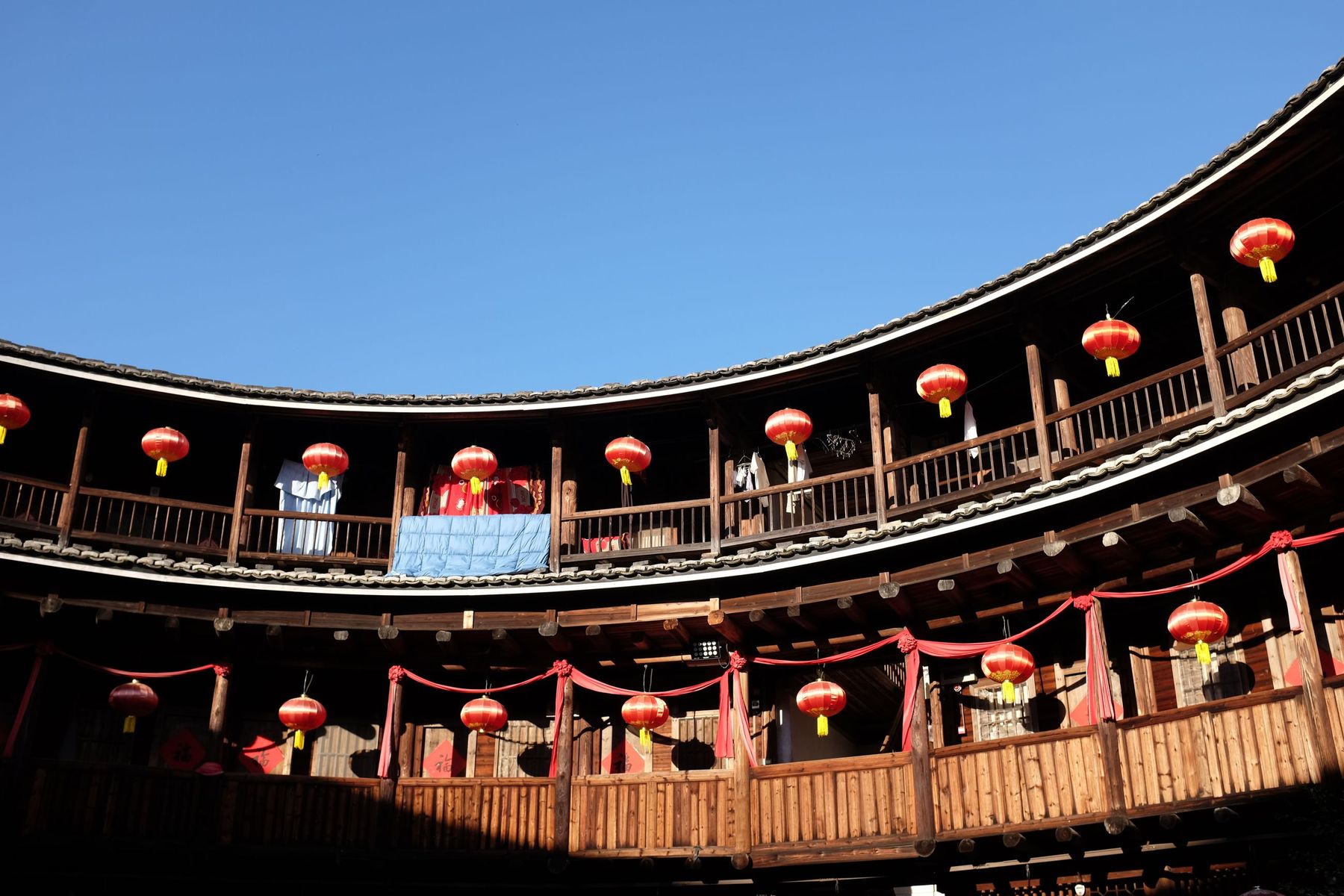
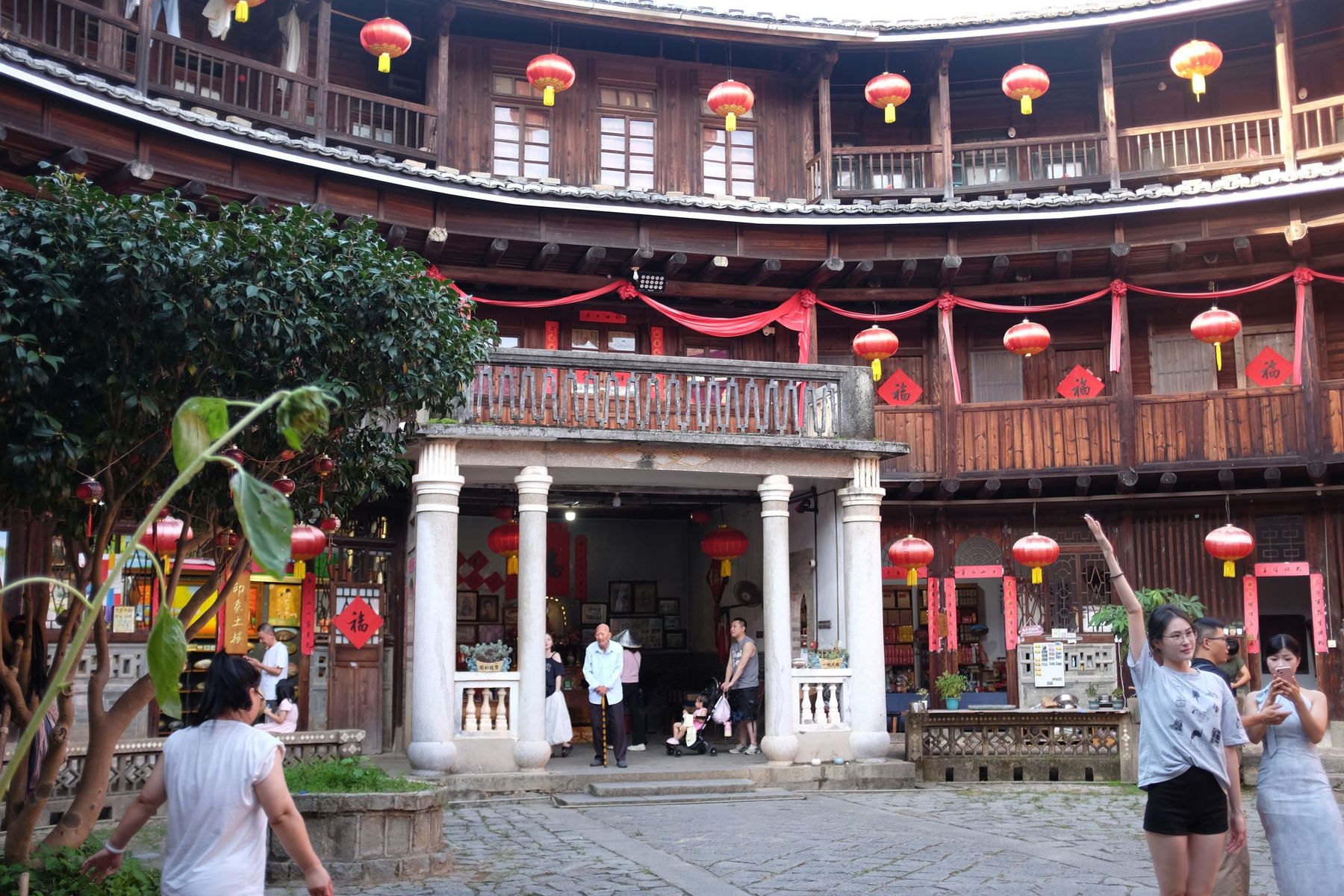
As a structure, however, Tulou Wang was immaculate ; really a peep into historical architecture and a realisation of the power of communal living.
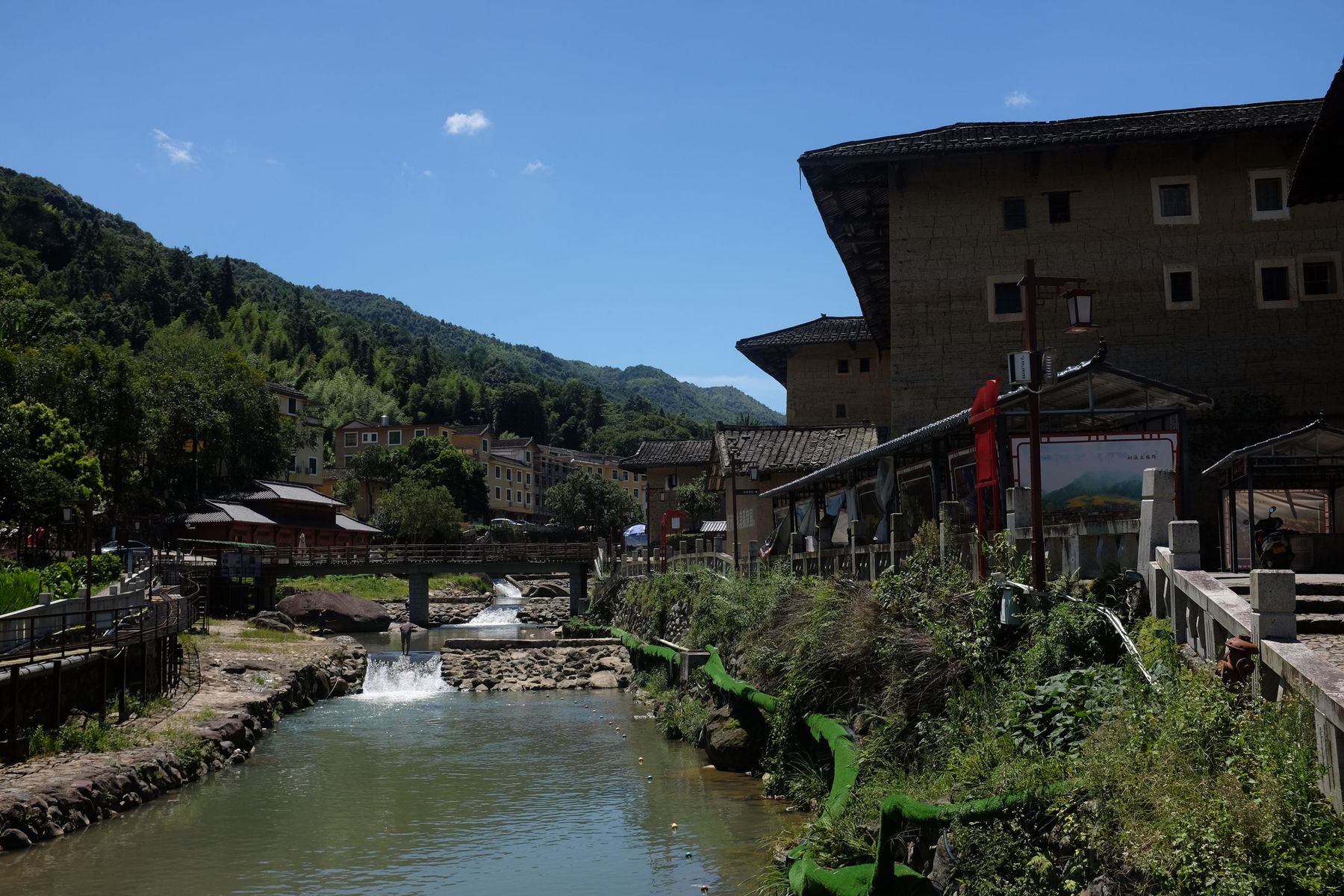
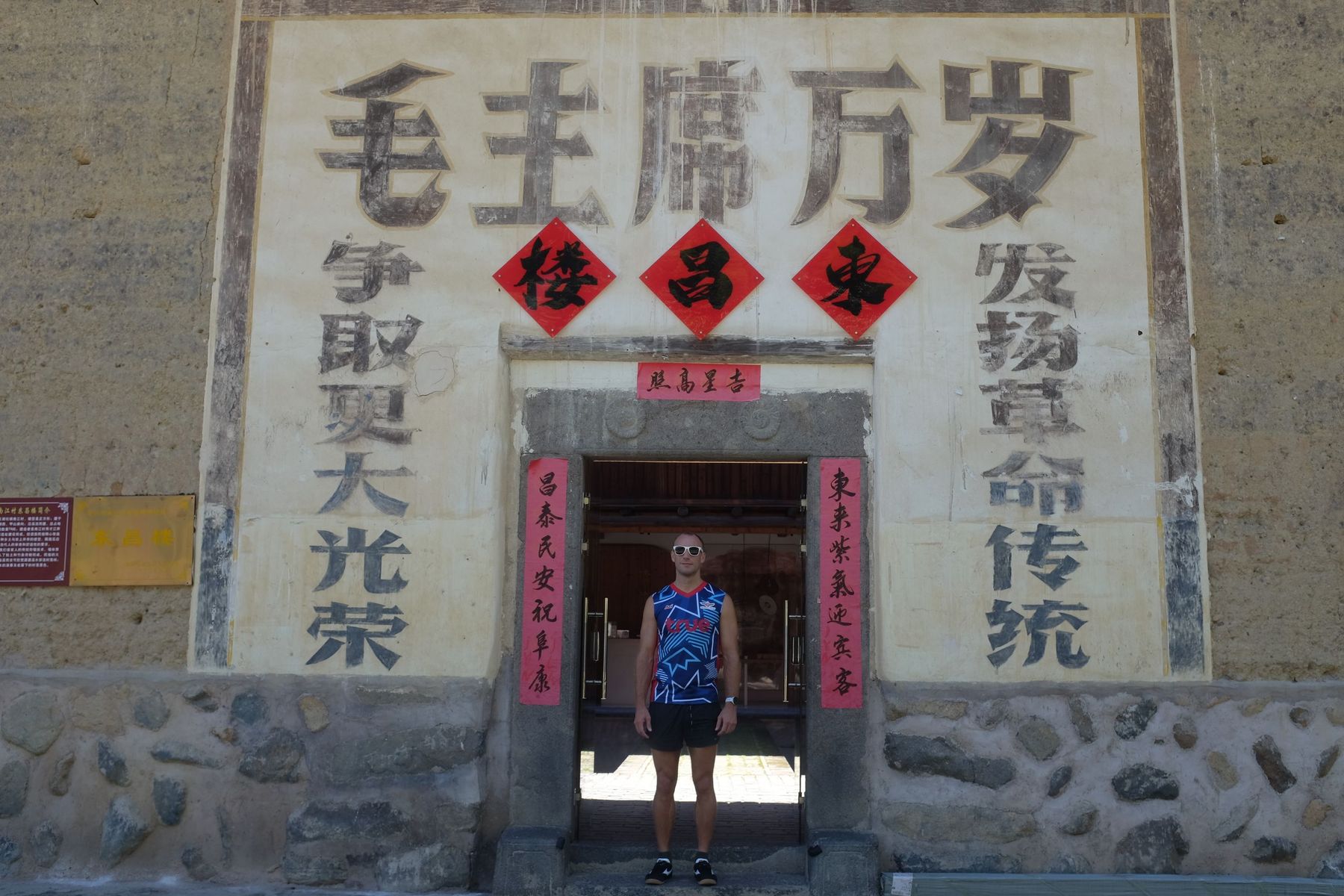
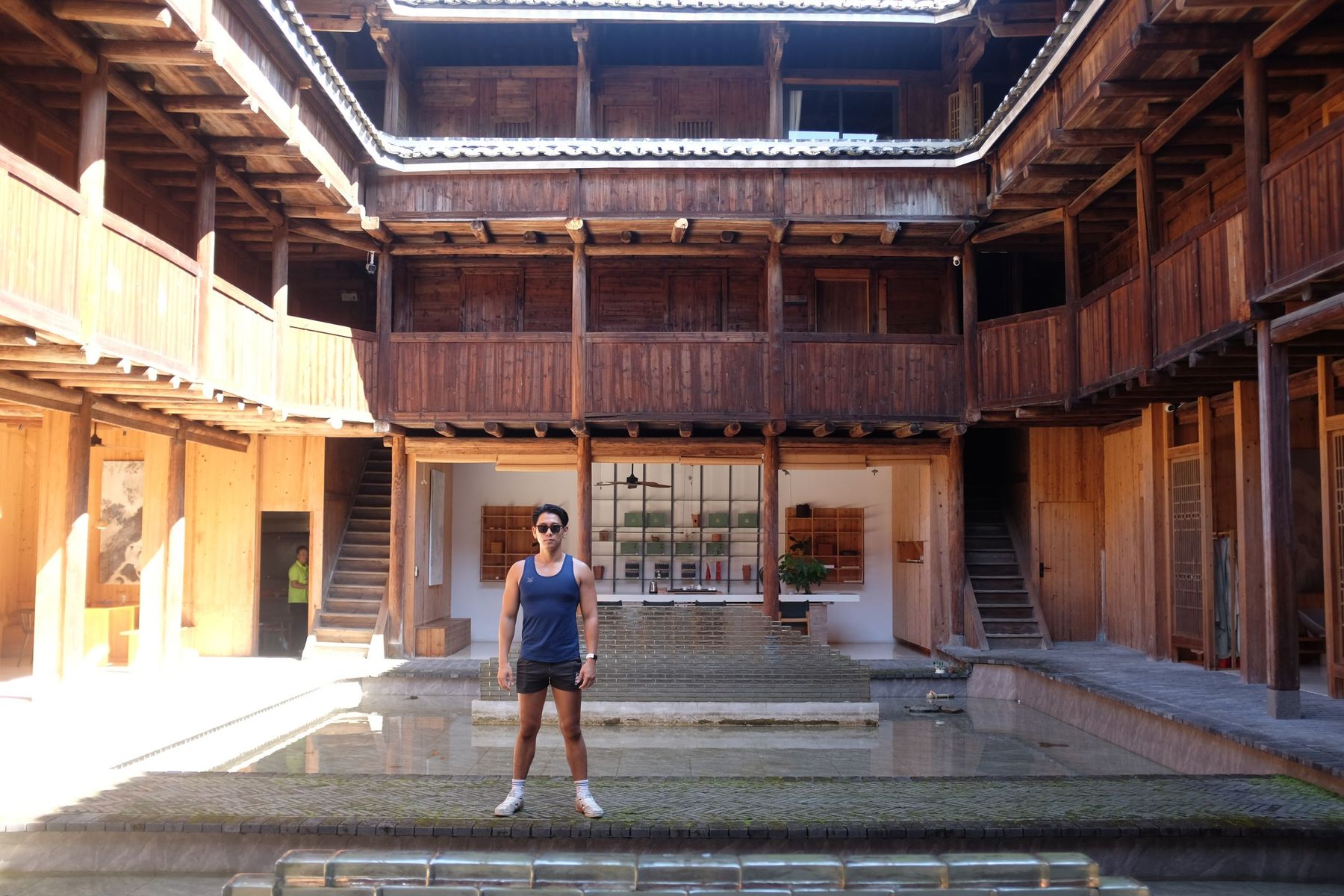
We spend the late afternoon there and go afterwards to Nanjiang tulou (南江土樓) cluster. It's about 17:00 -- dusk. Our homestay, the Dulv Homestay, is a stunning converted old Tulou building. The walls are original structure, as are the blinds and the beams. A cool, refreshing update to the structures. Outside, a recently painted communist slogan that frames the entrance: Long Live Chairman Mao.
A river runs through the entire town, so we are walking down the river. It goes from older structures where we are to newer, refurbished structures. Tulous -- about four or five -- dot the entire journey, and they come in either circular (most common), square (less common) to ovalline (only two in all of existing tulou history). Then, typical Chinese installations of recent Tourism Bureaux funding: smoothly transitioning neon lights against the bridges and the banks; a random windmill tunnel; a small train track for kids rides and a bouncy net thing and bumper cars at the base of the river. From our recomended dinner place, we learn that there will be river rafting tomorrow, which we sign up for. Because why not do it with a tulou view?
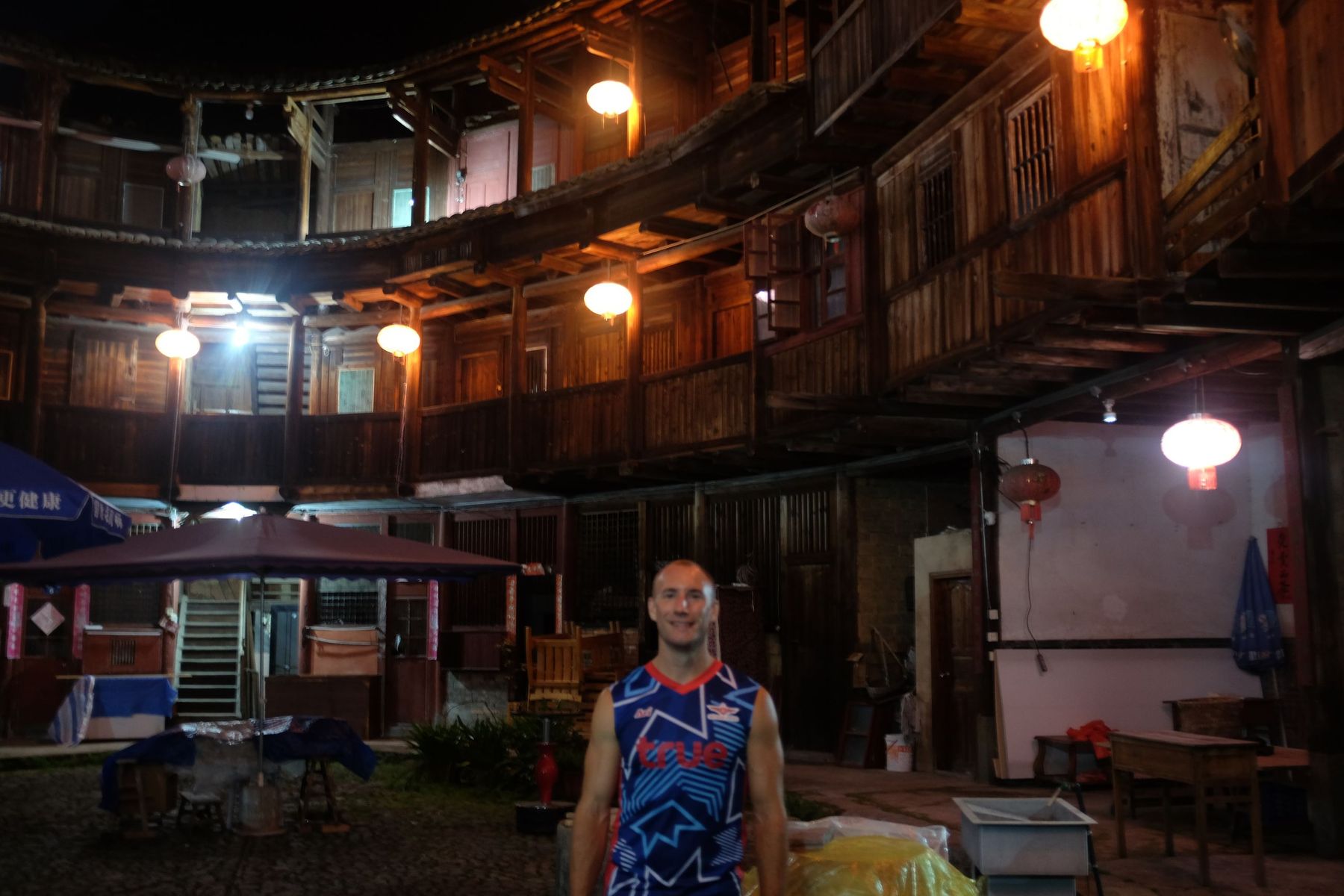
To secure the tickets, we ask our homestay administration staff if they could help us purchase it. In typical Chinese fashion, she links us to someone on Wechat who can help. He adds me, gives me a video call from the elliptical tulou, and says has tickets there (mind you it's about 22:30). He invites us over to the tulou to take a look, and I say yes. He drives up the hill in his car to pick us up and smiles, welcoming us. Once we get to his tulou -- the Tianyi Building 天一樓 -- he performs the same ritual as the tea lady from Tulou King earlier. A reception with tea, followed by several songs, and offering a locally rolled cigarette. He eventually encourages us to buy tea, to which we oblige, but tries to stuff in another bag ("There we go, why not 2 for 300? Fills out the carrier bag a bit better"). We politely decline, and he happily continues on and allows us to go up and see the second floor of the tulou. Seems he is entrepreneurial too. He also hands us the three river rafting tickets for tomorrow; the original purpose of this strange late night encounter.
There are no pictures from the river experience here, but 10/10 would recommend. A paved course for drifting along the river in a sturdy dinghy, with a tulou view along the way. An odd but satisfying way to spend a hot summer day in the town.
In the morning prior, we walk around the other tulous in this town (not Tianyi, that would be awkward). The Bureaux's money did not make it everywhere. Inside most tulous, locked doors to storage of random household items, and unkept courtyards. Some have overgrown weeds, loos that stink and a termite-chewed roof. At most, maybe one or two families living inside the only functioning rooms, the only sights of continued living. If anything, these tulous give an actual look into what tulous would have looked like had the Bureaux not come in and fixed them. The trickiness of preservation; the pressure on preserving cultural heritage.
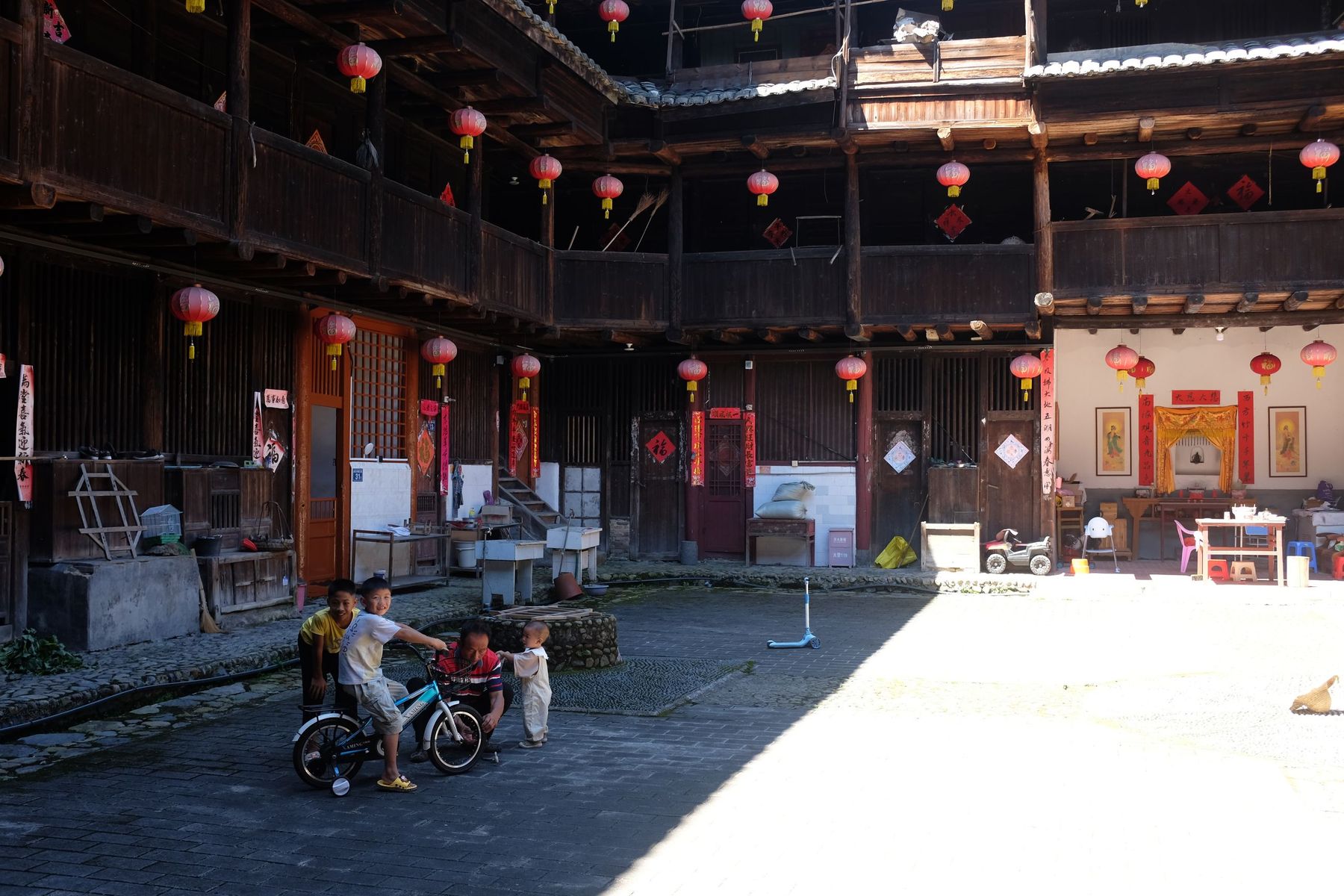
Overall, the Hakka are warm. Or maybe it's a countryside thing? They have a lot chat about and entertain questions openly, trying to explain the nuances of their culture. Not a single person's mood soured, nor did they feel the need to kick us out because we weren't purchasing anything. There is hospitability and a patience I'm not accustomed to seeing with Chinese people in larger cities. Maybe that's why so many of them receive guests with tea. It's the perfect setup to either entertain a conversation, or just sit in silence amongst each other. It's relaxing and keeps the host and guests busy. And it's the beginning of the pitch. So it ticks all the boxes. I'm just not sure what I should do with all the tea that I have now?