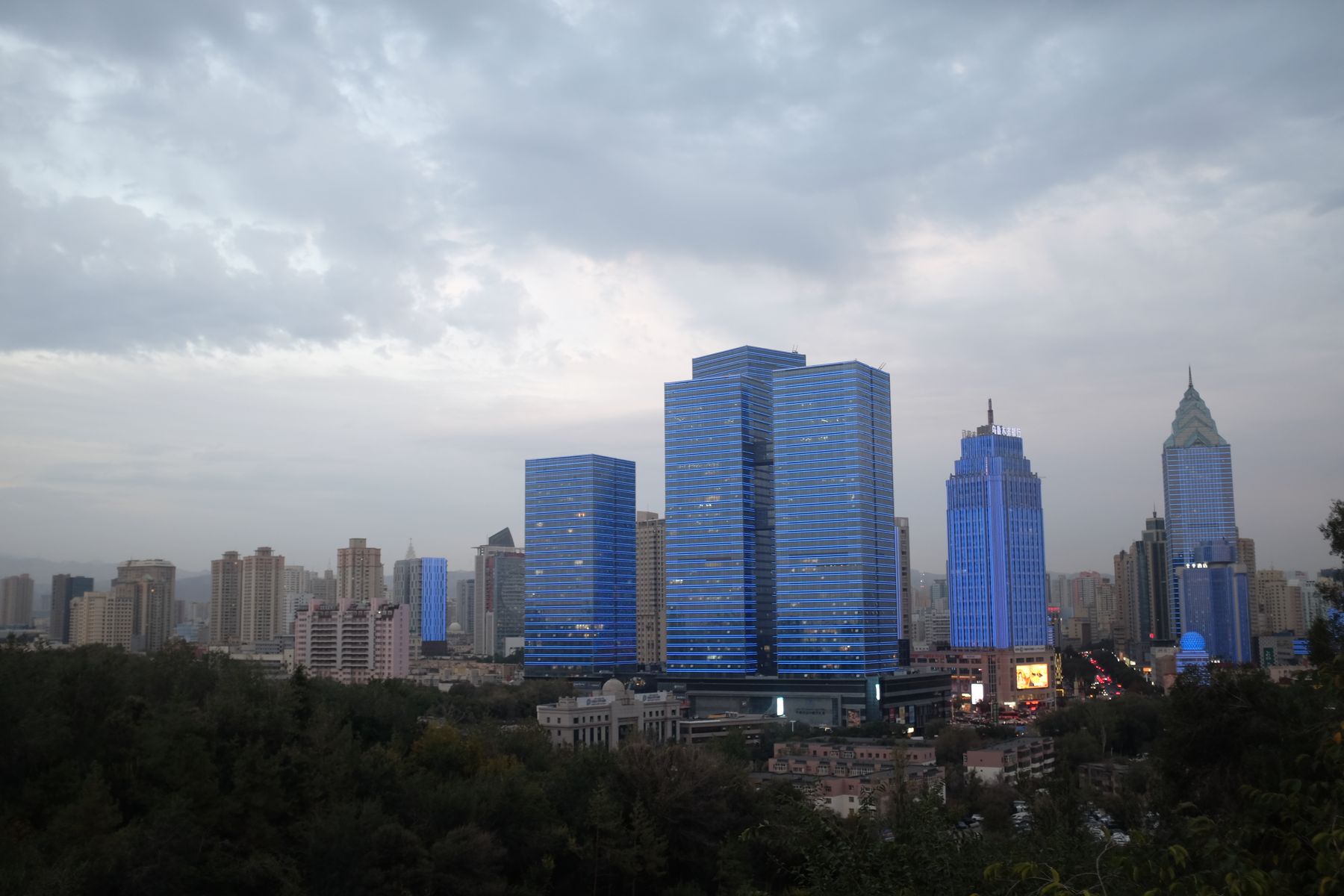
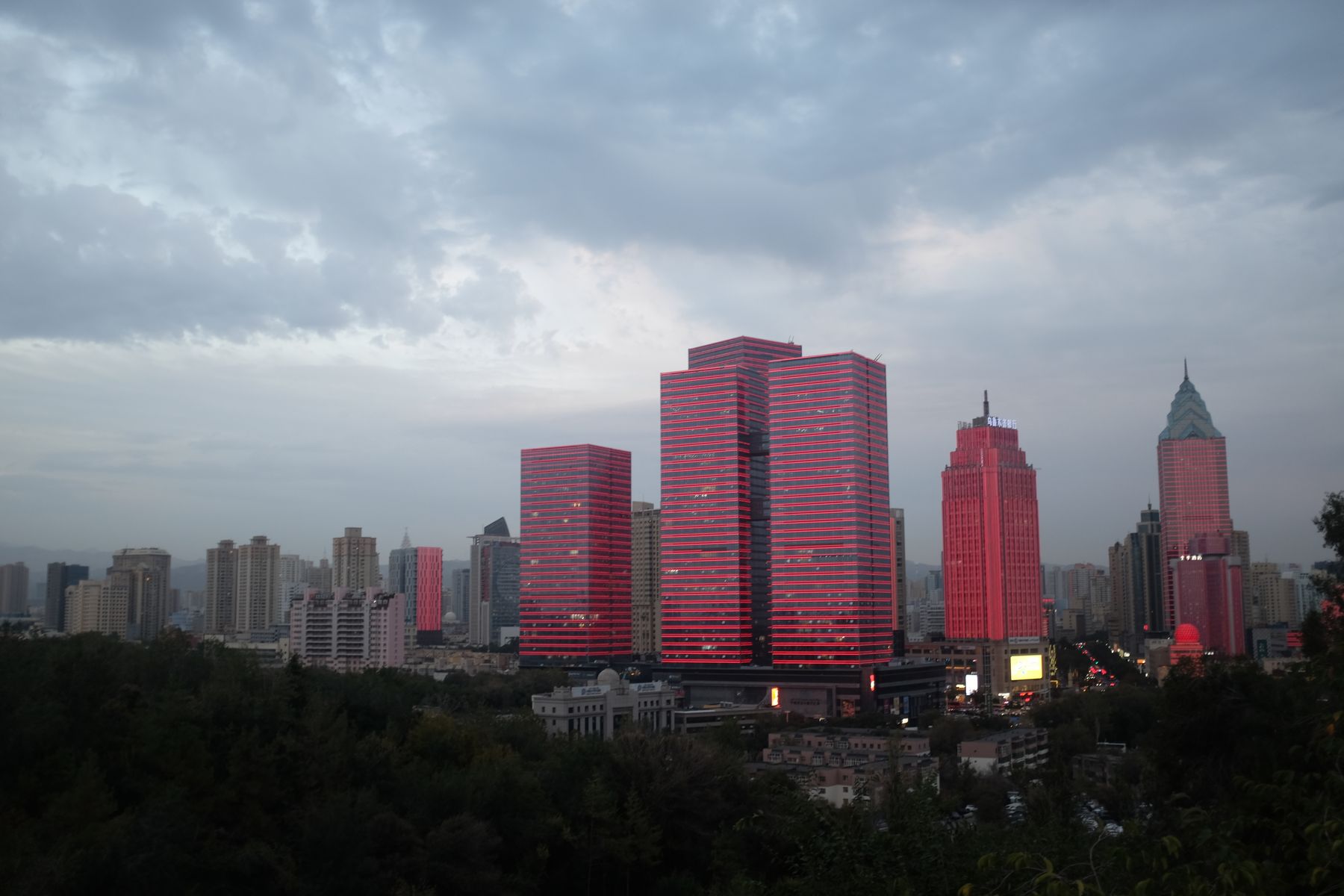
DAY 8: Ürümqi (烏魯木齊) — City Walk
2026-09-22
Stay: Serene Hongshan Designer Courtyard CCMall
“How do you translate 折衷主義?” He asked me. And because I wasn’t listening carefully the word slipped by. He scuffles through the dictionary and stammers through, “e-cle-c…ti-cism”. I nod, not even knowing the English meaning of the word eclecticism.
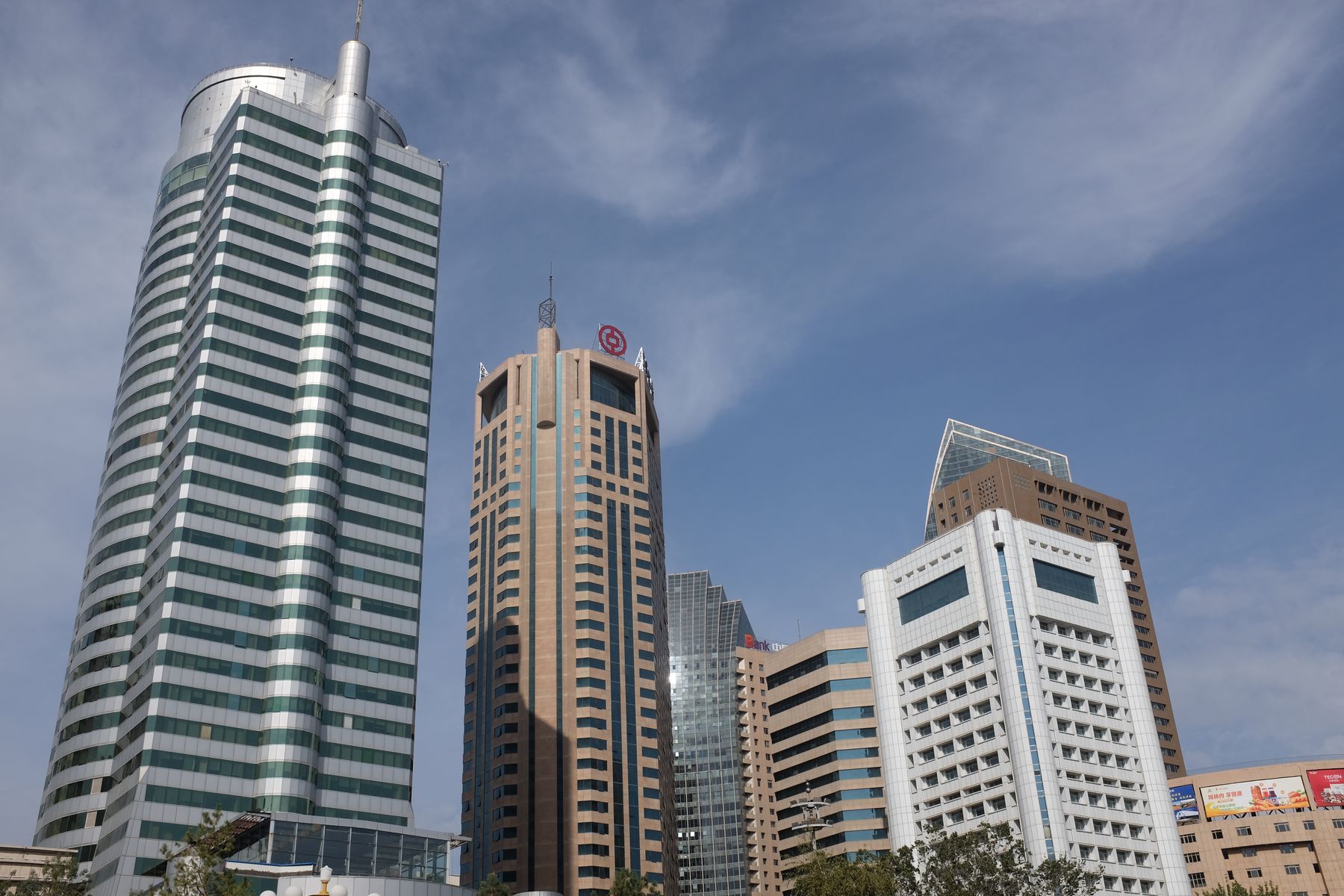
When someone walks you through the architectural history of a city, each building becomes more than its physical architecture. Buildings are seen through time to give a lens as to why it has certain constructional elements, or why a certain material was used. Of all the buildings in Ürümqi, he said the only one worthy of being “transplanted” to another city to compete and show the grandeur of Ürümqi on the global stage was Bank of China building (中國銀行大樓).
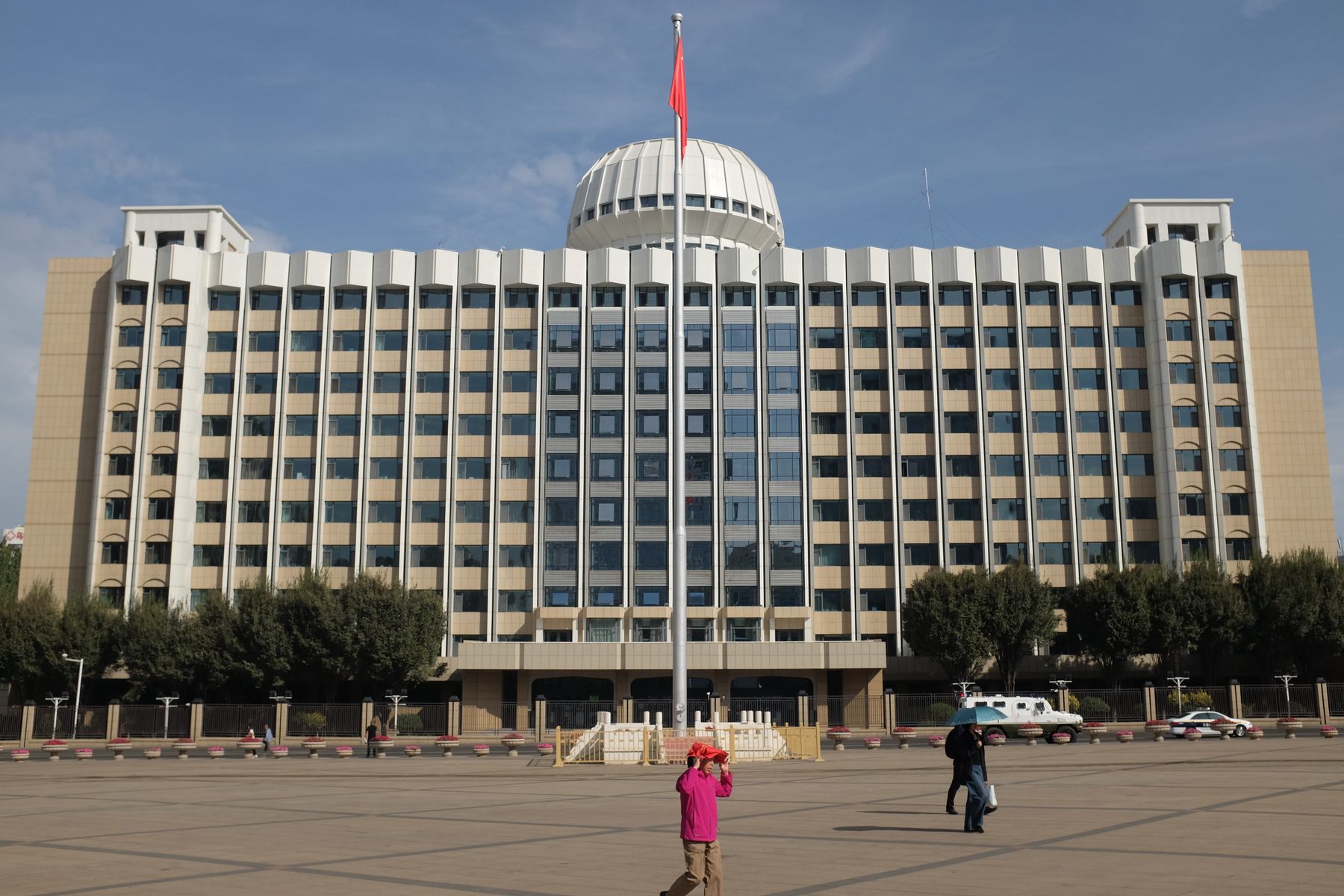
Much more interesting to me was the simple modesty of the seat of the government building.
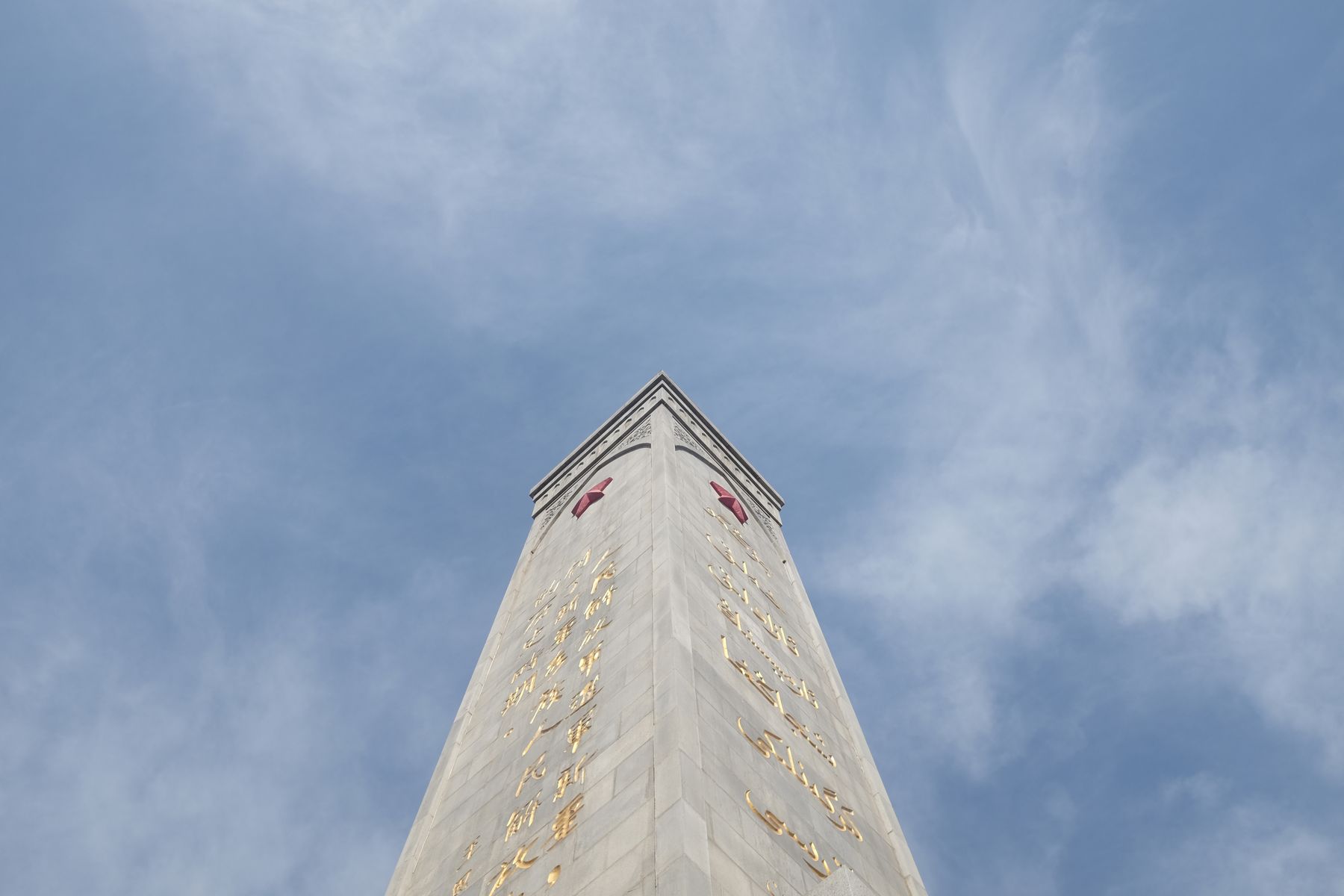
Or, a war monument written in a different language on each of the four faces of the obelisk
So began the tour of Ürümqi with a guy I met on Reddit. 80 USD for a “roughly 6 hour” walking tour through his hometown. He is third generation Han Chinese, born and raised in Ürümqi after his grandfather moved there during the Cultural Revolution to avoid persecution. He studied urban design, and so he saw the city through lenses of architecture, history and interior design. Walking with him gave a whole different feeling to the city.
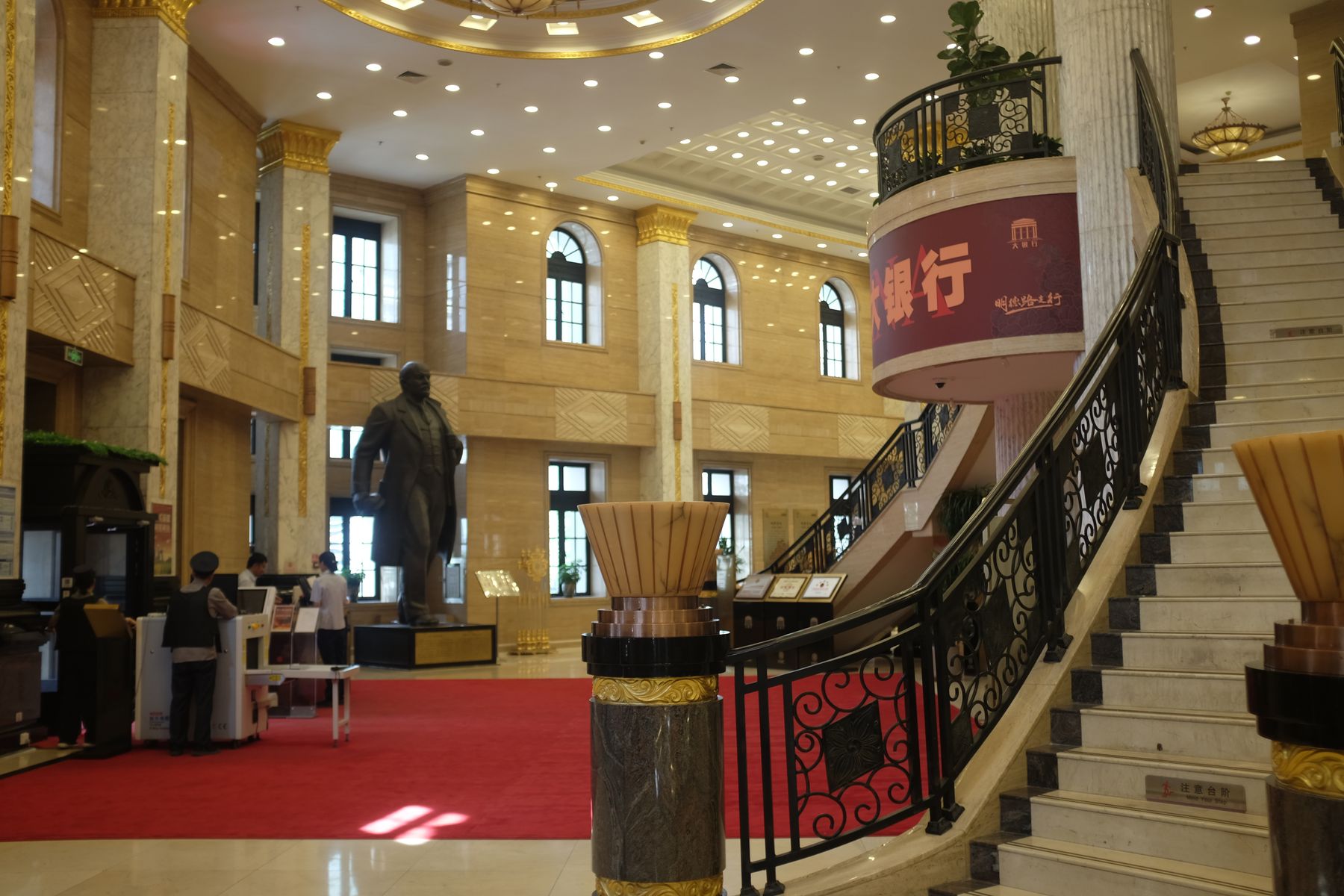
Every building, tourist permitting, would be analysed from the outside in. Take, for example, a building from 1943. Thought to be a German designer, it was in fact built by a Chinese political figure who used money from the Russian government to build it. It is now a bank.
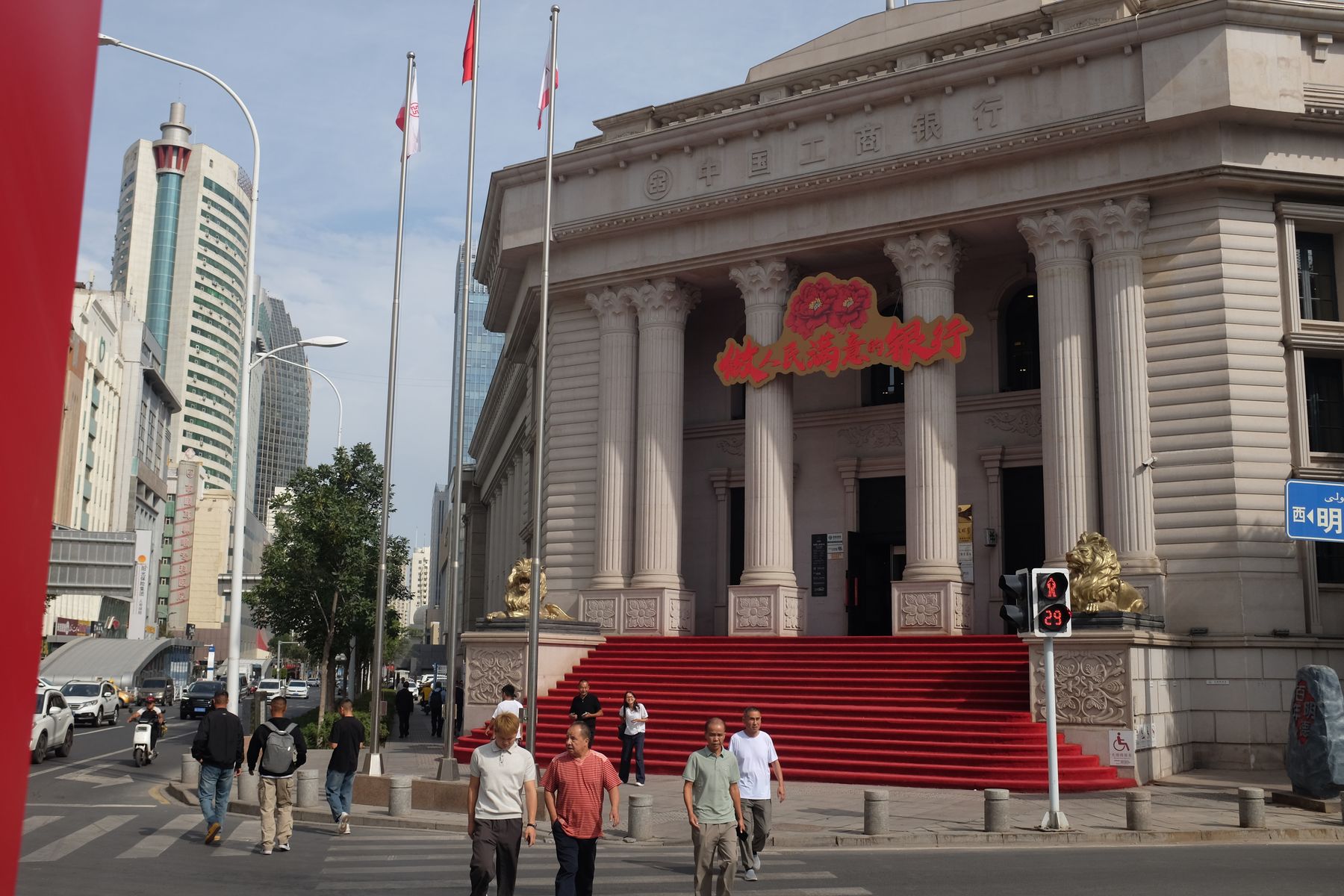
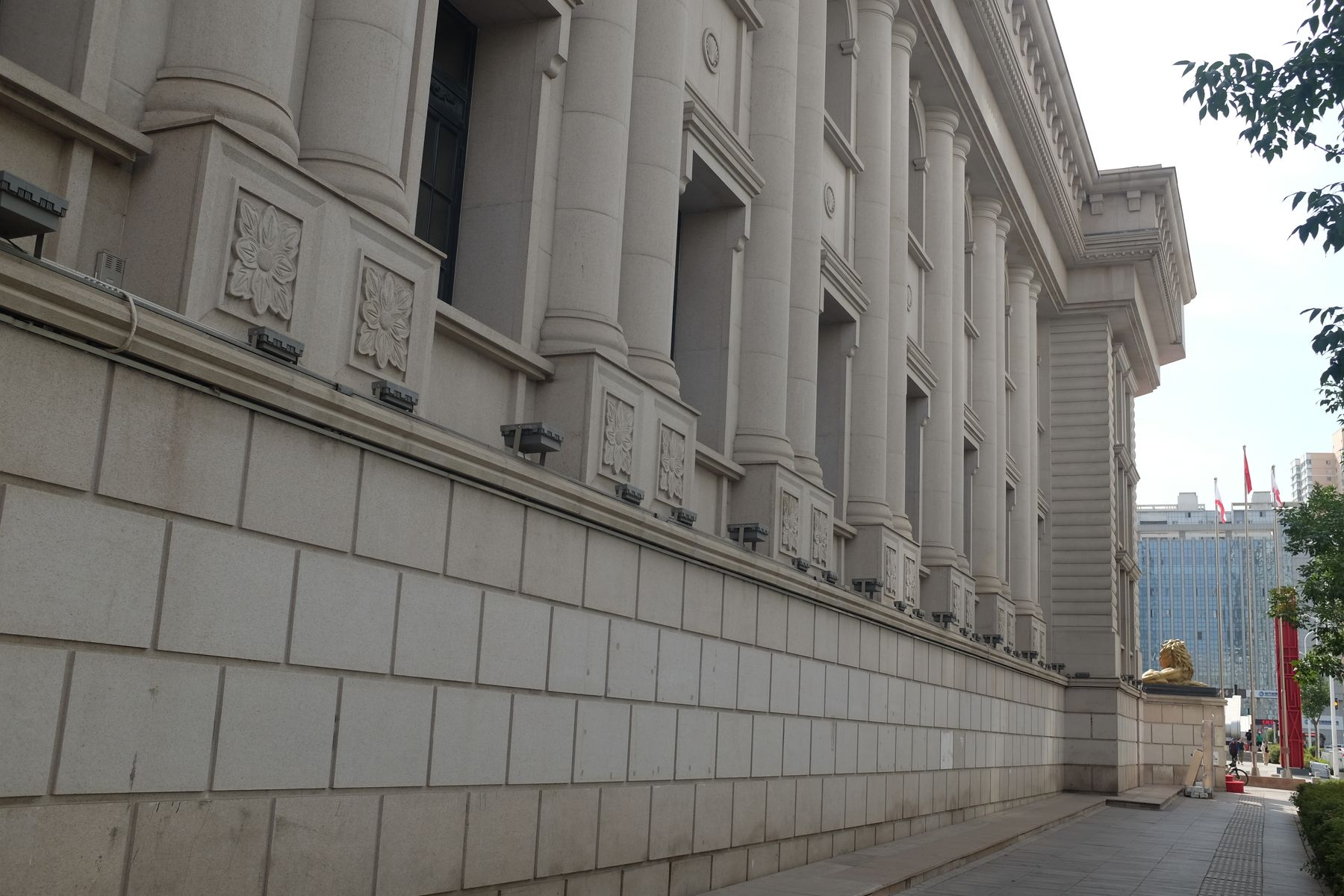
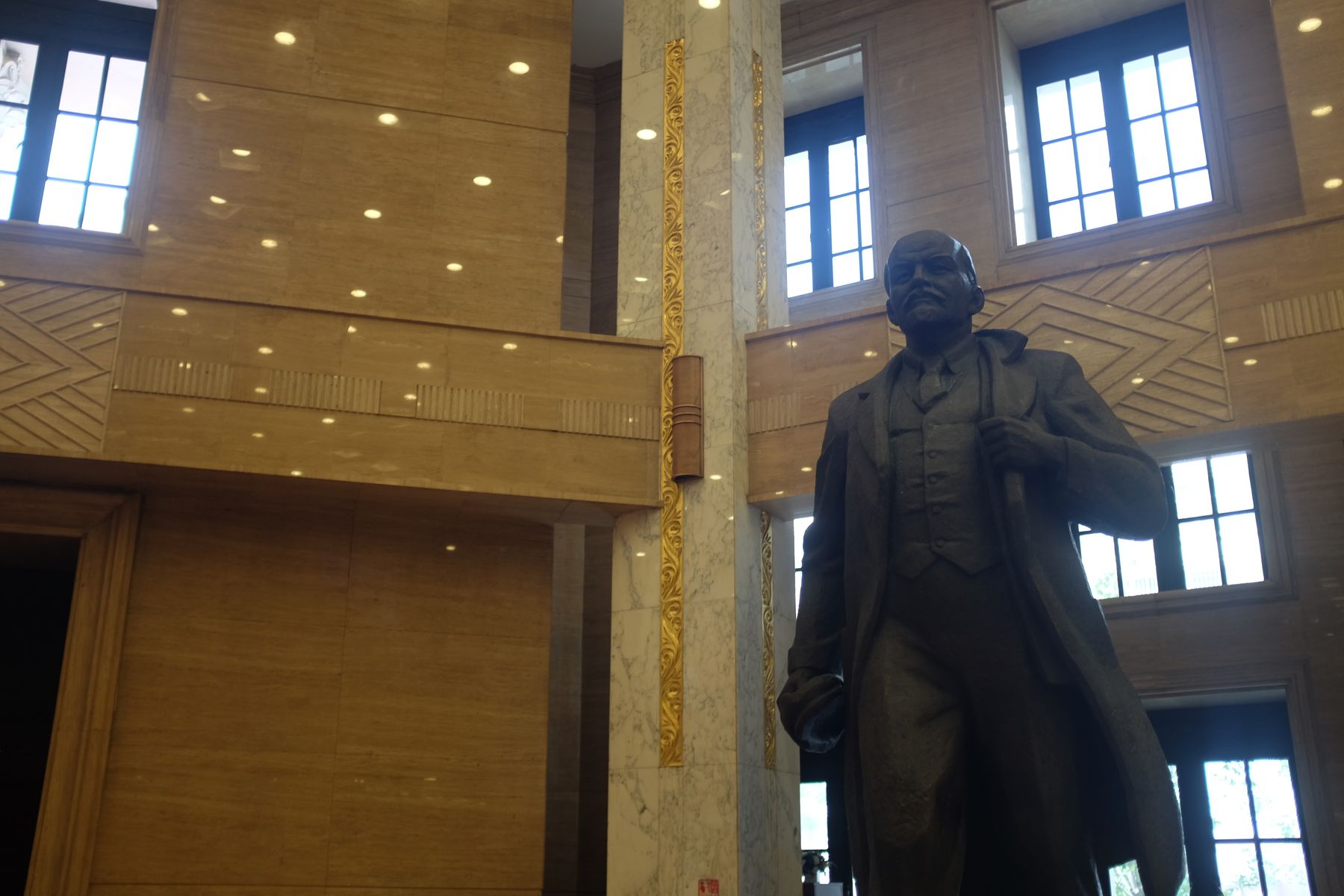
He scrutinises the columnal elements and their architectural use. What is its purpose – for design, or structural use? These ones are clearly design elements and not structural ones, based on the composition and building material. And then he digresses into the use of foreign architecture to add flourish over structure. When we walk inside, he acknowledges he is less fluent in interior design. Just admire the interior, he says. And indeed the bank looks like an old-fashioned bank still in use. A massive statue of Lenin is erected in the main hall, contrasting the flapper-dapper chinois interior.
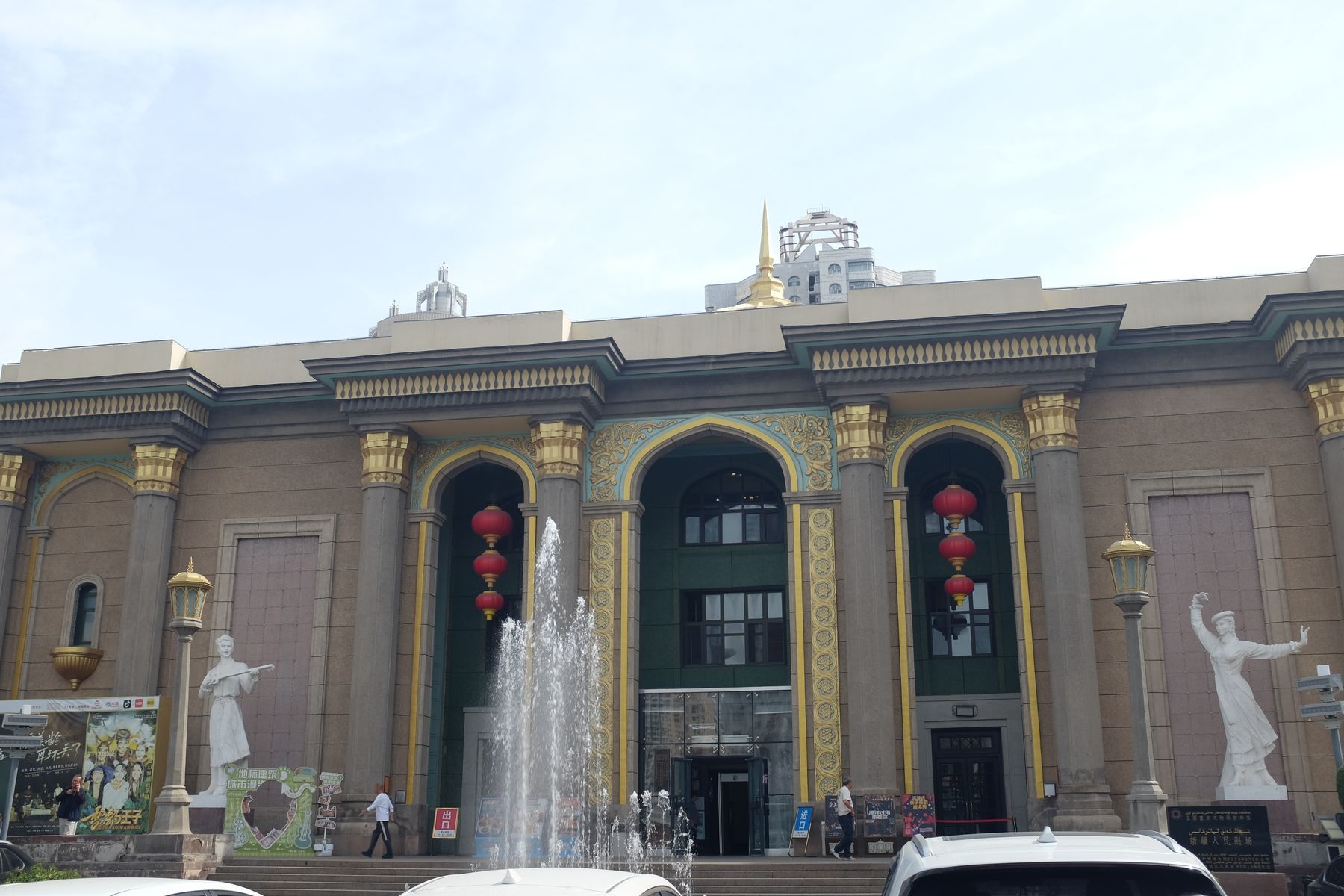
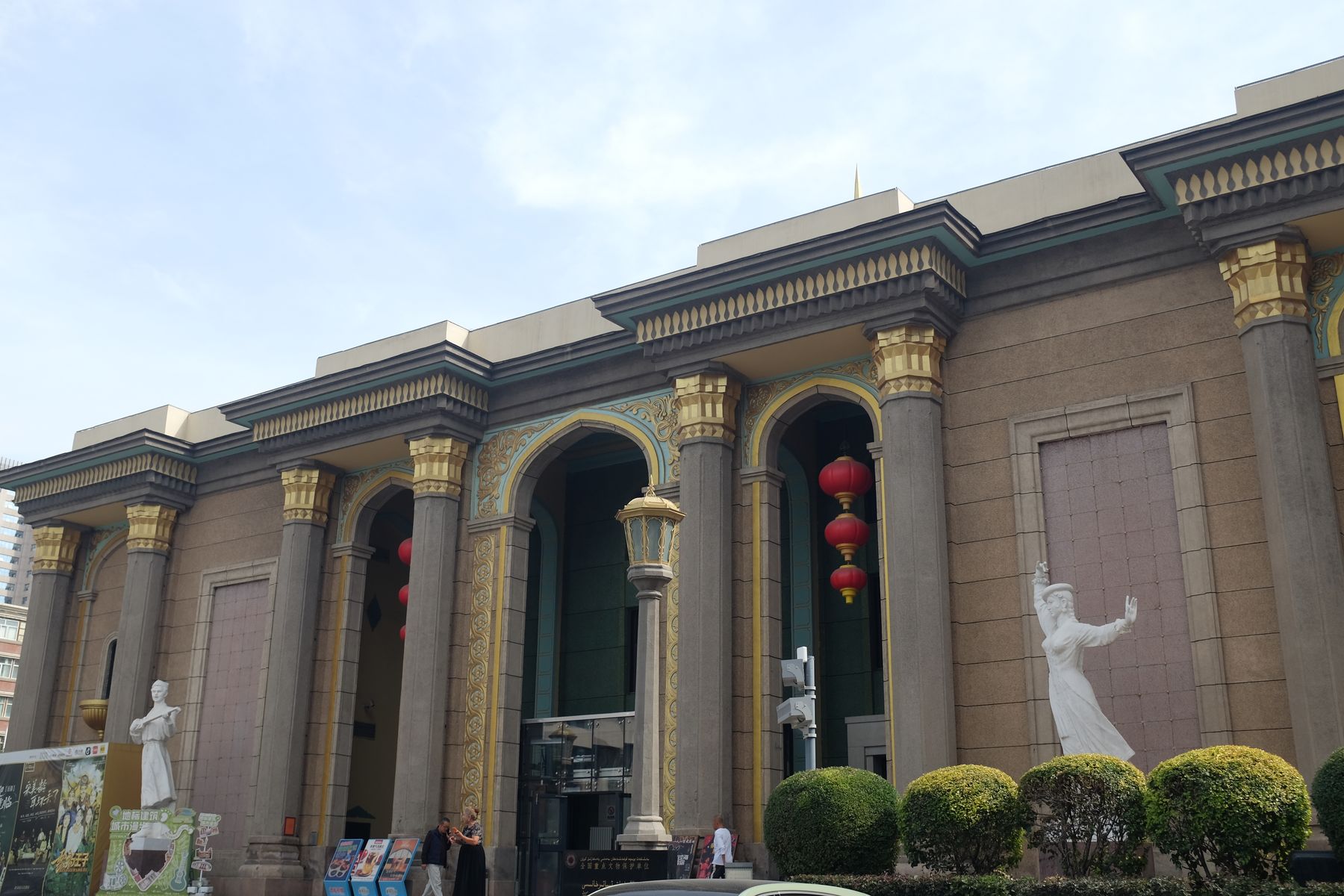
The People’s Theatre (新疆人民劇場), an entertainment venue old and new, is also examined in the same way. He again scrutinises the exterior. It’s a 3x3 building: three floors from base, middle, and upper; and also a vertical left, middle and right section. Why is the arch a pointed one, and not a rounded one? Russian-designed elements. Why are the motifs along the edge of the arch flowers, and not animals? Uyghur classic design elements. And then a steeple in the middle at the top, like a mosque-style minaret, also in Islamic style. As for the two Chinese statues on the side, these are truly Chinese modern elements.
The interior is as much of a hodgepodge, with the interior space adapting to modern times. At the foyer, a screen of movie times which looks like a stock exchange.
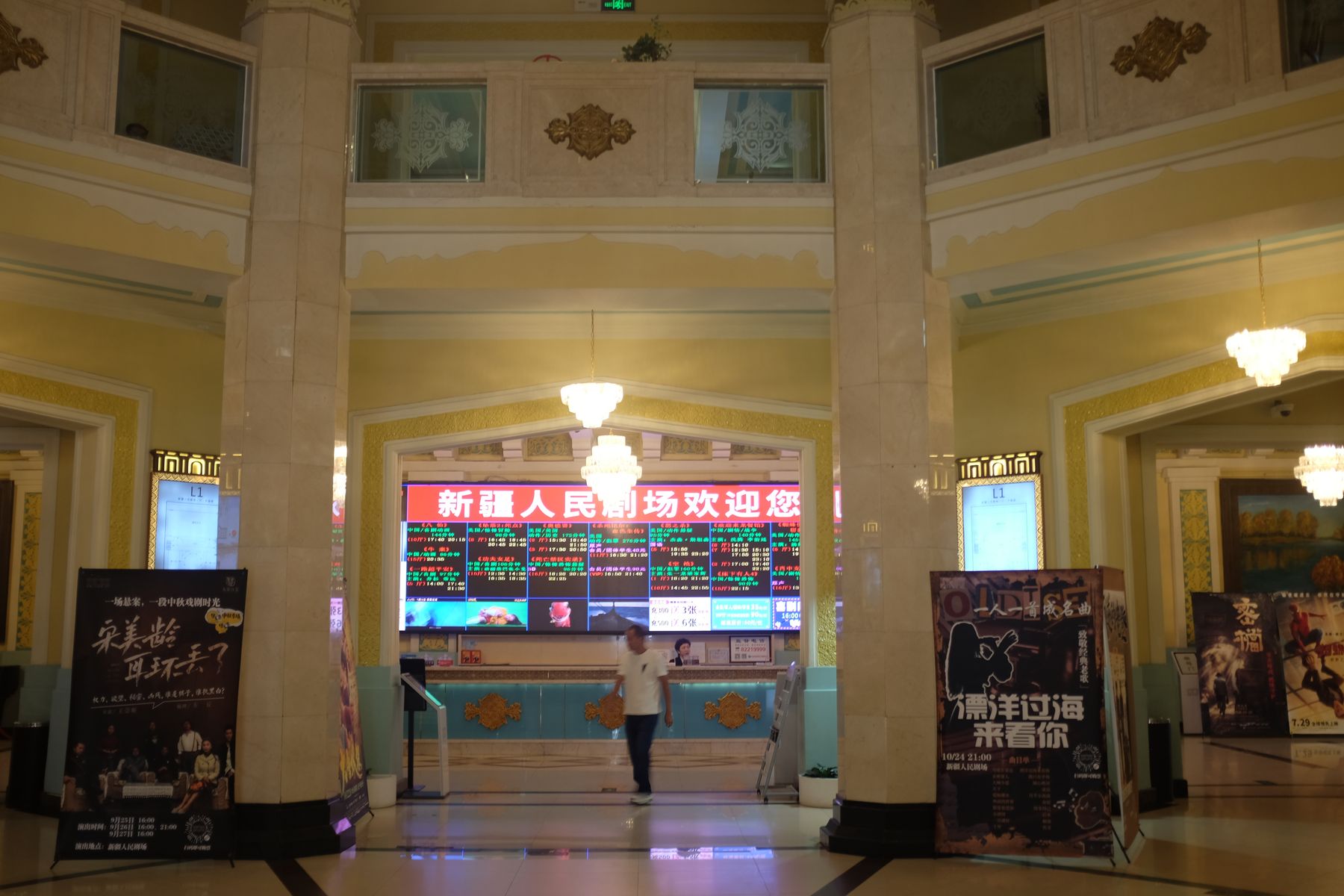
Walk into the room, and what do you feel? A sort of mock-up of the Chinese ideation of western design. How can I put language to this? Think of it like soft and hard elements, he said. A hard element will give the impression that it is inspired from a certain culture or architectural design element, but done in a rougher way. He shows me this in the etching of the ceiling with a course silhouette carving of flowers.
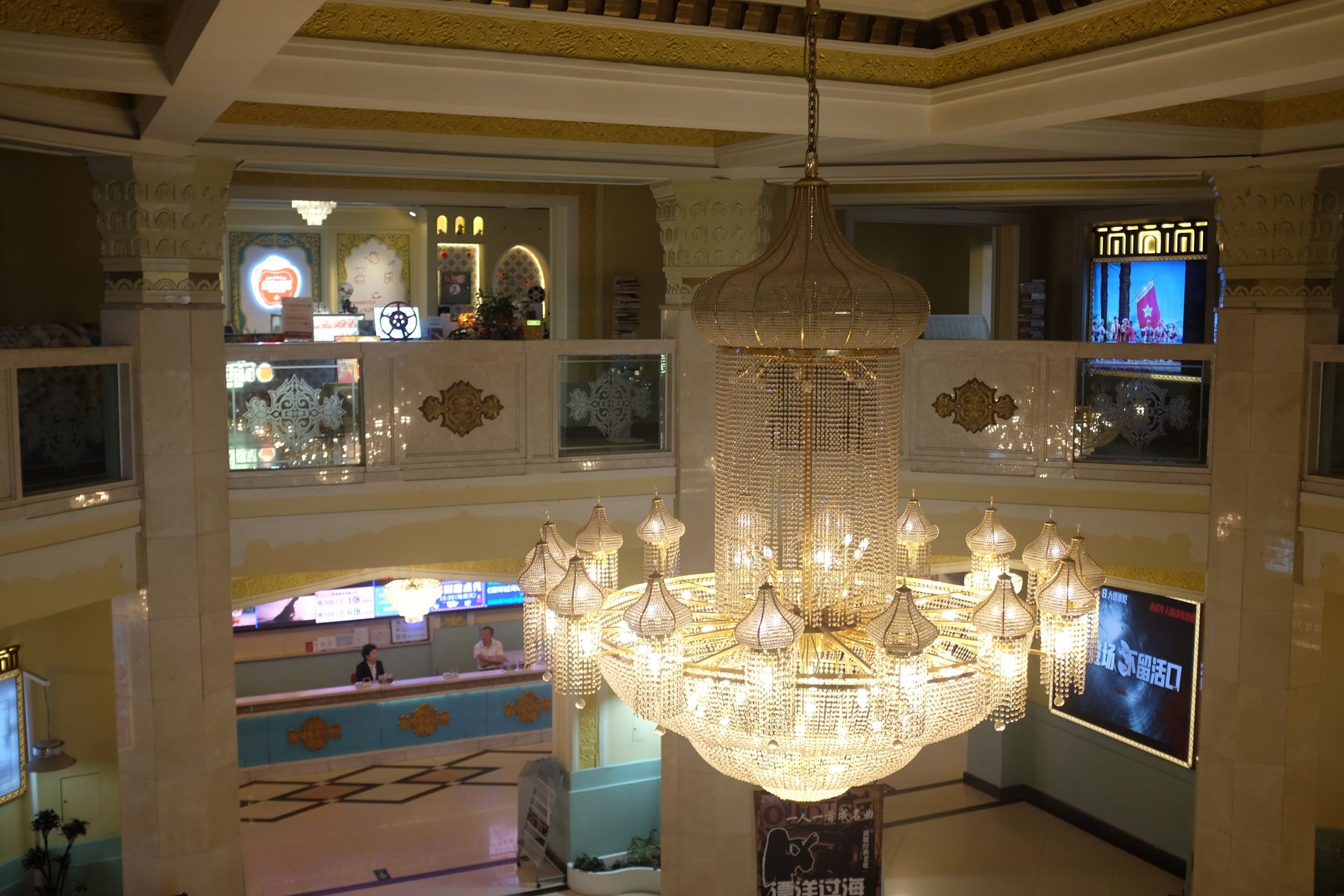
These sometimes aren’t meant to be designs, but structural (think columns) – why would you want an intricately designed element to be a structural elements, anyhow? Softer elements can be purely for visual pleasure.
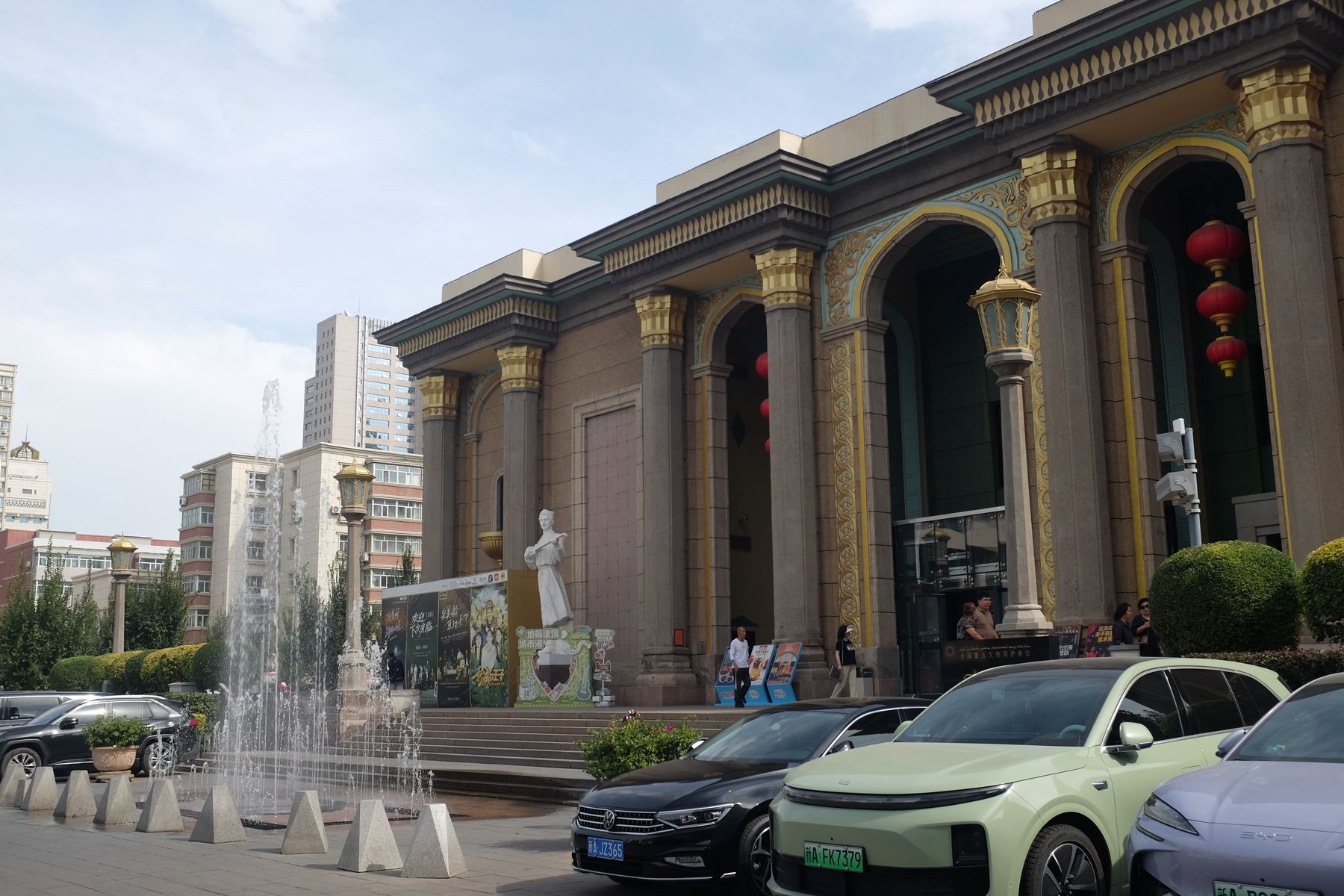
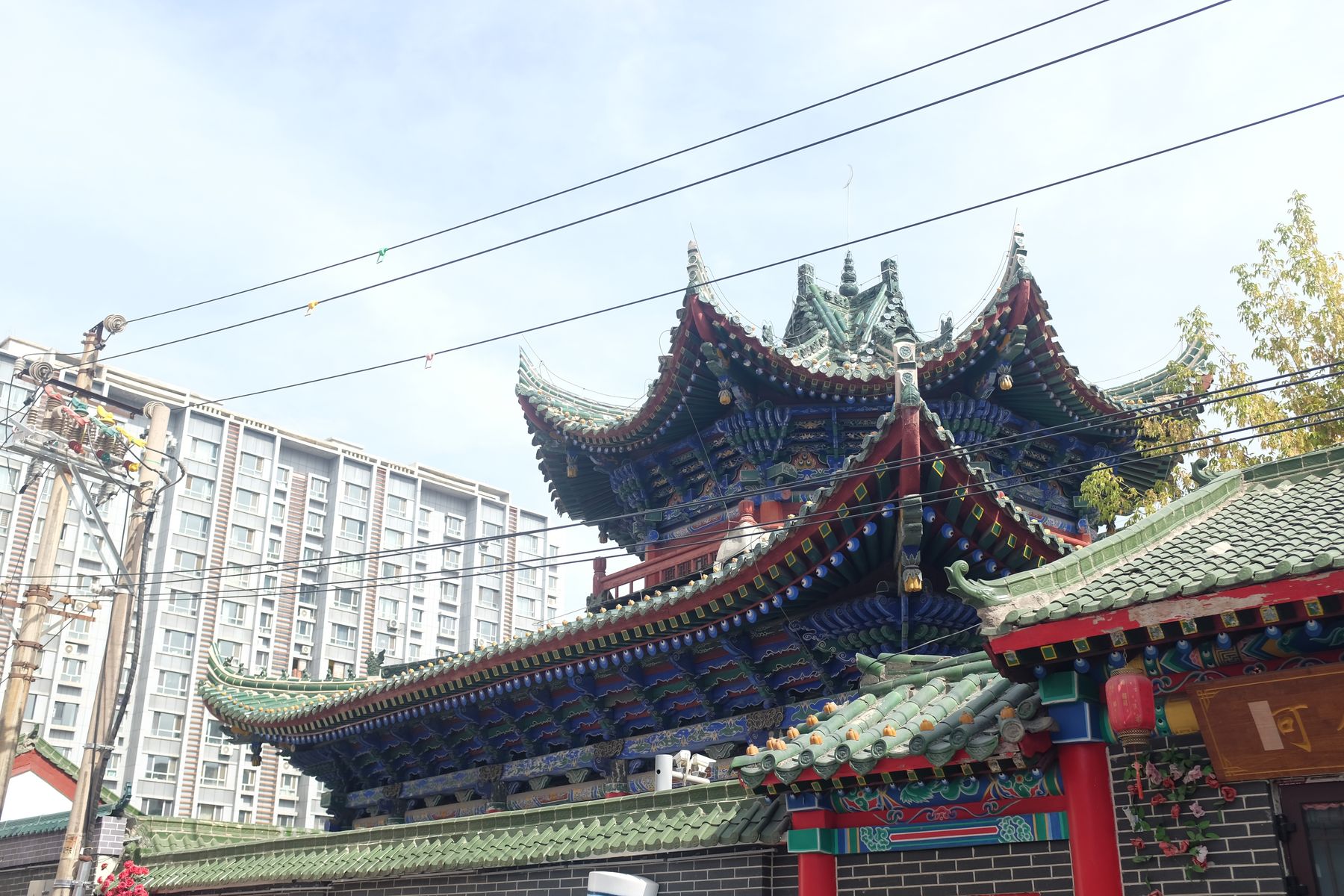
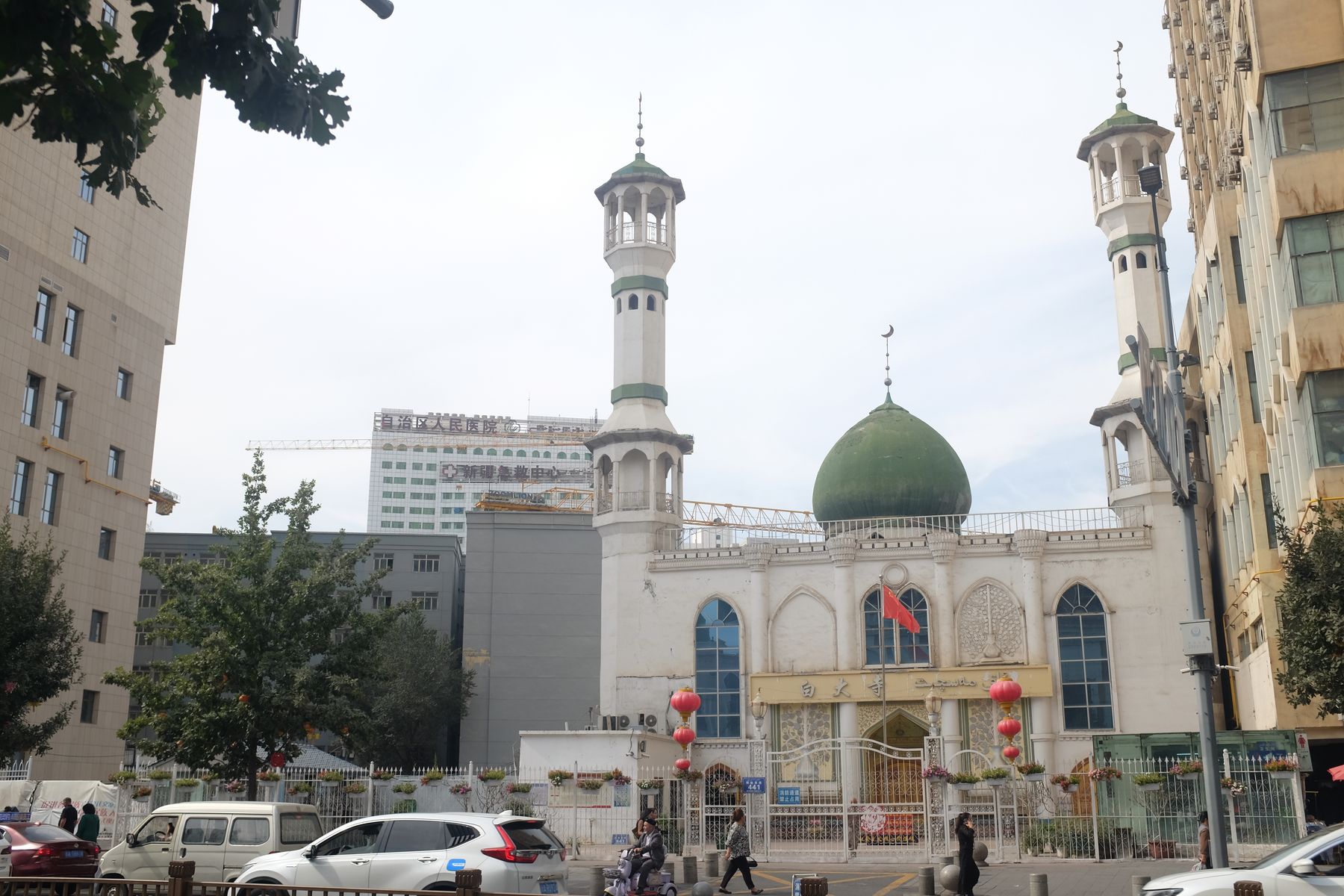
Through the city, he explains the eclecticism of each building: why does this mosque look Chinese, but not that one? How does an architect describe the structural elements?
Or why is there a Catholic church in the middle of the city, but not in use?
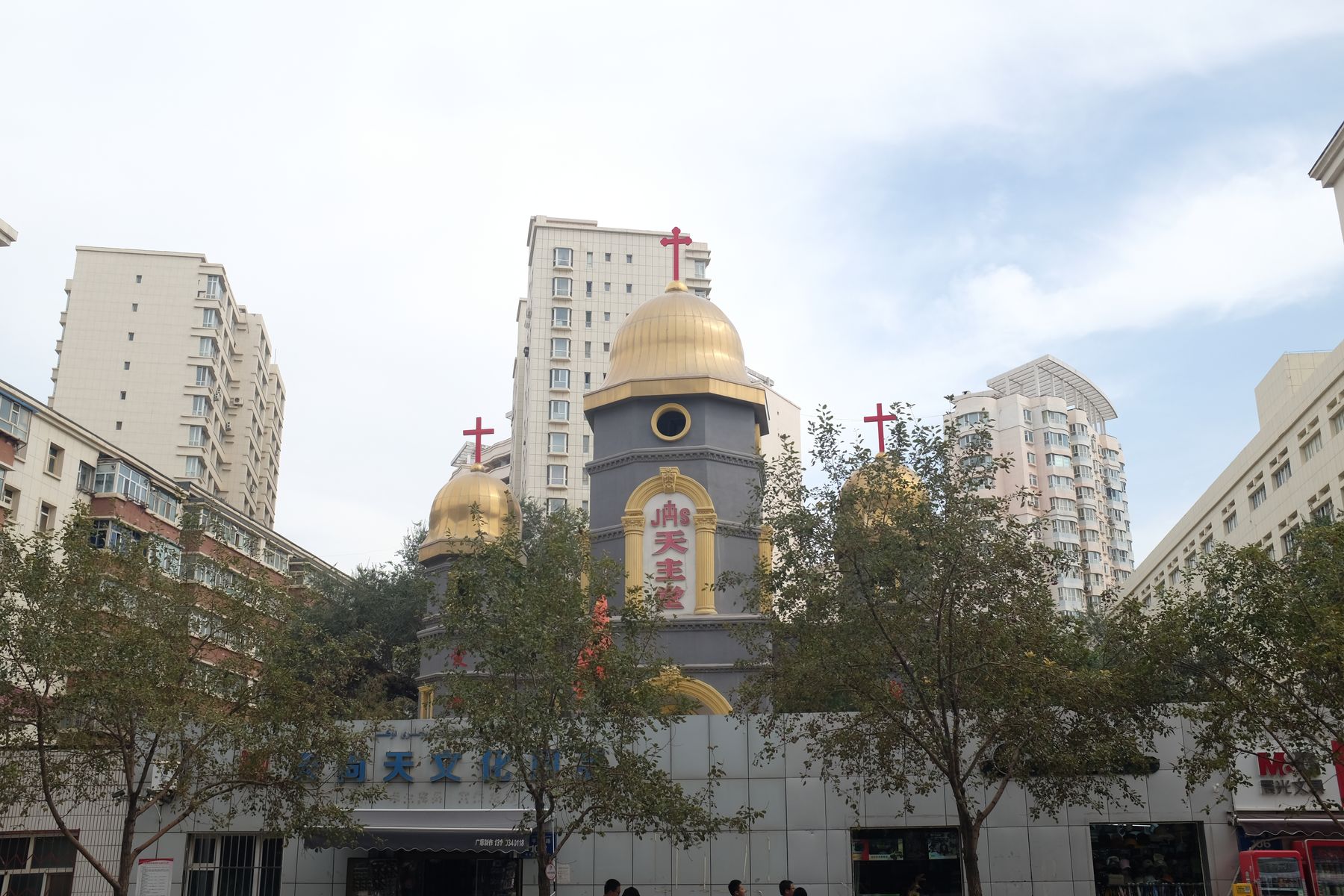
I ask him about the benefits and downsides of rejuvenated cities done the Chinese way – flashy, shiny buildings that are meant to be pretty but lack any of its original flavour – and he has an explanation for this as well –
To explain this, I recall what a professor said to me. Think of it as skin and bones. The government provides a new layer of skin, but people always give the building or area its structural purpose.
He pulls out his phone to show me a picture of a Turkish bazaar and contrasts it to that of the Grand Bazaar in Ürümqi (新疆國際大巴扎). The Grand Bazaar is newer, wider and more commercial. It’s been given a recent facelift from the government to provide tourism. Contrasted with the Turkish bazaar, which is smaller, tighter, and people have squeezed into every nook. In my interpretation of his words, the latter is a product of “bone peeking through” without ever getting a skin-lift; the Chinese style of rejuvenation is always skin-deep though.
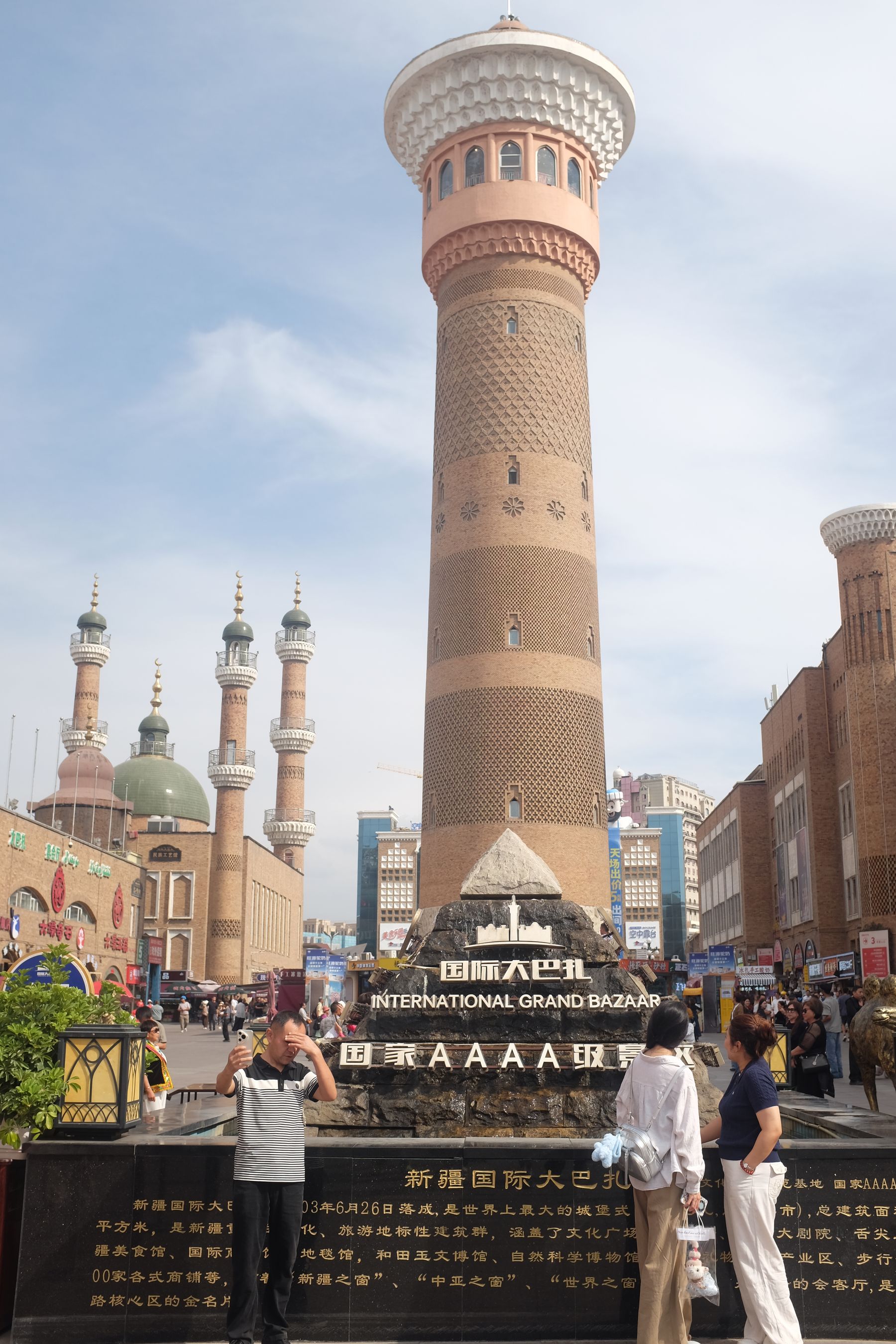
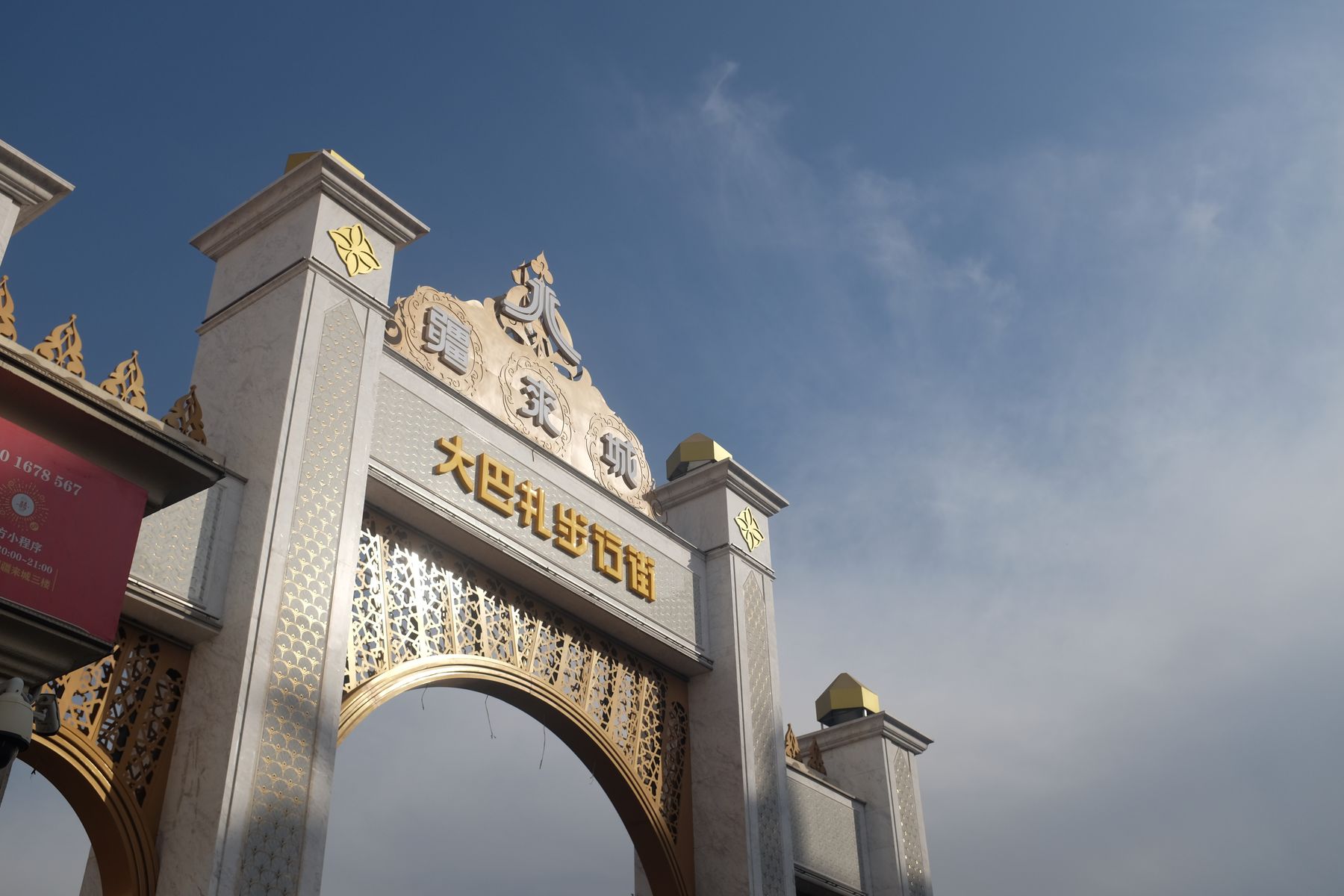
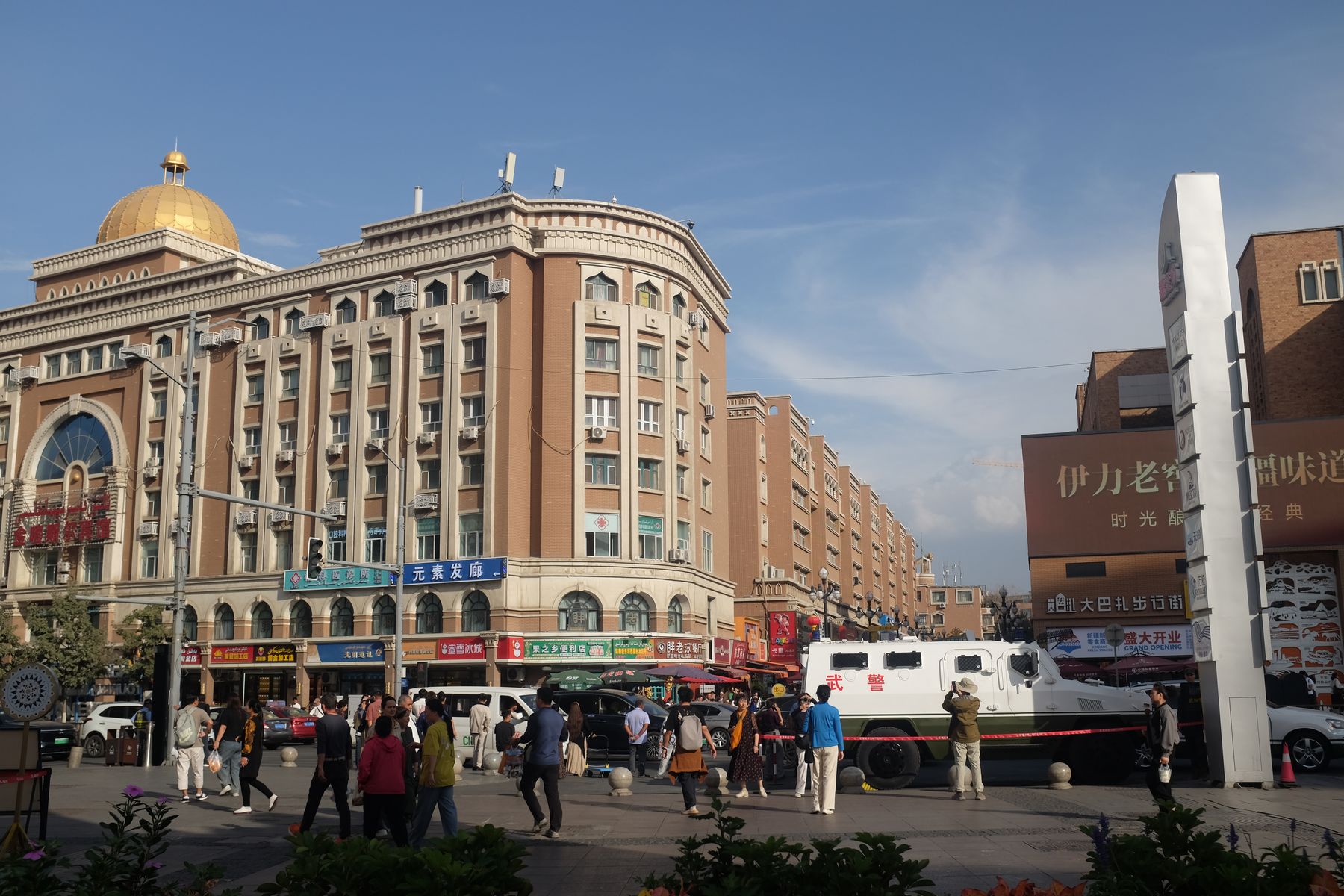
The entire day, he anchors his discussion around a historical map of the old town. He explains it in the same way as he has every other building but takes a more macroscopic view: why is the old town shaped like a pentagon, and why are there three sections to it, and what were historically in these three sections? The short of it is that the old town grew much like many towns in history did, through the historical migration of people from the east and west, and their exclusion from the town centres and the surrounding areas that developed as a result.
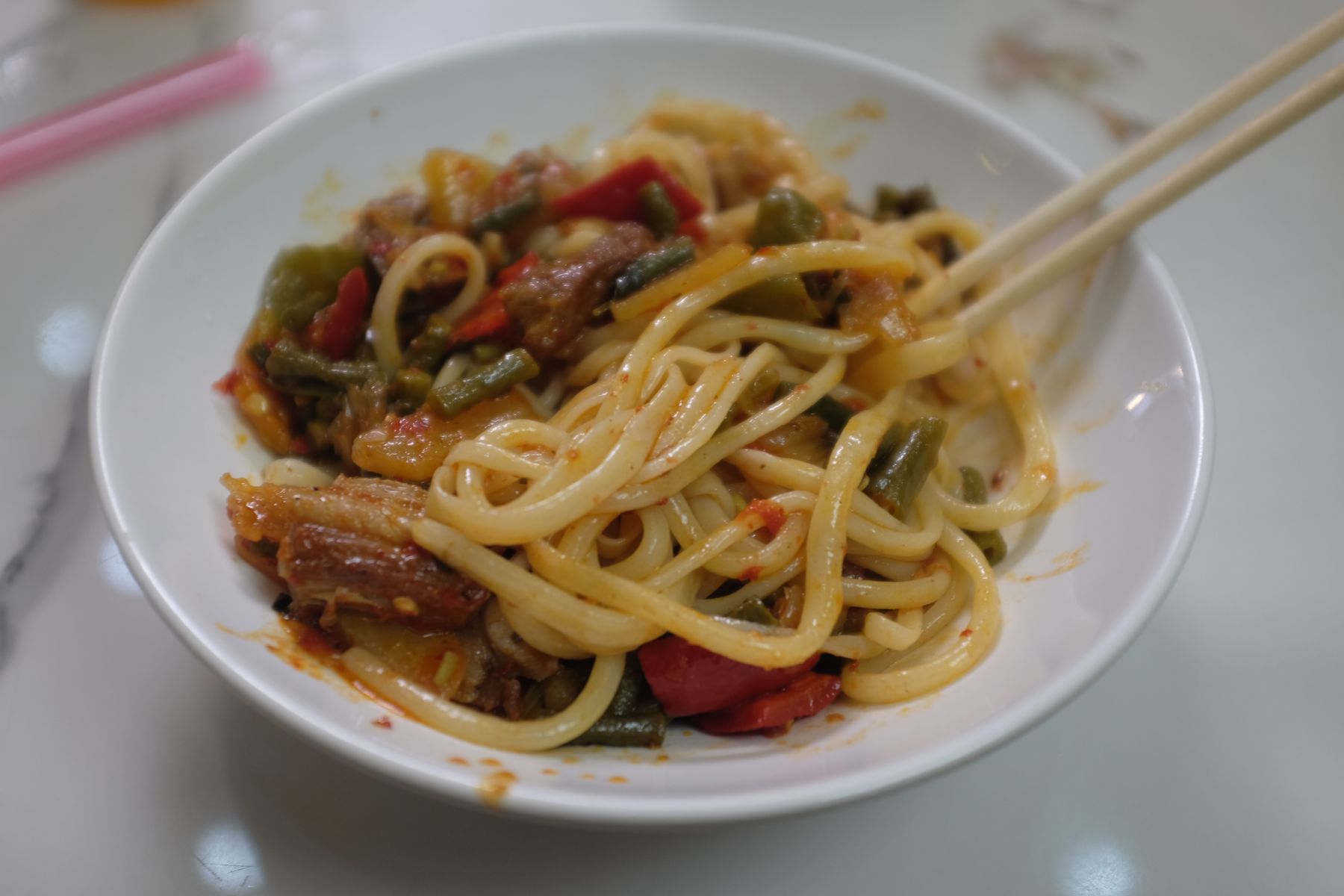
In the evening, we grab a quick bite of hand-rolled noodles, and he tells me that there’s a nice vantage point of the city he wants to take me to. It is now a park, but it used to be a barren mountain that has undergone “greenifying” from the government.
We take the bus, his preferred mode of transport, and we do a short 10-minute stroll to the top. When we get to the top, some commercial buildings visible from the vantage point light up in plain colours, and alternate between primary colours every 10 seconds.
“My god”, he says, “That’s ugly. I never know why the government chooses to make the outward face of the buildings so tacky. Get any Bachelor’s design student and they will have done that way better.” I guess the government doesn’t always get the skin right, either.
As the sun sets, we go to a higher vantage point and overlook the “extended” parts of Ürümqi that have grown within the last 10-15 years. The view is of an entire sea of blockish buildings. He laments the architecture and says that Ürümqi lacks money, and that buildings are built not with design but with structure and utility in mind. Somehow beyond his emotional sign, I feel his deep appreciation for this city and its architecture. The tour ended up being 9 hours.